Understanding Thermally Modified Clear Radiata
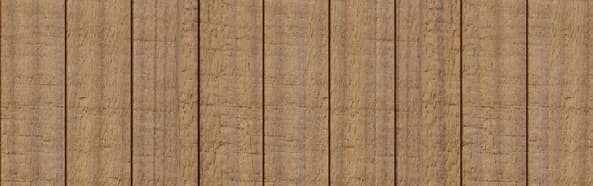
Thermally Modified Clear Radiata is a wood product valued for its clear, consistent grain and enhanced stability. The thermal modification process aims to reduce the wood's moisture response, which can contribute to improved performance compared to unmodified timber in certain applications. This material is selected for its cleaner visual field, making it suitable for modern architectural applications where a restrained surface is desired.
Its understated grain pattern allows for continuous architectural lines, making it a candidate for various applications where visual consistency is important. The material's natural tone can complement a range of design aesthetics, from minimalist to more complex compositions.
Key Product Profiles and Dimensions
Thermally Modified Clear Radiata is available in several standard profiles, each designed for specific applications. Understanding these profiles and their nominal sizes is fundamental to proper project planning. Nominal size refers to the size before finishing, and the actual dimensions will be slightly smaller.
This profile is often chosen for its defined shadow line and contemporary aesthetic. For decking, 'S4S E4E' (surfaced four sides, eased four edges) profiles are common, available in nominal sizes such as 5/4 × 6 and 2 × 6. The 2 × 6 size can also be considered for structural details where appropriate. For trim and moulding, 'S4S E4E' is available in nominal sizes like 1 × 8, 1 × 12, and 2 × 6, providing options for various finishing touches.
Suitable Applications for Thermally Modified Clear Radiata
The characteristics of Thermally Modified Clear Radiata make it suitable for a range of uses. Its clear appearance and improved stability are beneficial for cladding, where a consistent visual field and resistance to moisture changes are desirable. It is also well-suited for ceilings and soffits, contributing to a clean overhead aesthetic.
Beyond these, the material can be used for decking, offering a durable surface for outdoor living spaces. Its versatility extends to trim and moulding, where its consistent grain can provide a refined finish. Custom milling options can further expand its use in coordinated slat systems and other bespoke architectural details.
Benefits for Your Project
Choosing Thermally Modified Clear Radiata offers several benefits. Its 'clear appearance' provides a restrained surface, ideal for modern installations that emphasize continuous lines and a minimalist aesthetic. The 'improved stability' gained through thermal modification means the material has a lower moisture response compared to unmodified wood, which can be an advantage in environments with fluctuating humidity. This can contribute to a more consistent performance over time.
The 'detail flexibility' of Thermally Modified Clear Radiata is another key benefit. The ability for custom milling allows for the coordination of various elements, such as slats, trim, and field profiles, ensuring a cohesive design across different components of a project. This flexibility supports complex designs and allows for precise execution of architectural visions.
This wood originates from responsibly managed plantations, which can be an important consideration for projects focused on material sourcing.
Worked Example: Selecting Siding for a 20-foot Wall
The actual face width of this profile, considering a typical reveal, might be around 5.25 inches (or 0.4375 feet).
To calculate the number of boards needed for the height, divide the wall height by the board's face width: 9 feet / 0.4375 feet/board = 20.57 boards. Since you cannot use partial boards for the full height, you would need 21 boards to cover the height. For the 20-foot length of the wall, if you plan to use full-length boards to minimize waste and seams, you would need 21 boards, each 20 feet long. This totals 420 linear feet of material for this wall section.
This calculation provides a baseline. Always account for waste due to cuts, defects, or specific design patterns (e.g., staggering joints). A standard practice is to add 10-15% to the initial quantity to cover these contingencies. For this example, adding 10% waste would bring the total to approximately 462 linear feet (420 * 1.10). This ensures you have enough material to complete the project without delays from reordering. Confirm the exact face width and recommended waste factor with your supplier for the specific profile you choose.
Before you order
- Confirm the specific profile (e.g., Nickel Gap, S4S E4E) required for your application.
- Verify the nominal and actual dimensions (width, thickness) of the chosen profile.
- Ensure the material's stated applications (cladding, decking, trim) align with your project's intended use.
- Consider the aesthetic characteristics, such as the 'clear appearance' and 'consistent grain', to match your design vision.
- Review the benefits like 'improved stability' and 'detail flexibility' in the context of your project's environmental conditions and design complexity.
- Calculate the required quantity of material, including a waste factor, based on actual project dimensions and board face widths.
- Inquire about any specific installation guidelines or fastener recommendations for the chosen profile and application.
Confirm installation details, approved uses and warranty terms in the current instructions for the exact product and profile. Your installer should verify the substrate, structure and applicable project requirements.
Questions to help you decide
What does 'thermally modified' mean for Radiata wood?
Thermal modification is a process where wood is heated to high temperatures in an oxygen-controlled environment. This process aims to alter the wood's cellular structure, which can lead to improved dimensional stability and reduced moisture absorption compared to unmodified wood. For Radiata, this enhances its suitability for applications where consistent performance and appearance are important.
Can Thermally Modified Clear Radiata be used outdoors?
Yes, Thermally Modified Clear Radiata is suitable for various outdoor applications, including cladding and decking. Its improved stability, resulting from the thermal modification process, helps it perform in exterior environments. However, like all wood products, proper installation, finishing, and maintenance are crucial for its longevity and appearance outdoors.
Are there different grades or appearances for Thermally Modified Radiata?
Thermally Modified Radiata is often selected for a 'clear' appearance, meaning it aims for a cleaner visual field with minimal knots or other natural characteristics. This gives it a restrained surface with consistent grain, which is desirable for modern architectural designs where continuous lines are emphasized. Always review product samples or specifications to confirm the visual grade before ordering.
Request a Quote for Your Project
Ready to specify Thermally Modified Clear Radiata for your project? Contact us with your project dimensions, desired profile, and ZIP code to receive a material quote and confirm current availability and service options. Our team can assist you in selecting the right specifications for your needs.
Request a material quote →