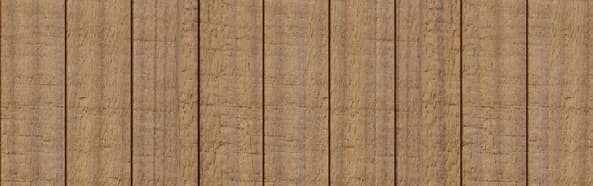
Understanding Thermally Modified Clear Radiata
Thermally Modified Clear Radiata is a wood product selected for a clean visual field and then subjected to a thermal modification process. This process enhances the wood's stability by reducing its hygroscopicity, meaning it absorbs and releases moisture at a slower rate compared to unmodified wood. This improved stability is a key benefit for exterior applications, as it can help mitigate common issues like warping and cupping.
The material features an understated grain, making it suitable for modern, continuous installations. Its natural tone is consistent, offering a clear surface that complements contemporary architectural lines. Common applications include cladding, ceilings, soffits, and custom slat systems.
Thermal Movement on Sun-Exposed Elevations
Even with improved stability from thermal modification, all wood products will experience some degree of thermal expansion and contraction. On sun-exposed elevations, the surface temperature of cladding can rise significantly, leading to greater movement compared to shaded areas. This movement is primarily along the width of the board, as wood fibers expand and contract perpendicular to the grain.
To accommodate this natural movement, appropriate spacing between boards and at transitions (such as corners, windows, and doors) is essential. Insufficient spacing can lead to compression stresses, causing boards to buckle or fasteners to become strained. Conversely, excessive spacing might expose too much of the underlying substructure or create undesirable shadow lines.
Color Changes Under UV Exposure
Thermally Modified Clear Radiata, like most wood species, will undergo a natural color change when exposed to ultraviolet (UV) radiation from direct sunlight. Initially, the material presents a warm, natural hue. Over time, and particularly on sun-exposed elevations, this color will gradually mellow to a silvery-gray patina. This weathering process is superficial and does not compromise the structural integrity of the wood.
The rate and uniformity of this color change can vary depending on the elevation's orientation, local climate, and the presence of protective finishes. Elevations with full sun exposure will typically weather more quickly and uniformly than those partially shaded. If a consistent color is desired, a UV-inhibiting finish can be applied and regularly maintained. Without such a finish, embracing the natural graying process is part of the material's aesthetic evolution.
Worked Example: Planning a South-Facing Cladding Elevation
This elevation receives maximum sun exposure throughout the day.
**1. Assuming a standard reveal or overlap that results in an effective coverage width of approximately 5.5 inches (0.458 feet) per board. For a 16-foot wide wall, you would need 16 feet / 0.458 feet/board = approximately 34.9 boards. Rounding up, you would need 35 boards for the width.
**2. Consult the manufacturer's installation guidelines for specific expansion gap recommendations. For example, if the installation guidance suggests 1/16 inch per board, then across 35 boards, the total movement could be up to 35/16 inches, or approximately 2.18 inches. This cumulative movement must be managed by appropriate spacing and detailing at the ends of the wall.
**3. Plan for Color Variation:** On this south-facing elevation, the Thermally Modified Clear Radiata will likely achieve its silvery-gray patina relatively quickly and uniformly. If an adjacent north-facing elevation uses the same material but remains mostly shaded, it will weather at a slower rate and may exhibit less pronounced graying. This difference in weathering should be anticipated during the design phase. If a consistent appearance across all elevations is a priority, a UV-inhibiting finish would be necessary for all exposed surfaces, requiring regular reapplication.
**4. Fastener Selection:** Given the potential for thermal movement, choose fasteners that are compatible with the material and designed for exterior use. Stainless steel fasteners are often recommended to prevent staining and ensure long-term hold in moving wood.
Maintenance and Finishes for Sun-Exposed Radiata
For Thermally Modified Clear Radiata on sun-exposed elevations, maintenance considerations largely depend on whether the natural graying process is desired. If a uniform, weathered appearance is acceptable, minimal maintenance beyond occasional cleaning to remove dirt and debris is generally sufficient. This helps to ensure even weathering.
If the original warm tone is to be preserved, a high-quality exterior finish with UV inhibitors must be applied. These finishes require periodic reapplication, typically every few years, depending on the product and exposure conditions. It is important to select a finish specifically formulated for thermally modified wood and to follow the manufacturer's application and maintenance instructions closely. Regular inspection for wear and timely reapplication are crucial for maintaining the finish's protective qualities and aesthetic.
Complementary Products for Your Project
Enhance your Thermally Modified Clear Radiata project with carefully selected complementary materials:
For a complete exterior solution, consider our range of Siding and Cladding options, which includes various profiles and species to create varied textures and visual interest.
Explore other Thermally Modified Wood species to compare different aesthetic and performance characteristics for various project zones.
For specific brand solutions, NORX offers a selection of high-performance wood products, including thermally modified options.
For an alternative high-performance wood, Maximo Accoya is another excellent choice known for its exceptional stability and durability.
Before you order
- Assess the orientation of each elevation: Which walls receive direct, prolonged sun exposure?
- Determine desired aesthetic: Is the natural silvery-gray patina acceptable, or is a consistent original color preferred?
- Consult manufacturer's guidelines for thermal movement: What are the recommended expansion gaps for your chosen profile?
- Plan for finishes: If preserving original color, select a UV-inhibiting finish and budget for regular reapplication.
- Consider substructure and fastening: Ensure the substructure is robust and fasteners are appropriate for dynamic movement.
- Review adjacent materials: How will the weathering or finish of Thermally Modified Radiata integrate with other facade elements?
- Mock-up a section: If possible, install a small mock-up on a sun-exposed area to observe actual weathering and movement over time.
Confirm installation details, approved uses and warranty terms in the current instructions for the exact product and profile. Your installer should verify the substrate, structure and applicable project requirements.
Questions to help you decide
Does thermal modification prevent all movement in the wood?
No, thermal modification significantly improves the dimensional stability of wood by reducing its moisture absorption and release, but it does not eliminate all movement. Wood will still expand and contract with changes in temperature and humidity, though to a lesser extent than unmodified wood. Proper installation with adequate spacing is still essential to accommodate this natural movement, especially on sun-exposed elevations.
Can I prevent Thermally Modified Radiata from graying in the sun?
You can slow down and minimize the graying process by applying a high-quality exterior finish that contains UV inhibitors. These finishes protect the wood from the sun's ultraviolet rays, helping to preserve its original color. However, these finishes require periodic reapplication and maintenance according to the product manufacturer's instructions to remain effective.
Is the silvery-gray patina a sign of damage?
No, the silvery-gray patina that develops on Thermally Modified Radiata (and many other wood species) when exposed to sun and weather is a natural weathering process, not a sign of damage. It is a superficial change to the wood's surface caused by UV radiation. This natural graying does not typically impact the structural integrity or performance of the thermally modified wood.
Ready to Plan Your Sun-Exposed Elevation with Thermally Modified Radiata?
Request a material quote today. Provide your project dimensions, desired profile, and ZIP code to confirm current availability and service options for Thermally Modified Clear Radiata.
Request a material quote →