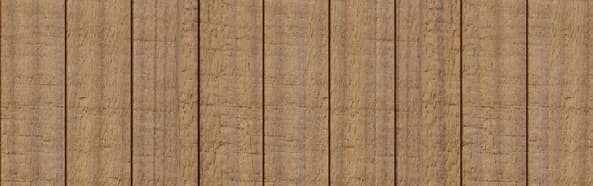
Understanding Thermally Modified Clear Radiata
Thermally Modified Clear Radiata is a type of Pinus radiata selected for a clean, consistent visual field. It undergoes a thermal modification process that enhances its stability, making it less prone to movement caused by changes in moisture compared to unmodified wood. This improved stability contributes to the longevity and consistent appearance of the installed material.
The wood's natural tone is clean and consistent, allowing for a modern aesthetic. It is often chosen for cladding, ceilings, decking, trim, and custom slat systems where a restrained surface and continuous installation are priorities. The thermal modification process also imparts a darker, uniform color throughout the wood.
Available Profiles for Thermally Modified Radiata
Lumber Plus offers Thermally Modified Clear Radiata in several standard profiles designed for various applications. Each profile is milled to specific dimensions and features that create distinct visual effects.
The Nickel Gap design creates a narrow, consistent shadow line between boards, offering a clean, modern aesthetic with subtle depth.
Another versatile profile is "S4S E4E" (Surfaced Four Sides, Eased Four Edges). This profile is available in multiple nominal sizes, such as 5/4 × 6 and 2 × 6 for decking, and 1 × 8, 1 × 12, and 2 × 6 for trim and molding. S4S E4E boards have a smooth, finished surface on all four sides and slightly rounded edges, making them suitable for applications where a flat, flush appearance is desired, or as a base for custom milling.
The Impact of Profile on Shadow Lines and Visual Depth
The choice of profile directly dictates the shadow lines that appear on your finished wall or ceiling. Shadow lines add visual interest and can make a surface appear more dynamic or more monolithic.
A Nickel Gap profile, for instance, is designed to create a consistent, narrow gap between boards. This gap casts a crisp, linear shadow, emphasizing the individual planks and adding a rhythmic quality to the surface. The depth of this shadow is determined by the specific milling of the gap and the angle of light hitting the surface. A deeper gap will produce a more pronounced shadow.
S4S E4E profiles, when installed with a minimal gap or butt-jointed, result in a flatter, more continuous surface with fewer pronounced shadow lines. This can create a contemporary, seamless look, especially when used for trim or a flush-mounted wall. If used for cladding, the spacing between boards will determine the shadow effect, often relying on spacers or furring strips to achieve a desired gap.
Worked Example: Calculating Appearance for a Nickel Gap Cladding
Consider a hypothetical exterior wall measuring 10 feet high by 20 feet wide.
To cover the 20-foot width, we would need 20 feet / 0.458 feet/board = approximately 43.67 boards. Since boards are purchased in full lengths, we would round up to 44 boards for the width, assuming a standard installation with minimal waste on the ends. For a 10-foot height, if we use 10-foot long boards, we would need 44 boards of 10 feet each. The total linear footage would be 440 linear feet. Each board's exposed face would contribute to a consistent 1/8-inch to 1/4-inch shadow line, depending on the exact milling and installation practice, creating a distinct horizontal pattern across the facade.
If a different aesthetic is desired, such as a wider or narrower shadow line, custom milling might be an option, but this would require specific project planning and potentially lead to different exposed face widths and material quantities. Always confirm the exact installed width, including any desired gap, before finalizing material quantities.
Selecting the Right Profile for Your Project
When choosing a profile, consider the overall architectural style of your project. For modern designs emphasizing clean lines and subtle texture, the Nickel Gap profile offers a refined solution. Its consistent shadow lines provide definition without overwhelming the surface.
If your project requires a more versatile board for trim, molding, or custom applications where you might define your own spacing and shadow, the S4S E4E profile provides a clean, adaptable base material. This profile is also suitable for decking or applications where a robust, flat surface is needed.
Additionally, consider how light will interact with the surface throughout the day. Areas that receive direct sunlight will have more pronounced shadows, while shaded areas may show more subtle effects. Samples can help visualize these nuances.
Before you order
- Determine the desired aesthetic: Do you prefer crisp, linear shadows or a flatter, more continuous surface?
- Consider the application: Is it for cladding, ceilings, trim, or decking?
- Evaluate actual exposed face width: Understand how the profile's design affects the visible width of each board.
- Account for light conditions: How will natural light enhance or diminish the shadow lines?
- Plan for installation: Does the chosen profile require specific fastening methods or spacing to achieve the desired shadow effect?
- Consider custom milling: If standard profiles don't meet your needs, investigate custom options for unique shadow lines.
Confirm installation details, approved uses and warranty terms in the current instructions for the exact product and profile. Your installer should verify the substrate, structure and applicable project requirements.
Questions to help you decide
What is the difference between Nickel Gap and S4S E4E profiles?
The Nickel Gap profile is specifically milled to create a small, consistent gap between boards when installed, resulting in distinct, linear shadow lines.
Can Thermally Modified Clear Radiata be used for both interior and exterior applications?
Yes, Thermally Modified Clear Radiata is suitable for both interior and exterior use. Its improved stability from thermal modification makes it a good choice for exterior cladding and decking, while its clear appearance and consistent grain are desirable for interior ceilings, walls, and trim where a modern aesthetic is sought.
How do I ensure consistent shadow lines with my chosen profile?
Consistent shadow lines are achieved through precise installation. For profiles like Nickel Gap, the milling itself helps guide consistency. For S4S E4E, careful measurement and the use of spacers during installation are crucial to maintain uniform gaps. Always follow manufacturer or installer guidelines for best results.
Request a Quote for Thermally Modified Radiata
Ready to specify Thermally Modified Clear Radiata for your project? Contact us for a material quote. Provide your project dimensions, desired profile, and ZIP code to confirm current availability and service options.
Request a material quote →