Understanding Thermally Modified Radiata for Privacy Screens
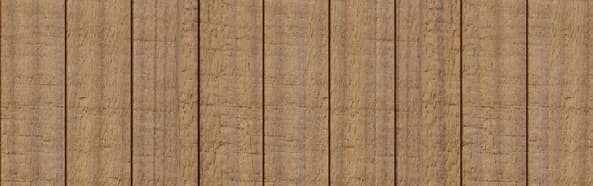
Thermally Modified Clear Radiata is selected for a cleaner visual field, a characteristic that is particularly beneficial for privacy screens where a consistent, contemporary surface is often desired. The thermal modification process enhances the material's stability by reducing its moisture response compared to unmodified wood. This improved stability helps the wood maintain its shape and dimensions, which is important for the longevity and appearance of an outdoor structure like a privacy screen.
The understated, consistent grain of Clear Radiata allows for continuous architectural lines, which can contribute to a modern aesthetic in a privacy screen. Its natural tone can be left to weather or finished to achieve a specific look, providing design flexibility for various outdoor settings.
While Thermally Modified Radiata offers material benefits, the structural design of any privacy screen, including its supports and wind load resistance, must be engineered separately by a qualified professional to ensure safety and performance.
Available Profiles and Visual Impact
Thermally Modified Clear Radiata is available in several profiles that can be adapted for privacy screen designs. The "S4S E4E" (Surfaced Four Sides, Eased Four Edges) profiles are often suitable for slat systems, offering smooth, consistent dimensions. Common nominal sizes include 5/4 × 6 and 2 × 6, which can provide robust slats or framing elements for a screen. Larger sizes like 1 × 8 and 1 × 12 are also available for trim and moulding applications, which might be incorporated into the screen's frame or decorative elements.
The choice of profile directly influences the visual density and light transmission of the screen. Thicker profiles create a more substantial barrier, while narrower or spaced slats allow for more light and air flow, creating a semi-private effect. The consistent clear appearance of Radiata helps ensure that even when slats are spaced, the overall impression remains cohesive and refined.
Designing for Privacy and Light
The primary function of a privacy screen is to control views, but it also influences light and air circulation. With Thermally Modified Radiata, you can design screens that range from solid panels to open slat designs.
For a balance of privacy and light, varying the spacing between slats is effective. A common approach is to use slats with a gap equal to half their width, allowing some visibility and light while still obscuring direct views. The inherent stability of thermally modified wood helps maintain these precise gaps over time, contributing to a consistent visual effect.
Consider the angle of the sun and prevailing winds when designing your screen. Orienting slats at an angle can block specific sightlines while still allowing light from other directions. For example, horizontal slats angled downwards can block views from above while maintaining an open feel from below.
Structural Support and Installation Considerations
While Thermally Modified Radiata provides the aesthetic and material benefits for the screen itself, the structural integrity of the entire assembly depends on appropriate framing and supports. The screen material must be securely fastened to a robust framework capable of resisting wind loads and other environmental forces. This framework is typically constructed from treated lumber, metal, or other suitable structural materials.
Fasteners should be chosen for their compatibility with thermally modified wood and their resistance to outdoor conditions. Stainless steel fasteners are often recommended to prevent staining and ensure long-term durability. It is important to pre-drill pilot holes to prevent splitting, especially when working near board ends or edges.
Proper ventilation behind any solid screen sections is crucial to prevent moisture accumulation. If using a rainscreen-style assembly for privacy panels, ensure an adequate air gap is maintained. For slat designs, the inherent gaps often provide sufficient air movement.
Worked Example: A 10-Foot Privacy Screen
Let's consider a hypothetical privacy screen project for a 10-foot long section, with a desired height of 6 feet above ground. The goal is to create a semi-private barrier using Thermally Modified Clear Radiata S4S E4E 1x6 boards, spaced to allow some light.
Assumptions:
Screen dimensions: 10 feet wide x 6 feet high (excluding posts/frame)
Material: Thermally Modified Clear Radiata S4S E4E 1x6 (nominal 1 inch thick, 5.5 inches actual width)
Vertical boards calculation:
Each 1x6 board is 5.5 inches wide.
For a 10-foot (120-inch) width, the number of modules is 120 / 7 = 17.14. To maintain consistent spacing, you might adjust the total width slightly, or adjust the gap size.
Total width of 17 boards: 17 * 5.5 inches = 93.5 inches.
Each board needs to be 6 feet long. If purchasing 12-foot lengths, each 12-foot board yields two 6-foot pieces, minimizing waste.
Total boards needed: 17 boards * (6 feet / 12 feet per board) = 8.5 boards. You would purchase 9 full 12-foot boards.
This example illustrates how to plan for material quantities and spacing. Always account for fasteners, structural framing, and potential waste due to cuts or imperfections when ordering materials.
Before you order
- Determine the primary function: full privacy, semi-privacy, or decorative screen?
- Evaluate desired visual aesthetic: modern, natural, slatted, or solid?
- Measure the area for the screen, noting height, width, and any obstructions.
- Consider sun exposure and prevailing wind direction for slat orientation and structural design.
- Select Thermally Modified Radiata profile (e.g., S4S E4E 1x6, 2x6) based on desired visual impact and structural needs.
- Plan slat spacing or panel configuration to achieve desired privacy and light transmission.
- Consult with a structural engineer for appropriate framing, posts, and foundation details to withstand local conditions.
- Choose compatible fasteners (e.g., stainless steel) and plan for pre-drilling.
- Decide on a finish (clear sealant, stain) or allow the wood to weather naturally.
- Factor in potential waste for cuts when calculating material quantities.
Confirm installation details, approved uses and warranty terms in the current instructions for the exact product and profile. Your installer should verify the substrate, structure and applicable project requirements.
Questions to help you decide
Can Thermally Modified Radiata be left unfinished for a privacy screen?
Yes, Thermally Modified Radiata can be left unfinished. Over time, it will naturally weather to a silver-gray patina, similar to other wood species exposed to the elements. Applying a UV-protective finish can help maintain its original warm tone if desired, but is not structurally required for the wood itself.
How does Thermally Modified Radiata compare to other wood species for privacy screens?
Thermally Modified Radiata offers improved dimensional stability compared to unmodified softwoods, which helps reduce warping and cupping in outdoor applications like privacy screens. Its clear appearance provides a consistent, modern aesthetic. Other species may offer different grain patterns, natural durability, or cost points, so the best choice depends on specific project requirements and budget.
Are there specific maintenance requirements for a Thermally Modified Radiata privacy screen?
Maintenance for a Thermally Modified Radiata privacy screen is generally low. If left unfinished, occasional cleaning to remove dirt, mold, or mildew with a mild soap and water solution is typically sufficient. If a finish is applied, it will require reapplication periodically according to the manufacturer's recommendations to maintain its appearance and protective properties.
Start Your Privacy Screen Project with Thermally Modified Radiata
Ready to design your privacy screen? Request a material quote today. Provide your project dimensions, desired Thermally Modified Radiata profile, and ZIP code to confirm current availability and service options. For design assistance, consider our complementary products like siding and cladding, additional thermally modified wood options, and Maximo Accoya for other outdoor applications.
Request a material quote →