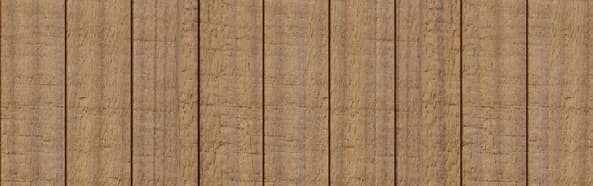
Understanding Thermally Modified Clear Radiata's Natural Aesthetic
Thermally Modified Clear Radiata is selected specifically for its clear visual field, meaning fewer knots and a more uniform appearance. This characteristic is key to achieving a 'natural look' that is simultaneously contemporary and understated. The thermal modification process further enhances this by giving the wood a consistent, rich brown tone throughout its thickness, which can deepen with certain finishes or age into a silvery-gray patina if left unfinished.
The grain of Radiata Pine is generally straight and fine, contributing to a smooth, consistent surface. This makes it a versatile choice for designs where a continuous architectural line is desired, whether for siding, soffits, or custom slat systems. Unlike some woods with prominent, swirling grain patterns, Thermally Modified Clear Radiata provides a calm backdrop that highlights the form of the structure itself.
The 'natural look' with this material is about celebrating the wood's inherent texture and subtle variations, rather than masking them. It's a choice for projects that aim for an elegant simplicity, allowing the material's integrity to speak for itself.
Profiles for a Clean, Natural Elevation
The profile of the Thermally Modified Radiata material plays a significant role in defining the final look of your elevation. Different profiles create distinct shadow lines and surface textures, influencing how light interacts with the facade and, consequently, its perceived naturalness.
For siding and ceilings, the "Nickel Gap × Square Back" profile is a popular choice. This profile creates a clean, consistent gap between boards, resulting in a linear and modern aesthetic that still highlights the individual wood pieces. The precise spacing offers a subtle shadow line that emphasizes the material's natural texture without being overly rustic.
For applications like decking, trim, and structural details, "S4S E4E" (Surfaced Four Sides, Eased Four Edges) profiles are available in various nominal sizes, such as 5/4 × 6 and 2 × 6 for decking, and 1 × 8, 1 × 12, or 2 × 6 for trim. These smooth, square-edged boards allow for custom applications and detailing, where the natural appearance comes from the sheer simplicity and quality of the wood itself.
The flexibility in milling also allows for custom slat systems, where the natural, clear appearance of the Radiata can be used to create intricate patterns or screens while maintaining a cohesive visual theme. This allows designers to coordinate various elements across a project, from cladding to decorative features, using the same base material.
Finishing Choices and Their Impact on Natural Appearance
The decision to apply a finish, and which type of finish, significantly impacts how the "natural look" of Thermally Modified Clear Radiata evolves over time. Each approach offers a different interpretation of natural beauty.
Leaving the material unfinished allows it to naturally weather to a silvery-gray patina over time. This is arguably the most 'natural' appearance, as it reflects the wood's interaction with the elements. The initial rich brown tone from the thermal modification will gradually fade as the surface oxidizes. This option is often chosen for projects seeking a low-maintenance, organic aesthetic.
Applying a clear or transparent finish can help preserve the warm, consistent brown color imparted by the thermal modification process. These finishes protect the wood from UV radiation and moisture, slowing down the weathering process and maintaining the initial color longer. Such finishes require periodic reapplication to sustain their protective qualities and aesthetic.
Semi-transparent stains can enhance the wood's natural grain while introducing a subtle tint. This allows for a degree of color customization while still letting the authentic wood character show through. Opaque paints or solid stains, while providing robust protection, would largely mask the natural grain and texture, moving away from a truly natural look.
Worked Example: Designing a Natural-Look Siding Elevation
Consider a hypothetical residential project aiming for a modern, natural-look facade on a 20-foot wide by 10-foot high wall section. The goal is to achieve a clean, linear appearance using Thermally Modified Clear Radiata siding.
This profile provides a subtle shadow line that emphasizes the wood's natural character without overwhelming the clean aesthetic.
To cover the 20-foot width, we would need approximately 44 boards (20 feet * 12 inches/foot / 5.5 inches/board = 43.6 boards, rounded up). Assuming standard board lengths of 10, 12, or 16 feet are available, using 10-foot boards would be efficient for minimal waste on the height. However, for horizontal installation across the 20-foot width, we would need multiple 10-foot boards per row, or longer boards cut to fit.
For a horizontal layout, if we use 10-foot long boards, each row would require two boards. Each row is 20ft long. If we use 10ft boards, we need 2 boards per row. So 22 rows * 2 boards/row = 44 boards of 10ft length. This calculation is a simplified area-equivalent and does not account for specific cutting plans, starter strips, or waste factors which are crucial for actual ordering.
For a truly natural look that evolves, the client might choose to leave the siding unfinished, allowing it to weather to a graceful silver-gray patina over time. Alternatively, a clear, penetrating oil could be applied to enhance the rich brown tones and offer initial protection, with a plan for reapplication every few years to maintain the color.
Comparing Thermally Modified Radiata with Other Materials
When aiming for a natural-look elevation, Thermally Modified Clear Radiata stands out for its consistent grain and clear appearance, which is distinct from other wood species or manufactured alternatives.
Compared to unmodified softwoods, Thermally Modified Radiata offers improved stability, meaning less expansion and contraction with changes in moisture. This contributes to a more consistent facade over time, reducing the likelihood of gaps or warping that could detract from a clean, natural aesthetic. The thermal modification also imparts a uniform color throughout the wood, which is not typically found in untreated timber.
In contrast to many composite or engineered siding products, Thermally Modified Radiata provides the authentic look and feel of real wood. While manufactured materials can offer consistency, they often lack the subtle variations and inherent warmth that only natural wood can provide. For projects prioritizing genuine wood character, even in a refined context, Thermally Modified Radiata bridges the gap between raw natural wood and engineered uniformity.
For projects aiming for a 'natural' look, the choice often comes down to the desired level of grain visibility and color consistency. If a very pronounced grain or a specific color variation is preferred, other wood species might be considered. However, for a clear, understated, and stable natural wood surface, Thermally Modified Radiata is a strong contender.
Before you order
- Do you prefer a consistent, clear wood grain over pronounced knots and patterns?
- Is a contemporary and understated natural aesthetic a priority for your elevation?
- Are you comfortable with the wood weathering to a silvery-gray patina if left unfinished, or committing to periodic maintenance for color retention?
- Does your design benefit from linear profiles and subtle shadow lines?
- Is improved dimensional stability important for your project's long-term appearance?
- Have you considered how Thermally Modified Radiata's natural tone will complement other materials in your design?
- Have you planned for the desired finish (or lack thereof) and its implications for maintenance and appearance over time?
Confirm installation details, approved uses and warranty terms in the current instructions for the exact product and profile. Your installer should verify the substrate, structure and applicable project requirements.
Questions to help you decide
What does 'clear appearance' mean for Thermally Modified Radiata?
A 'clear appearance' refers to the selection of Thermally Modified Radiata boards that have fewer knots and natural imperfections, resulting in a more uniform and consistent visual surface. This quality is desirable for modern architectural designs where clean lines and an understated aesthetic are prioritized.
Can Thermally Modified Radiata be painted for a different look?
While Thermally Modified Radiata can be painted, doing so would largely obscure its natural grain and the distinct brown tone achieved through thermal modification. If a painted finish is desired, it's important to consider if the benefits of a clear wood appearance are still relevant to the project or if a different material might be more suitable for an opaque finish.
How does thermal modification contribute to a natural look?
Thermal modification gives the Radiata wood a consistent, rich brown color throughout its thickness, which looks natural and uniform. It also improves the wood's stability, reducing its tendency to swell or shrink with moisture changes. This enhanced stability helps maintain the integrity of the installation, ensuring that the 'natural look' remains consistent without excessive warping or gapping over time.
Request a Material Quote for Your Natural-Look Elevation
Ready to bring the refined natural aesthetic of Thermally Modified Clear Radiata to your project? Contact us with your project dimensions, desired profile, and ZIP code to request a material quote. We can help confirm current availability and service options for your specific needs. Explore our full range of Thermally Modified Wood products, including the versatile Clear Radiata, suitable for various applications from siding to custom trim.
Request a material quote →