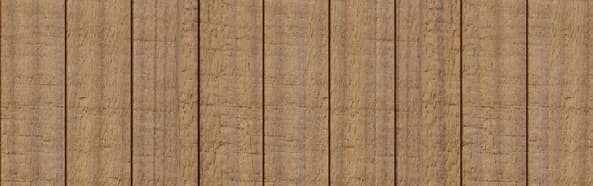
Why Thermally Modified Radiata for Interiors?
Thermally Modified Clear Radiata is selected for its clean, consistent grain, offering a restrained surface ideal for modern, continuous installations. The thermal modification process enhances the wood's stability, resulting in a lower moisture response compared to unmodified material. This improved stability is beneficial for interior applications, where consistent aesthetics and minimal movement are often desired.
Unlike some other wood options, Thermally Modified Clear Radiata presents a clear appearance, allowing for an understated grain that complements various interior design styles. Its natural tone can serve as a neutral backdrop or be enhanced with finishes to achieve a specific look. This material is noted for its suitability in cladding, ceilings, and custom slat systems, which are all relevant to interior feature wall concepts.
Selecting the Right Profile for Your Feature Wall
The choice of profile significantly impacts the final aesthetic of an interior feature wall. Thermally Modified Clear Radiata is available in several profiles, each offering a distinct visual effect. This profile creates a clean shadow line that can enhance the perception of continuous architectural lines.
Other profiles like "S4S E4E" (Surfaced Four Sides, Eased Four Edges) in various dimensions (e.g., 1 × 8, 1 × 12, 2 × 6) are typically designated for trim and molding applications, or even decking and structural details. While these could theoretically be adapted, the Nickel Gap profile is designed to deliver the characteristic linear appearance often sought for feature walls and ceilings. Custom milling can also be explored to coordinate slats, trim, and field profiles, offering design flexibility.
Design Considerations: Layout and Visual Impact
When planning your interior feature wall, consider the orientation of the boards. Horizontal installation can make a room feel wider, while vertical installation can visually increase ceiling height. The "clear appearance" and "restrained surface" of Thermally Modified Clear Radiata lend themselves well to both orientations, creating a contemporary and consistent look.
Think about how the feature wall will interact with other elements in the room, such as furniture, lighting, and adjacent wall finishes. The natural tone of the wood provides a versatile base, allowing for a range of complementary colors and textures. For custom slat systems, the spacing between slats can be adjusted to create different levels of visual interest and light diffusion, adding depth to the wall.
Finishing Options for Interior Applications
While Thermally Modified Clear Radiata offers a natural aesthetic, it can be finished to match or complement your interior palette. For interior use, a clear sealant or a light stain can protect the wood while allowing its grain to show through. Alternatively, a painted finish can completely transform its appearance, offering a smooth, uniform surface.
When selecting a finish, consider the desired level of sheen and durability. For high-traffic areas or spaces where the wall might be frequently touched, a more durable finish might be appropriate. Always test any finish on a scrap piece of wood to ensure the desired outcome before applying it to the entire feature wall. For interior applications, water-based finishes are often preferred for their low odor and quicker drying times.
Worked Example: Designing a Living Room Feature Wall
Imagine a living room with a main wall measuring 10 feet wide and 8 feet high. The homeowner desires a modern, linear feature wall using Thermally Modified Clear Radiata with a Nickel Gap profile.
To cover the 10-foot (120-inch) width, we divide 120 inches by 5.5 inches per board, which equals approximately 21.8 boards. Since boards must be purchased in full lengths, we'll round up to 22 boards for the width. For the 8-foot height, if we plan a vertical installation, each board will be 8 feet long. It is always recommended to add an additional 10-15% for cuts, waste, and future repairs. This example assumes a simple, continuous installation without complex cuts around windows or doors.
Before you order
- Confirm Thermally Modified Clear Radiata's suitability for your specific interior environment.
- Select the appropriate profile (e.g., Nickel Gap for linear aesthetics) and nominal size.
- Determine the desired orientation (horizontal or vertical) for the feature wall.
- Consider the aesthetic interaction with existing interior elements and lighting.
- Choose a finish that complements your interior design and offers necessary protection.
- Calculate material quantities, including an allowance for waste and cuts.
- Plan for proper fastening and substrate preparation suitable for interior wood cladding.
Confirm installation details, approved uses and warranty terms in the current instructions for the exact product and profile. Your installer should verify the substrate, structure and applicable project requirements.
Questions to help you decide
Does Thermally Modified Radiata require a finish for interior use?
While Thermally Modified Clear Radiata offers improved stability, applying a finish for interior use is a design choice. A clear sealant can protect the wood and maintain its natural appearance, while stains or paints can alter its color to match your aesthetic. Finishing can also provide a layer of protection against minor scuffs or dirt.
Can Thermally Modified Radiata be used in high-humidity interior areas like bathrooms?
Thermally Modified Clear Radiata has improved stability and lower moisture response compared to unmodified wood. While this makes it more suitable for environments with fluctuating humidity, it is still wood. For high-humidity areas like bathrooms, ensure proper ventilation and consider finishes that offer enhanced moisture resistance to protect the material from prolonged exposure to moisture.
What is the best way to clean an interior feature wall made of Thermally Modified Radiata?
For general cleaning, a soft, dry cloth is usually sufficient to remove dust. For occasional deeper cleaning, a slightly damp cloth with mild soap can be used, ensuring to wipe dry immediately afterward. Avoid abrasive cleaners or excessive moisture, as these can damage the wood or its finish over time. The specific cleaning method may also depend on the type of finish applied.
Ready to Design Your Interior Feature Wall?
Request a material quote for Thermally Modified Clear Radiata. Provide your project dimensions, desired profile, and ZIP code to confirm current availability and service options. Explore our full range of <a href="/siding-and-cladding">siding and cladding</a>, <a href="/thermally-modified-wood">thermally modified wood</a>, and <a href="/brands/norx">NORX products</a> to complete your project. Consider <a href="/products/maximo-accoya">Maximo Accoya</a> for other premium wood needs.
Request a material quote →