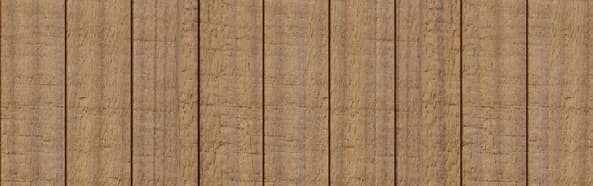
Confirming the Material: Thermally Modified Clear Radiata
Before any order is placed, confirm with your contractor that the specified material is Thermally Modified Clear Radiata. This material is distinct for its clear, consistent grain and improved stability due to the thermal modification process. It is chosen for projects requiring a restrained, contemporary surface, suitable for continuous architectural lines.
Thermally Modified Clear Radiata is particularly well-suited for applications such as cladding, ceilings, soffits, and custom slat systems where a clean visual field is desired. Its origin from responsibly managed plantations and its specific thermal treatment contribute to its consistent appearance and reduced moisture response compared to unmodified wood. Ensure your contractor understands these core properties to align expectations for handling and installation.
Profile Selection and Application
The profile of Thermally Modified Clear Radiata directly impacts its application and aesthetic. Discuss with your contractor which specific profiles are chosen for each part of your project.
For decking, "S4S E4E" profiles in nominal sizes like 5/4 × 6 or 2 × 6 are typically specified. If your project includes trim or molding, "S4S E4E" in sizes such as 1 × 8, 1 × 12, or 2 × 6 might be appropriate. Custom milling is also an option for coordinating slats, trim, and field profiles, offering design flexibility. Verify that the selected profiles match the design drawings and are suitable for their intended use.
Installation Details and Substructure Compatibility
A critical part of the contractor handoff involves reviewing the installation plan. Thermally Modified Clear Radiata, while stable, still requires proper installation techniques to perform as expected. Discuss the substructure: what kind of framing or sheathing will support the material? Will a rainscreen system be employed for exterior cladding to ensure proper ventilation and drainage?
Confirm details such as fastener type and spacing, ensuring they are appropriate for Thermally Modified Radiata and the chosen substructure. Consider how corners, window and door openings, and wall bases will be finished. For example, proper clearance at the base of a wall is essential for drainage. These details should be explicitly noted in the project plans and reviewed with your contractor to avoid on-site improvisation.
Finishing and Maintenance Considerations
While Thermally Modified Clear Radiata offers a natural, clean appearance, discuss any finishing requirements with your contractor. Will the material be left to weather naturally, or will a finish be applied to maintain its initial color or achieve a specific look? If a finish is chosen, confirm the type of product, application method, and expected maintenance schedule.
Long-term maintenance is also a key discussion point. Even without a finish, understanding how the material will age and what general cleaning might be required is important. Establish who is responsible for communicating maintenance guidelines to you and who will perform any initial post-installation cleaning. This helps set realistic expectations for the material's appearance over time.
Worked Example: Calculating Cladding for a Feature Wall
The total area is 10 ft * 15 ft = 150 square feet.
To calculate the linear footage needed: Divide the total width of the wall (15 feet) by the face width of one board (0.458 feet). This gives approximately 32.75 boards across the width. Since you can't use a fraction of a board, you'd need 33 full boards to cover the width. Each board needs to be 10 feet long for the height. Therefore, you would need 33 boards * 10 feet/board = 330 linear feet.
It is always advisable to add a waste factor, typically 10-15%, to account for cuts, defects, or future repairs. For this example, adding 15% waste: 330 linear feet * 1.15 = 379.5 linear feet. When ordering, you would round up to the nearest available board length and quantity. For instance, if boards are sold in 10-foot lengths, you would order 38 pieces, totaling 380 linear feet. Always confirm exact dimensions and waste factors with your contractor and supplier before ordering.
Before you order
- Confirm material is Thermally Modified Clear Radiata.
- Verify specific profiles for each application (e.g., Nickel Gap for siding, S4S E4E for decking/trim).
- Review and approve detailed installation drawings, including substructure, fasteners, and flashing.
- Discuss and agree upon corner details, window/door trim, and wall base clearances.
- Decide on any desired finishes, application methods, and future maintenance expectations.
- Confirm waste factor percentage for material ordering and review quantity take-offs.
- Establish delivery logistics and on-site material storage plan with the contractor.
- Review any required product documentation or manufacturer guidelines with your contractor.
- Agree on a communication plan for any unforeseen site conditions or design changes.
Confirm installation details, approved uses and warranty terms in the current instructions for the exact product and profile. Your installer should verify the substrate, structure and applicable project requirements.
Questions to help you decide
What makes Thermally Modified Clear Radiata different from standard Radiata pine?
Thermally Modified Clear Radiata undergoes a high-temperature treatment process without chemicals. This process improves its dimensional stability, making it less prone to swelling and shrinking in response to moisture changes. It also enhances its durability and gives it a consistent, attractive color throughout the wood, while maintaining a clear, understated grain. Standard Radiata pine does not have these enhanced properties.
Can Thermally Modified Clear Radiata be used in all climates?
Thermally Modified Clear Radiata's improved stability makes it suitable for a wide range of climates. However, proper installation, including adequate ventilation in exterior applications like rainscreens, remains crucial regardless of climate. In coastal areas, consider salt exposure; in cold climates, ensure proper detailing for snow and ice. Always consult with your contractor regarding specific local conditions and best practices for installation.
Is Thermally Modified Clear Radiata suitable for structural use?
While some larger S4S E4E profiles (e.g., 2 × 6) are listed for "Decking and structural details," the primary benefit of Thermally Modified Clear Radiata is its enhanced stability and appearance for non-structural applications such as cladding, ceilings, soffits, and trim. For any primary structural elements, always consult with a structural engineer to ensure appropriate sizing and material selection. Thermally modified wood properties can differ from untreated lumber.
Ready to Plan Your Thermally Modified Radiata Project?
Request a material quote today. Provide your project dimensions, exact profile selections, and ZIP code to confirm current availability and service options for Thermally Modified Clear Radiata. We can help you get started on your material order.
Request a material quote →