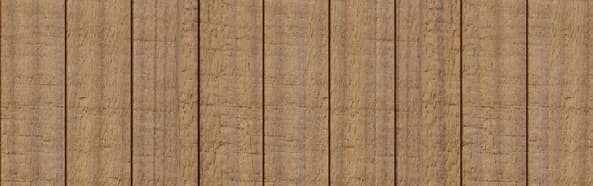
Understanding Thermally Modified Radiata for Exterior Use
Thermally modified Radiata is Pinus radiata wood that has undergone a high-temperature treatment process. This modification alters the wood's cellular structure, which can result in improved stability and a lower moisture response compared to unmodified material. These characteristics make it a candidate for exterior applications like cladding, where dimensional stability is important.
The material is selected for a clear visual field, providing a consistent grain appearance suitable for modern, continuous installations on walls, ceilings, and soffits. It is available in various profiles, including Nickel Gap and S4S E4E, to suit different aesthetic and functional requirements.
While thermally modified Radiata exhibits improved stability, it is still a wood product. It will respond to changes in ambient moisture and temperature, though often to a lesser degree than untreated wood. This inherent characteristic must be accounted for in cold-climate wall assemblies.
Moisture Management in Cold-Climate Wall Assemblies
Cold climates present unique challenges for moisture management. Vapor drive can reverse seasonally, and condensation can occur within wall cavities if not properly addressed. For any wood cladding, including thermally modified Radiata, a robust rainscreen assembly is generally recommended.
A rainscreen system creates a ventilation gap behind the cladding, allowing air circulation to dry out any incidental moisture that penetrates the outer layer. This gap also helps to equalize pressure across the cladding, reducing the driving force of wind-driven rain. Proper detailing at windows, doors, and corners is essential to prevent water ingress into the wall assembly.
The use of a high-quality weather-resistive barrier (WRB) is fundamental. This barrier acts as the primary plane of water protection, shedding water away from the structural components of the wall. Ensure the WRB is continuous and properly integrated with flashing details around openings and at material transitions.
Thermal Movement and Installation Gaps
Despite its enhanced stability, thermally modified Radiata will experience some expansion and contraction due to temperature changes, particularly in cold climates with large diurnal and seasonal temperature swings. These movements are typically more pronounced across the width of the board than along its length.
To accommodate this movement and prevent buckling or splitting, it is often recommended to incorporate appropriate spacing between cladding boards. For Nickel Gap profiles, the inherent gap often provides some allowance. For S4S profiles installed as open-joint cladding, specific gap dimensions should be followed based on manufacturer guidelines and local climate conditions. When installed as a closed-joint system, a small expansion gap at butt joints and corners can be beneficial.
Fastening methods also play a role. Using blind fasteners or specific fastening patterns can allow for some movement while keeping the cladding securely attached. Always consult the specific installation instructions for the chosen profile and manufacturer to determine recommended fastener types and spacing.
Choosing the Right Profile for Cold Climates
The choice of cladding profile can influence both appearance and performance in a cold climate. For thermally modified Radiata, common profiles include Nickel Gap and S4S E4E.
Nickel Gap profiles create a consistent shadow line and can offer some protection against direct water penetration, while the gap itself can contribute to drainage and ventilation. S4S E4E (smooth on four sides, eased four edges) boards offer versatility for various applications, including trim, moulding, or as part of a custom slat system. When used as cladding, S4S boards can be installed with an open joint for a modern aesthetic, which inherently provides ventilation, or as a tight-joint system with proper detailing.
Consider how snow and ice accumulation might interact with the chosen profile. Profiles with deep recesses might trap snow, potentially leading to prolonged moisture exposure. A profile that promotes shedding of water and ice is generally preferred in areas prone to heavy snowfall.
Worked Example: Thermally Modified Radiata on a Cold-Climate Wall
The project aims for a rainscreen assembly.
First, the wall requires a continuous weather-resistive barrier, properly shingled and taped. These strips should be spaced to align with the fastening points of the cladding, often at 16 or 24 inches on center. Horizontal furring might be needed at specific points for window and door detailing.
For a 20-foot (240-inch) wide wall, this would theoretically require 240 / 5.5 (actual coverage) = 43.6 boards horizontally. Rounding up, we would plan for 44 boards across, necessitating some cuts. Vertically, for a 10-foot (120-inch) height, if boards are installed horizontally, multiple courses will be needed. If boards are installed vertically, 120-inch lengths would be appropriate. Assuming a horizontal installation, each course would be 5.5 inches tall, so 120 / 5.5 = 21.8 courses. Plan for 22 courses. This example highlights the need for careful measurement and cut planning to minimize waste and ensure proper module alignment.
Fastening would involve stainless steel screws or nails, blind-fastened through the tongue or face-fastened, depending on the desired aesthetic and manufacturer recommendations. At corners, mitered joints or trim boards made from matching thermally modified Radiata (e.g., 1x8 S4S E4E) could be used.
This example simplifies the process; actual projects require detailed drawings, material take-offs, and adherence to local building codes.
Before you order
- Is a rainscreen assembly planned for moisture management?
- Are specific installation gaps considered for thermal movement?
- Is the chosen cladding profile suitable for shedding snow and ice?
- Are all flashing details around openings and at transitions properly designed?
- Have fastening methods been selected to accommodate wood movement?
- Is there a plan for adequate clearance at the base of the wall?
- Are local building codes and climate-specific requirements reviewed?
Confirm installation details, approved uses and warranty terms in the current instructions for the exact product and profile. Your installer should verify the substrate, structure and applicable project requirements.
Questions to help you decide
Does thermally modified Radiata require a finish in cold climates?
While thermally modified Radiata can be left unfinished to weather to a silver-gray patina, applying a finish can help maintain its initial appearance and offer additional protection from UV exposure and surface dirt. In cold climates, a finish can potentially reduce moisture uptake on the surface, though it will not eliminate the need for a proper rainscreen assembly. Always choose a finish designed for exterior wood and suitable for your climate.
How does thermally modified Radiata compare to other wood species for cold-climate cladding?
Thermally modified Radiata offers improved stability and a clear, consistent grain compared to some unmodified wood species. Its reduced moisture response can be an advantage in climates with significant moisture fluctuations. However, other thermally modified woods or naturally durable species may also be suitable. The best choice often depends on specific project requirements, aesthetic preferences, and budget. Always compare material properties and installation requirements.
What is the importance of ventilation behind thermally modified Radiata cladding?
Ventilation behind cladding, typically achieved through a rainscreen gap, is critical in cold climates. It allows any moisture that penetrates the cladding to dry out, preventing accumulation within the wall cavity. This helps mitigate issues like mold, rot, and freeze-thaw damage to the wall structure. The air gap also contributes to pressure equalization, reducing the risk of water being driven into the wall assembly by wind.
Plan Your Cold-Climate Wall with Thermally Modified Radiata
Ready to specify thermally modified Radiata for your project? Request a material quote with your project dimensions, exact profile, and ZIP code to confirm current availability and service options. We can help you understand the material requirements for your cold-climate wall.
Request a material quote →