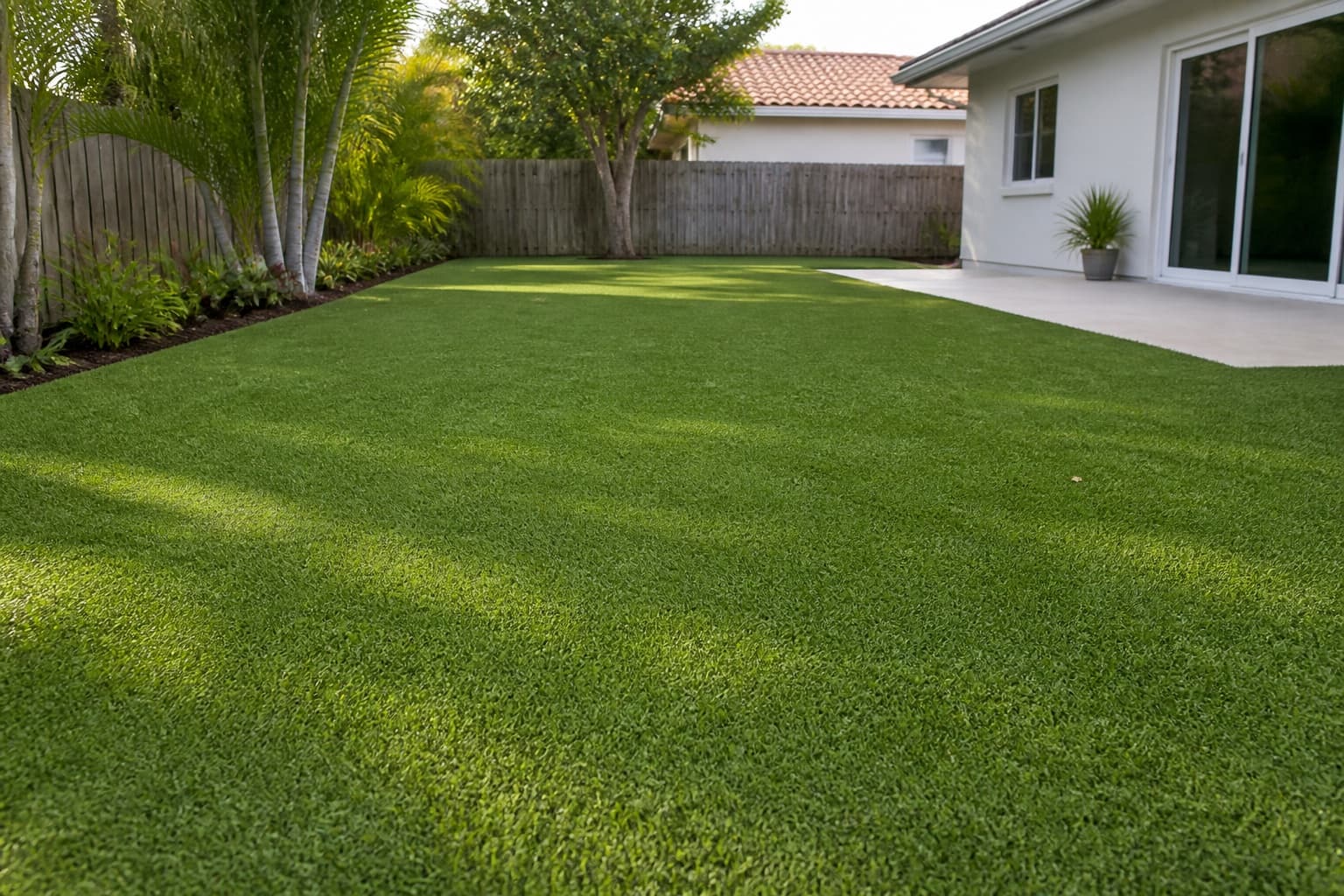
Understanding Fiber Profiles and Appearance
The individual fibers, often called 'blades,' are the primary component determining artificial turf's texture and appearance. These fibers come in various shapes and sizes, each designed to replicate natural grass while offering specific performance characteristics. Some common profiles include flat, c-shaped, s-shaped, or even diamond-shaped blades. Each profile influences how the turf reflects light, how it feels underfoot, and its resilience to compression.
For instance, a turf with a flatter, wider blade might offer a more uniform, manicured look, while a turf with a multi-directional or textured blade can mimic the varied appearance of natural grass more closely. The choice of fiber profile is a balance between aesthetics and functionality.
Density and Pile Height: Impact on Look and Feel
Density refers to how closely packed the turf fibers are. A higher density generally creates a fuller, more luxurious appearance and can contribute to better resilience, as the fibers support each other. Conversely, a lower density might offer a more sparse or economical look.
Pile height is the length of the individual turf blades. Shorter pile heights often result in a tidier, more compact look, suitable for high-traffic areas or putting greens. Longer pile heights tend to create a softer, more natural, and lush appearance, often preferred for residential lawns or play areas. The combination of density and pile height is crucial for achieving the desired aesthetic and tactile experience.
Comparing Artificial Turf Options: Texture and Use
Lumber Plus offers several artificial turf options, each with distinct texture and appearance characteristics suited for different applications.
The Celtic turf option is described as having a soft feel, making it suitable for both indoor and outdoor projects, including spaces frequented by pets. Its texture aims for comfort and a pleasant tactile experience.
Wembley turf is noted for its performance and resistance to wear and tear. This suggests a denser, more robust texture designed to withstand consistent use while maintaining a green appearance year-round, suitable for various indoor and outdoor projects.
Stanford turf features a 'majestic cross-section' that contributes to a natural and dense appearance. This collection is highlighted for its high durability and consistent green color, indicating a texture that combines visual appeal with resilience.
Anfield turf is described as a graceful option offering superb durability and brightness. Its texture aims to provide a vibrant, attractive look for any space throughout the year, balancing aesthetic appeal with practical longevity.
When considering these options, think about the primary function of your turf area. Is it for active play, pet use, or primarily for visual enhancement? The intended use will guide your choice of texture and appearance.
Color and Sheen: Contributing to Natural Appearance
While often overlooked, the specific shade of green and the sheen of the artificial turf fibers greatly influence its overall natural appearance. Different turfs may incorporate multiple shades of green, sometimes with tan or brown thatch layers at the base, to mimic the variegated look of natural grass.
The sheen, or how light reflects off the fibers, also plays a role. Some turfs are designed to have a lower sheen to reduce glare and appear more matte, similar to real grass, while others might have a slight sheen that can enhance their vibrancy. Observing samples in different lighting conditions can help you assess these characteristics accurately.
Worked Example: Choosing Turf for a Family Play Area
Imagine you are planning a 20-foot by 15-foot family play area in a backyard. The primary goals are a soft surface for children, durability against moderate foot traffic, and a natural, inviting appearance. You want a turf that feels comfortable for bare feet but can also withstand occasional outdoor toys and running.
Based on the descriptions, the Celtic turf, with its 'soft feel' and suitability for 'enjoying the outdoors with their pets,' would be a strong contender for comfort. However, for 'great performance and resistance to wear & tear' combined with a year-round green, Wembley might be a better fit if durability is a higher priority than extreme softness. If the goal is a balance of natural density and durability, Stanford, with its 'majestic cross-section' and 'high durability,' could also be considered.
To make the final decision, you would request samples of Celtic, Wembley, and Stanford. Laying these samples in the actual project area and observing them throughout the day would reveal how light affects their appearance and how they feel underfoot. For a 20x15 foot area, measuring 300 square feet, you would then calculate the required rolls based on the available roll widths, minimizing seams and cuts. If rolls are typically 15 feet wide, you would need two 20-foot long rolls, or 300 square feet, potentially with some offcuts for smaller sections or future repairs, assuming minimal waste.
Before you order
- What is the primary use of the area (e.g., play, pets, aesthetics, high-traffic)?
- What level of softness or resilience is desired?
- Do you prefer a uniform, manicured look or a more varied, natural appearance?
- What pile height is appropriate for the intended use and desired aesthetic?
- How does the turf's color and sheen appear in different lighting conditions?
- Have you obtained physical samples to assess texture and appearance firsthand?
- Will the chosen turf meet the durability requirements for expected foot traffic?
- How does the turf's cross-section contribute to its overall density and natural look?
- Are there specific environmental factors (e.g., shade, full sun) that might impact appearance?
- What are the roll width options and how do they impact seam placement for your project dimensions?
Confirm installation details, approved uses and warranty terms in the current instructions for the exact product and profile. Your installer should verify the substrate, structure and applicable project requirements.
Questions to help you decide
How can I tell if artificial turf will look natural?
To assess natural appearance, look at the blend of fiber colors, the presence of a thatch layer, and the blade profile. Turf with multiple shades of green and brown, varying blade shapes, and a non-uniform texture often appears more natural. Always view a physical sample in different lighting conditions, including the setting where it will be installed, to see how it reflects light and integrates with its surroundings.
Does artificial turf texture affect its durability?
Yes, artificial turf texture can affect its durability. Turfs designed for high traffic often feature denser construction and specific fiber profiles (e.g., c-shaped or s-shaped) that are engineered for resilience and to 'spring back' after compression. Softer, less dense turfs might prioritize comfort over extreme wear resistance. Always match the turf's texture and density to the expected level of use for optimal performance and longevity.
Can I get samples of different artificial turf textures?
Yes, requesting samples is highly recommended. Physical samples allow you to feel the texture, observe the color and sheen in your project's lighting, and compare different options side-by-side. This hands-on evaluation is crucial for making an informed decision about the look and feel of your chosen artificial turf.
Ready to Transform Your Outdoor Space?
Request a material quote today with your project dimensions, desired turf profile, and ZIP code. Confirm current availability and service options to start your project.
Request a material quote →