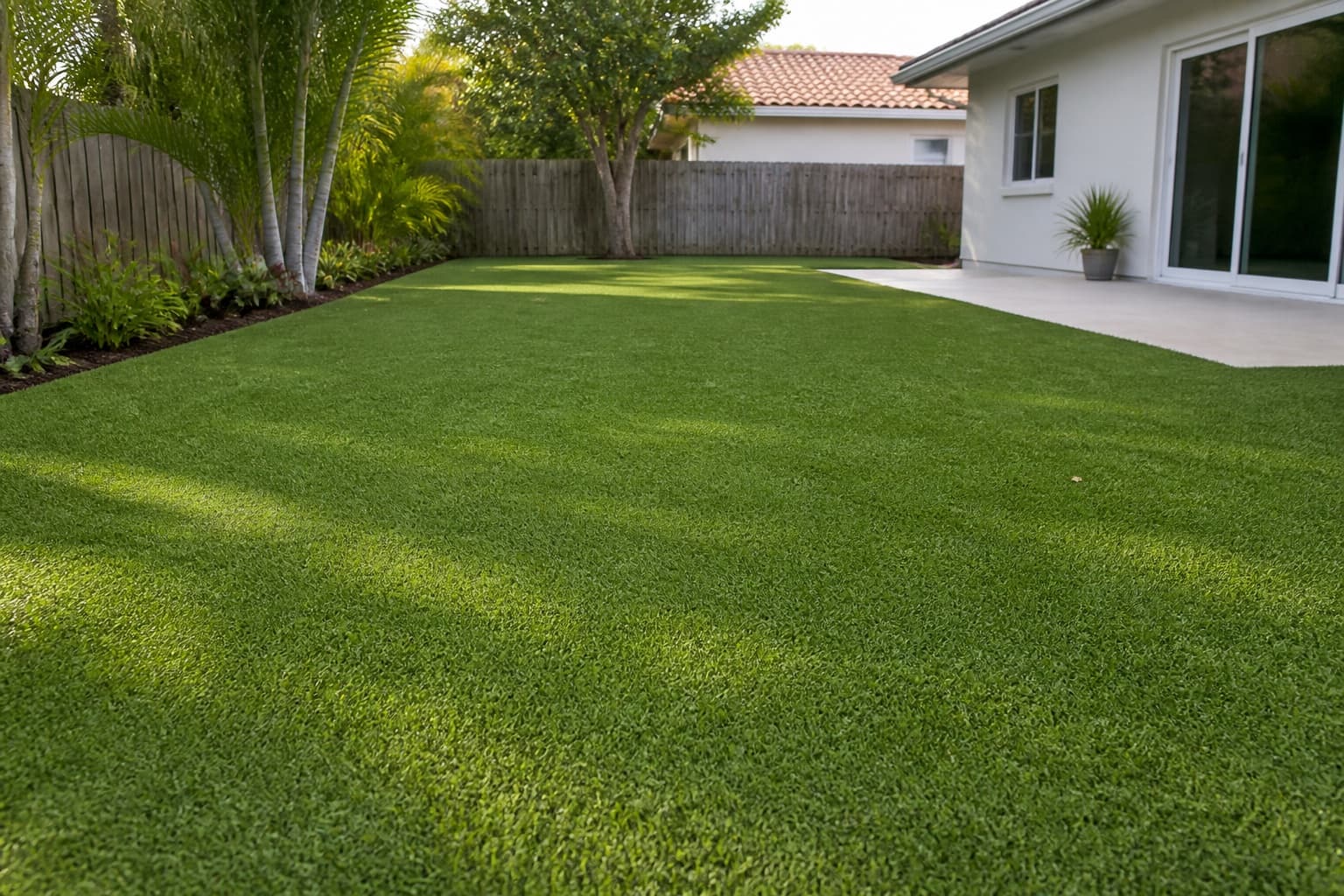
Understanding Artificial Turf Material Costs
The primary component of your artificial turf budget will be the turf itself. Artificial turf is typically sold in rolls of various widths and lengths. To estimate this cost, you need accurate measurements of your project area. It's not just about square footage; you must consider how the roll widths align with your dimensions to minimize waste and seam lines.
Lumber Plus offers several professional artificial turf options for residential, pet, and high-traffic applications. For instance, the Anfield turf provides durability and brightness, while Wembley offers performance and resistance to wear and tear. Stanford has a natural, dense appearance, and the pet-friendly option is designed for enjoyable outdoor spaces. Each type has distinct characteristics that may influence its cost per square foot.
When calculating, always account for cuts and potential waste. For example, if your area is 10 feet by 12 feet, and the turf comes in 15-foot wide rolls, you'll need to purchase a section of a 15-foot roll that is at least 12 feet long, even if you only use 10 feet of its width. This would be 15 feet x 12 feet = 180 square feet, not just 120 square feet.
It is always advisable to order a small percentage extra, typically 5-10%, to account for unforeseen cuts, errors, or future repairs. This small buffer can prevent project delays and additional shipping costs if you run short.
Essential Accessories and Infill
Beyond the turf rolls, several accessories are necessary for a proper installation and contribute to the overall budget. These include:
Seaming Tape and Adhesive: Used to join turf sections seamlessly, preventing visible lines and ensuring durability. The quantity needed depends on the number and length of seams in your project.
Edging Materials: To create a clean, defined border between the artificial turf and other landscape elements like pavers, garden beds, or concrete. Options range from flexible bender board to more rigid aluminum or plastic edging.
Weed Barrier Fabric: Installed beneath the base layer to prevent weeds from growing through the turf. This is a crucial step for long-term maintenance and should not be overlooked.
Infill Material: This granular material is brushed into the turf fibers after installation. It helps the blades stand upright, provides ballast to hold the turf down, and offers a cushioned feel. Common infill types include silica sand, crumb rubber, or specialized organic infills. The type and quantity of infill will depend on the turf product and its intended use (e.g., pet areas may require specific infills for odor control).
Base Materials: A stable, permeable base is critical for proper drainage and a smooth finish. This typically involves crushed aggregate, such as decomposed granite or crushed limestone, which needs to be compacted. The depth of the base layer will influence the quantity required.
Labor and Installation Costs
Unless you are undertaking a DIY project, labor costs will be a significant part of your budget. Installation involves several stages, each requiring time and skill:
Site Preparation: This includes clearing existing vegetation, leveling the ground, and ensuring proper grading for drainage.
Base Installation: Spreading, compacting, and leveling the aggregate base material.
Turf Laying and Cutting: Unrolling, positioning, and cutting the turf to fit the specific dimensions and contours of your area.
Seaming: Carefully joining turf sections with tape and adhesive.
Infill Application: Spreading and brushing in the infill material.
Edge Finishing: Installing edging materials and securing the turf perimeter.
The cost of labor can vary based on the complexity of the project, the size of the area, local rates, and whether you hire a professional installer or a general landscaper. Obtain multiple quotes from reputable installers to compare services and pricing. Be sure to clarify what is included in their quote (e.g., disposal of old lawn, base materials, infill).
Worked Example: Budgeting for a 300 sq ft Backyard Area
Let's outline a hypothetical budget for installing artificial turf in a rectangular backyard area measuring 15 feet by 20 feet (300 square feet). We'll assume the turf comes in 15-foot wide rolls.
1. Artificial Turf Material:
Area: 15 ft x 20 ft = 300 sq ft.
Since the turf rolls are 15 ft wide, you would need a 20-foot length of a 15-foot wide roll. Purchase quantity: 15 ft x 20 ft = 300 sq ft.
Add 5% for cuts/waste: 300 sq ft * 1.05 = 315 sq ft.
Build this part of the estimate from the current supplier quote. Record the exact product, quoted unit, quantity, compatible accessories and delivery costs separately so assumptions do not become advertised prices.
Build this part of the estimate from the current supplier quote. Record the exact product, quoted unit, quantity, compatible accessories and delivery costs separately so assumptions do not become advertised prices.
2. Accessories and Base Materials:
Build this part of the estimate from the current supplier quote. Record the exact product, quoted unit, quantity, compatible accessories and delivery costs separately so assumptions do not become advertised prices.
Build this part of the estimate from the current supplier quote. Record the exact product, quoted unit, quantity, compatible accessories and delivery costs separately so assumptions do not become advertised prices.
Build this part of the estimate from the current supplier quote. Record the exact product, quoted unit, quantity, compatible accessories and delivery costs separately so assumptions do not become advertised prices.
Build this part of the estimate from the current supplier quote. Record the exact product, quoted unit, quantity, compatible accessories and delivery costs separately so assumptions do not become advertised prices.
Build this part of the estimate from the current supplier quote. Record the exact product, quoted unit, quantity, compatible accessories and delivery costs separately so assumptions do not become advertised prices.
Build this part of the estimate from the current supplier quote. Record the exact product, quoted unit, quantity, compatible accessories and delivery costs separately so assumptions do not become advertised prices.
Build this part of the estimate from the current supplier quote. Record the exact product, quoted unit, quantity, compatible accessories and delivery costs separately so assumptions do not become advertised prices.
3. Labor Costs:
Build this part of the estimate from the current supplier quote. Record the exact product, quoted unit, quantity, compatible accessories and delivery costs separately so assumptions do not become advertised prices.
4. Contingency:
Always add a contingency fund, typically 10-15% of the total material and labor costs. This covers unexpected issues or minor changes.
Build this part of the estimate from the current supplier quote. Record the exact product, quoted unit, quantity, compatible accessories and delivery costs separately so assumptions do not become advertised prices.
Build this part of the estimate from the current supplier quote. Record the exact product, quoted unit, quantity, compatible accessories and delivery costs separately so assumptions do not become advertised prices.
Build this part of the estimate from the current supplier quote. Record the exact product, quoted unit, quantity, compatible accessories and delivery costs separately so assumptions do not become advertised prices.
This example provides a framework. Actual costs will vary based on product choices, local material prices, and labor rates.
The Importance of Contingency Planning
No project budget is complete without a contingency fund. This portion of your budget is set aside to cover unforeseen expenses, which can range from discovering unexpected drainage issues during site preparation to needing extra materials due to a miscalculation or damage during installation. A typical contingency is 10-15% of the total project cost. While you hope not to use it, having this buffer prevents financial stress and keeps your project on schedule if minor issues arise.
Without a contingency, a small problem can quickly derail your budget and timeline. It's an essential part of responsible project planning.
Comparing Artificial Turf Options
Lumber Plus offers a range of artificial turf products designed for different applications:
Anfield: A graceful option known for superb durability and brightness, suitable for enhancing any space.
Wembley: Combines strong performance with resistance to wear and tear, making it a robust choice for various indoor and outdoor projects.
Stanford: Features a majestic cross-section for a natural, dense appearance, offering high durability and a beautiful green color.
Pet-Friendly Turf: Specifically designed for outdoor enjoyment with pets, offering a soft feel and environmental friendliness.
Each product has unique characteristics that influence its suitability for your specific project and its price point. Requesting samples and discussing your project requirements with a Lumber Plus representative can help you select the most appropriate and cost-effective turf for your needs.
Consider the expected foot traffic, whether pets will use the area, and the desired aesthetic when making your selection. Higher density or specialized infills for pet areas, for example, might increase material costs but offer long-term benefits.
Before you order
- Have I accurately measured my project area, accounting for roll widths and potential waste?
- Have I identified all necessary accessories, including seaming tape, adhesive, edging, weed barrier, and infill?
- Have I determined the required base materials and their quantities (e.g., crushed aggregate depth)?
- Have I obtained multiple quotes for professional installation, if applicable, and understood what each quote includes?
- Have I allocated a contingency fund (10-15%) for unexpected expenses?
- Have I compared different artificial turf products based on my project's specific needs (e.g., pet-friendly, high-traffic) and their corresponding costs?
- Have I considered potential long-term maintenance costs, even though artificial turf is low-maintenance compared to natural grass?
Confirm installation details, approved uses and warranty terms in the current instructions for the exact product and profile. Your installer should verify the substrate, structure and applicable project requirements.
Questions to help you decide
What factors influence the cost of artificial turf?
The cost of artificial turf is primarily influenced by the quality and type of turf (e.g., pile height, density, backing material), the total square footage needed, the complexity of the installation area (e.g., curves, obstacles), and the specific infill material chosen. Labor rates in your area also play a significant role if you hire professional installers.
Do I need to include infill in my budget?
Yes, infill material is almost always a necessary component of an artificial turf installation. It helps the turf blades stand upright, provides stability, protects the backing from UV rays, and can enhance the feel and drainage of the turf. Different types of infill are available, each with varying costs and benefits, such as silica sand, crumb rubber, or specialized pet-friendly options.
How much should I budget for installation labor?
Labor costs can vary widely based on your location, the size and complexity of your project, and the experience of the installers. For a typical residential project, labor can represent a significant portion of the total budget. It's essential to get detailed, written quotes from several reputable installers that clearly itemize their services, including site preparation, base installation, turf laying, seaming, infill application, and cleanup.
Ready to Plan Your Artificial Turf Project?
Request a material quote today with your project dimensions, desired turf profile, and ZIP code to confirm current availability and service options for your area. Explore our professional artificial turf systems and start building your budget with confidence.
Request a material quote →