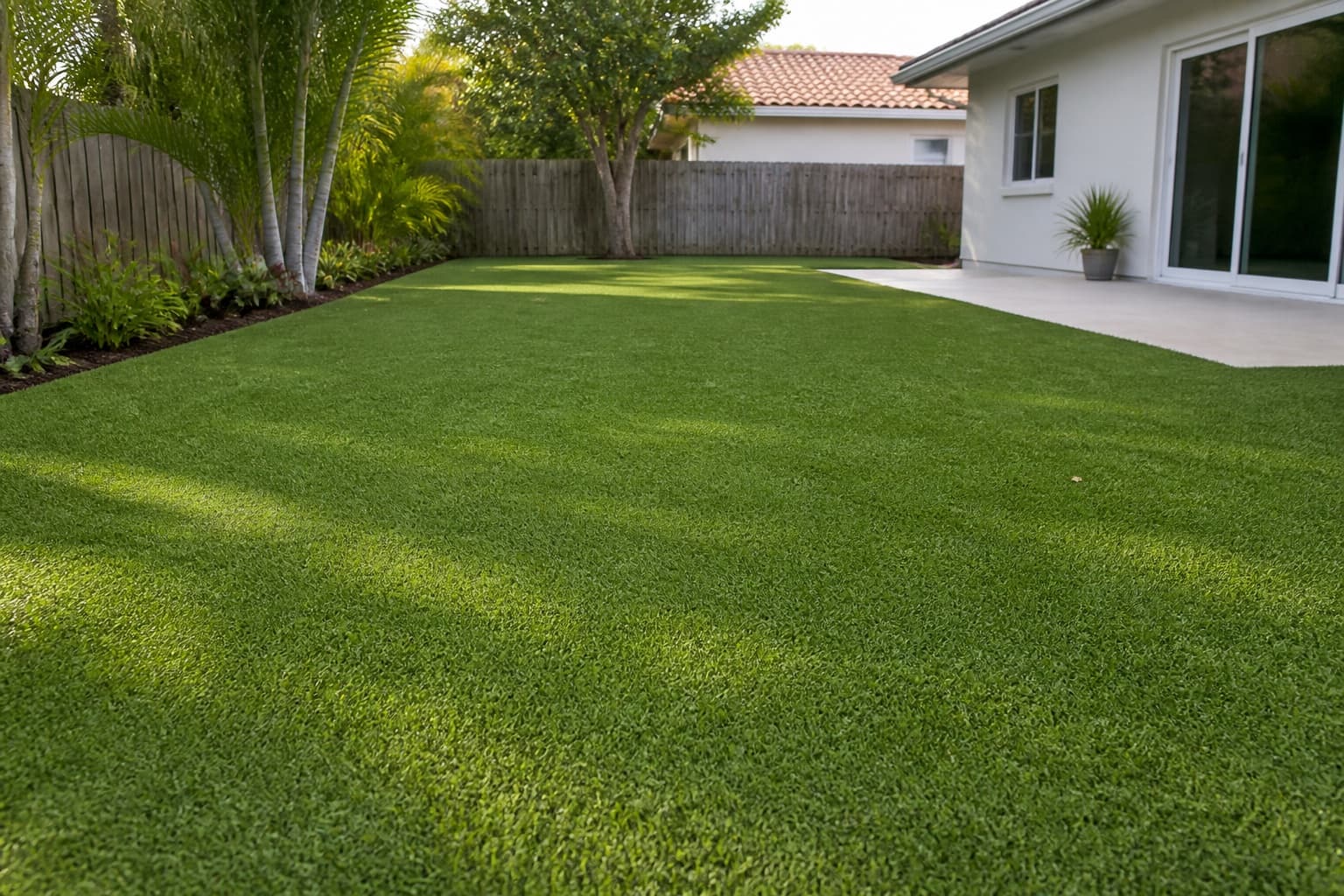
Evaluating Existing Drainage and Grading
One of the most critical aspects of an artificial turf renovation is understanding your current drainage. Artificial turf systems require effective water management to prevent pooling and ensure longevity. Observe your yard during and after rainfall. Do you see puddles forming? Does water consistently flow towards your house or other structures? These observations are crucial.
If your current lawn has poor drainage, simply laying artificial turf over the existing conditions could lead to significant problems. You may need to regrade the area to create a slight slope away from structures and towards designated drainage points. Installing a permeable base material beneath the turf is often necessary to facilitate water percolation. A professional assessment of your site's hydrology can help determine if extensive grading or a new drainage system (like a French drain) is required before turf installation.
Assessing the Existing Base Material
The foundation beneath your artificial turf is as important as the turf itself. For renovations, the existing base material must be stable, compacted, and free of organic matter. If you currently have a natural lawn, the soil will need to be excavated to a sufficient depth to accommodate a new, engineered base.
A typical artificial turf base consists of several layers: a compacted sub-base (often crushed rock or gravel) for stability and drainage, followed by a finer layer (like decomposed granite or crushed aggregate) for a smooth, level surface. If your renovation involves replacing old artificial turf or a patio, assess the condition of the existing base. Is it still level? Is it compacted? Are there any signs of settling or erosion? A compromised base will lead to an uneven turf surface and potential drainage issues.
Considering Site Conditions and Usage
Your site's specific conditions and how you intend to use the space will influence your turf selection and renovation plan. For areas with high foot traffic, such as a main pathway or a play area, you'll want a durable turf product designed for wear and tear. For pet owners, selecting a turf with good drainage and odor control properties is important. Products like Wembley and Anfield are noted for their performance and resistance to wear.
Consider sun exposure as well. While artificial turf doesn't require sunlight to grow, prolonged exposure to intense, direct sun can affect its temperature. If the area is heavily shaded, ensure adequate air circulation to prevent moisture buildup. The surrounding landscape, including trees, shrubs, and hardscaping, also needs to be factored in. How will the turf integrate with these elements? Will you need to cut around obstacles or create specific borders?
Product Selection: Pile Height, Density, and Backing
When renovating, choosing the right artificial turf product is key. Pile height refers to the length of the turf blades. Shorter pile heights often offer a tidier, more manicured look and are generally easier to clean, making them suitable for pet areas or high-traffic zones. Longer pile heights can provide a softer, more luxurious feel, resembling a lush natural lawn, as seen in options like Stanford.
Density, or the number of fibers per square inch, impacts the turf's durability and appearance. Denser turf typically withstands more traffic and offers a fuller look. The turf's backing material is also important for drainage and stability. Many professional artificial turf systems feature permeable backing designed to allow water to pass through effectively. Understanding these specifications helps you compare options like Celtic, Wembley, Stanford, and Anfield for your specific renovation needs.
You can explore various professional artificial turf systems, comparing options suitable for residential, pet, and high-traffic applications through Lumber Plus.
Worked Example: Renovating a 200 sq ft Backyard Section
Let's consider a hypothetical renovation of a 10-foot by 20-foot section of a backyard, currently a natural lawn with some minor puddling after heavy rain. The homeowner wants to install artificial turf for a low-maintenance play area.
First, we assess the existing conditions. The puddling indicates a need to improve drainage. We decide to excavate the existing lawn and about 4 inches of soil. This creates space for a new base. We'll lay down a geotextile fabric to separate the new base from the subgrade, then add 3 inches of compacted crushed gravel for drainage and stability. On top of this, we'll add 1 inch of decomposed granite, carefully leveled and compacted to create a smooth surface.
For the turf, given it's a play area, we opt for a durable, medium-pile turf like the Wembley option, known for its performance and resistance to wear. The area is 200 square feet. If the turf comes in 15-foot wide rolls, we would need one roll at least 14 feet long (200 sq ft / 15 ft width = 13.33 ft length), allowing for cuts and adjustments. However, to minimize seams and waste, we might consider a single 15-foot by 14-foot roll, or two 10-foot by 10-foot sections if the layout allows for a hidden seam. This example assumes a straightforward rectangular shape and a standard roll width. Actual cuts and waste will depend on the exact turf product and roll dimensions.
The edges will be secured with landscape spikes, and a border of bender board will be installed to define the turf area and hold the infill. For infill, a pet-friendly option will be chosen to help with odor control and provide cushioning.
Before you order
- Assess current drainage: Are there puddles or consistent water flow issues?
- Evaluate existing base: Is the current surface stable, level, and free of organic matter?
- Determine excavation needs: How deep will you need to dig to accommodate a new base?
- Consider new base materials: What type of gravel and fine aggregate are suitable for your project?
- Identify site usage: Will the area be for pets, high traffic, or general aesthetics?
- Check sun exposure: How much direct sun does the area receive, and will it affect turf temperature?
- Select turf pile height: Do you prefer a short, neat look or a longer, lush appearance?
- Compare turf density: Does the chosen turf offer sufficient durability for its intended use?
- Verify turf backing: Is the backing permeable for effective drainage?
- Plan for infill: What type of infill is appropriate for your usage (e.g., pet-friendly, cooling)?
- Account for edges and seams: How will the turf be secured and finished at the perimeter and where rolls meet?
Confirm installation details, approved uses and warranty terms in the current instructions for the exact product and profile. Your installer should verify the substrate, structure and applicable project requirements.
Questions to help you decide
Can I install artificial turf directly over my existing natural lawn?
Generally, no. Installing artificial turf directly over a natural lawn is not recommended. The existing grass and soil contain organic matter that can decompose, leading to an uneven surface, drainage problems, and potential odor issues. For a durable and long-lasting installation, the natural lawn and a layer of soil should be excavated, and a proper compacted base system (like crushed gravel and fine aggregate) should be installed.
How do I ensure proper drainage for my artificial turf renovation?
Proper drainage is critical. Start by assessing your current site for any areas where water pools. You may need to regrade the area to create a slight slope (typically 1-2%) away from structures. The base system beneath the turf should be permeable, consisting of compacted layers of crushed rock and finer aggregates that allow water to filter through. Many artificial turf products also feature permeable backing to facilitate drainage.
What should I do about existing irrigation systems during a renovation?
If you have an existing irrigation system in the area where you plan to install artificial turf, it should be capped off or removed. Artificial turf does not require watering. Leaving active sprinklers can lead to unnecessary water usage, potential over-saturation of the base, and mineral buildup on the turf fibers. Ensure all lines are properly drained and sealed to prevent leaks or future issues.
Ready to Transform Your Space with Artificial Turf?
Request a material quote for your project. Provide your project dimensions, desired artificial turf profile, and ZIP code to confirm current availability and service options. Our team can help you select the right products for your renovation.
Request a material quote →