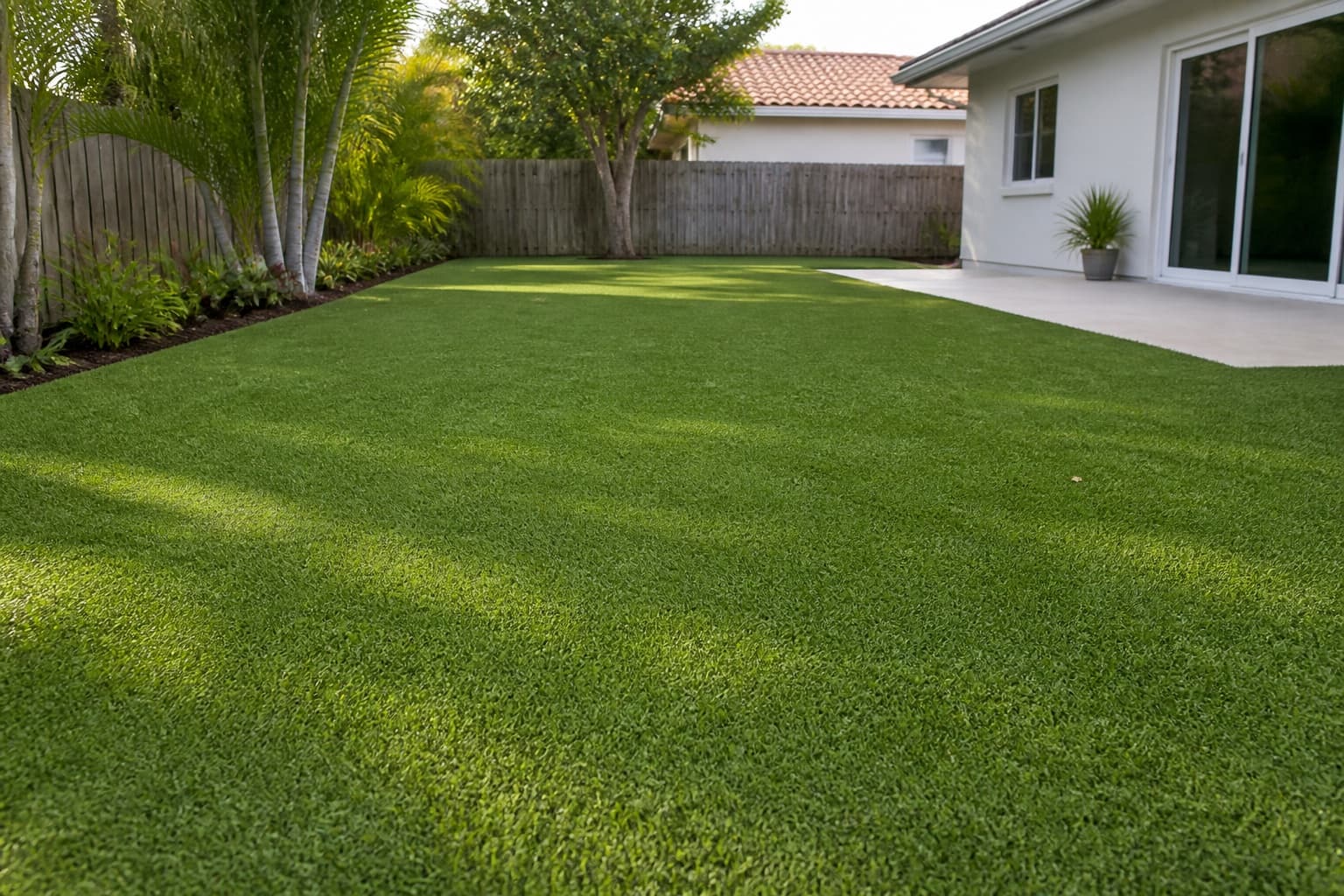
Determine Your Project Dimensions and Shape
The most fundamental piece of information for any artificial turf quote is the exact dimensions of your project area. Measure the length and width of each distinct section where turf will be installed. For irregularly shaped areas, break them down into simpler geometric shapes (rectangles, squares, triangles, circles) and provide the measurements for each. Sketching a simple diagram can be very helpful.
Consider an L-shaped patio area measuring 10 feet by 15 feet on one leg, and an additional 5 feet by 8 feet on the other. You would provide these two sets of dimensions. If you have curved edges, measure the straight sections and indicate the radius or approximate sweep of the curves. This helps estimate material needed for cuts and potential waste.
Select Your Artificial Turf Profile
Lumber Plus offers various artificial turf profiles, each designed for specific applications and aesthetics. Identifying your preferred profile is key to an accurate quote, as different options have varying material costs.
For residential use, you might consider options that prioritize a soft feel for family areas or durability for pet zones. For instance, the Anfield profile is known for its durability and brightness, while Celtic offers a soft feel suitable for pets and general outdoor use. Wembley is designed for performance and wear resistance, and Stanford provides a natural, dense appearance. Be ready to specify the exact profile name you are interested in.
If you are unsure which profile best suits your needs, describe your primary application (e.g., high-traffic play area, pet run, aesthetic lawn replacement) and your desired appearance (e.g., natural look, soft feel, robust texture). This information can help a specialist guide you to the most suitable options.
You can explore the available options at: [https://www.lumberplus.com/turf](https://www.lumberplus.com/turf)
Specify Your Project's Location and Access
The project's ZIP code is essential for calculating delivery costs and confirming serviceability. Additionally, describe the access points to your installation site. Will the turf rolls need to be transported through a narrow gate, around a house, or directly to a backyard via an open path? Are there stairs or other obstacles?
Artificial turf typically comes in large, heavy rolls. Knowing the access limitations helps the supplier determine the best delivery method and whether specialized equipment or additional labor might be required for placement at the job site. For example, a project on a roof terrace will have different access requirements than a ground-level backyard installation.
Outline Any Special Project Considerations
Beyond basic dimensions, any unique features or challenges in your project area should be communicated. This includes:
Trees or fixed obstacles: Provide measurements around these elements, indicating if the turf needs to be cut and fit around them.
Slopes or uneven terrain: While turf itself can conform, significant slopes may require specific base preparation that influences the overall project scope.
Existing surfaces: Is the turf being laid over soil, concrete, or an existing deck? This affects base material recommendations.
Drainage: Mention any existing drainage concerns or requirements, as proper drainage is critical for artificial turf longevity.
These details help in estimating not only the turf quantity but also any necessary accessories, infill, or potential installation complexities that could affect the final cost.
Indicate Your Project Timeline
While not directly impacting the material cost, providing an estimated project start date or desired delivery window helps with scheduling and confirming material availability. This is particularly important for larger projects or during peak construction seasons.
Knowing your timeline allows the supplier to check current stock levels and provide a realistic expectation for when your materials can be ready for pick-up or delivery.
Worked Example: Backyard Play Area
Let's consider a hypothetical backyard play area designed for children and pets. The main area is a rectangle, 25 feet long and 18 feet wide. There's also a small, curved section around a tree at one end, which can be approximated as a semicircle with a 3-foot radius attached to the main rectangle's width.
The chosen turf profile is 'Celtic' due to its soft feel and pet-friendly characteristics. The project is located at ZIP Code 90210. Access to the backyard is through a standard 36-inch wide gate, leading to a flat path. The desired installation is in early spring.
For a quote, you would provide: Rectangular area: 25 ft x 18 ft. Curved area: Semicircle, 3 ft radius. Turf profile: Celtic. Project ZIP: 90210. Access: 36-inch gate, flat path to backyard. Desired timeline: Early spring.
The supplier would calculate the area: (25 ft * 18 ft) + (0.5 * "pi" * (3 ft)^2) = 450 sq ft + 14.13 sq ft = approximately 464.13 square feet. Since turf rolls typically come in fixed widths (e.g., 15 ft), the supplier would then determine the most efficient cutting plan, accounting for seams and waste. For a 15-foot wide roll, you'd need one 25-foot length (15x25) and an additional piece to cover the remaining 3 feet of width and the curved section. This might mean purchasing two 15-foot wide rolls cut to specific lengths, or one longer roll cut strategically. The actual purchase quantity would likely be higher than the exact square footage to accommodate cuts and roll widths.
Before you order
- Project Dimensions (Length x Width for each section)
- Sketch or Diagram (for complex shapes or multiple areas)
- Artificial Turf Profile Name (e.g., Celtic, Wembley, Stanford, Anfield)
- Primary Application (e.g., pet area, high-traffic, aesthetic lawn)
- Project ZIP Code
- Site Access Description (gate width, stairs, path type)
- Special Features (trees, curves, existing obstacles)
- Existing Surface Type (soil, concrete, deck)
- Desired Project Start Date or Delivery Window
Confirm installation details, approved uses and warranty terms in the current instructions for the exact product and profile. Your installer should verify the substrate, structure and applicable project requirements.
Questions to help you decide
Why do I need to provide my project's ZIP code?
Your project's ZIP code is necessary for several reasons. It allows us to calculate accurate delivery costs, confirm that delivery services are available in your area, and ensure that we can provide localized service and support.
What if I don't know which artificial turf profile to choose?
If you're unsure about the best artificial turf profile for your project, describe its intended use, desired appearance, and any specific requirements (like pet-friendliness or high foot traffic). Our specialists can then recommend suitable options like Celtic for a soft feel, Wembley for wear resistance, or Stanford for a natural look, helping you make an informed decision.
Do I need to calculate the exact amount of turf myself?
While providing accurate measurements of your project area is crucial, you generally do not need to calculate the precise quantity of turf rolls yourself. Our team will use your dimensions to determine the most efficient cutting plan, accounting for standard roll widths, seams, and necessary waste to provide you with the correct material quote.
Request Your Artificial Turf Quote Today
Ready to move forward with your artificial turf project? Provide your project dimensions, desired turf profile, and ZIP code to request a material quote. Our team will confirm current availability and service options for your area. Visit our contact page to get started.
Request a material quote →