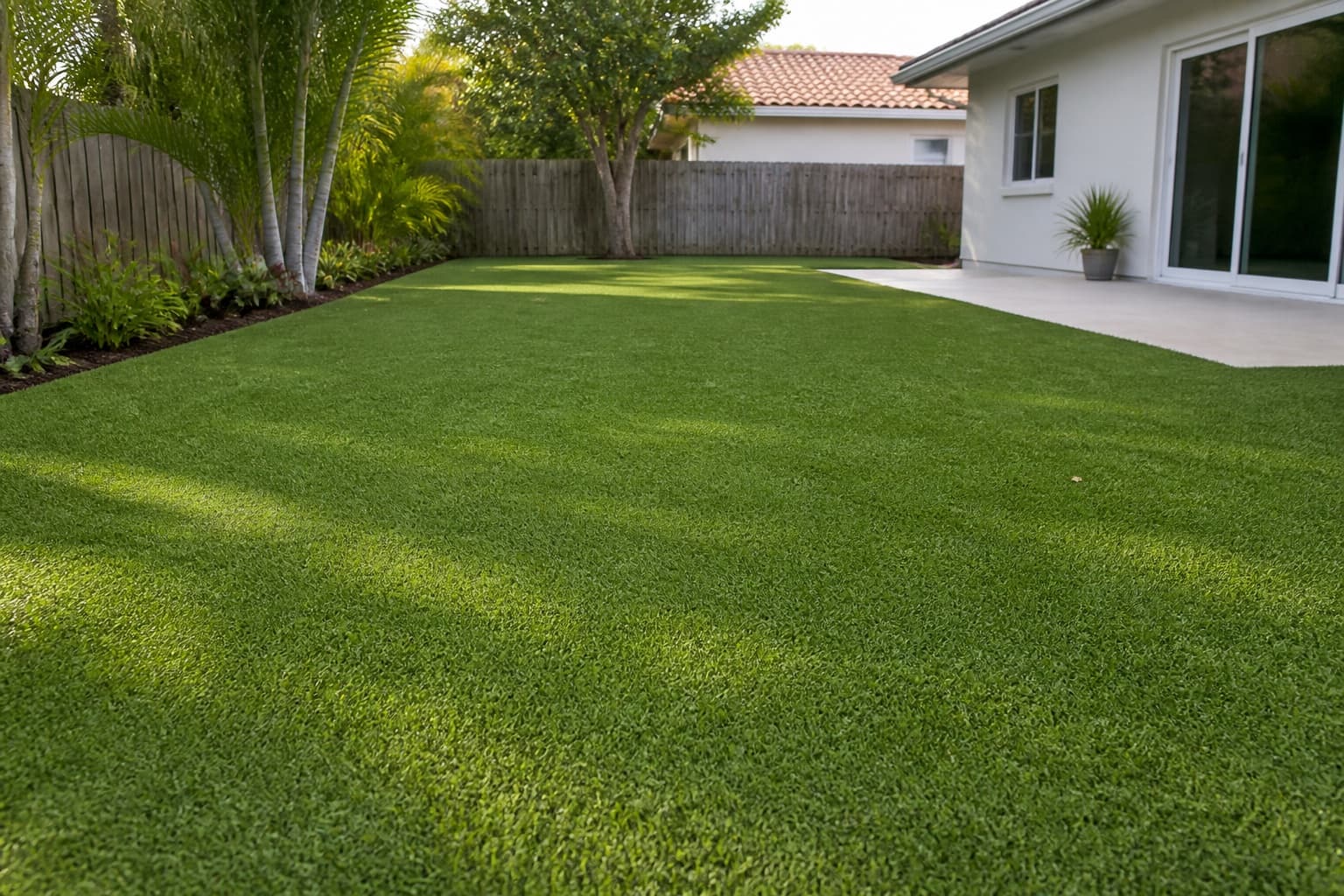
Understanding Artificial Turf Product Families
Artificial turf products are often categorized into families based on their intended use and performance characteristics. For example, some turf types are designed for general residential landscaping, while others are specifically engineered for pet areas or high-traffic zones. Identifying the right product family for your project is the first step in narrowing down your options.
Lumber Plus offers professional artificial turf systems across several categories, including options suitable for residential, pet, and high-traffic applications. Each family is developed to offer specific attributes that align with its intended environment, such as enhanced durability for busy areas or a softer feel for family spaces. For instance, the Anfield profile provides durability and brightness, while the Wembley profile is noted for performance and resistance to wear and tear. The Stanford profile offers density and a natural look, and another unnamed option is described as environmentally friendly and soft, suitable for pets.
By understanding these distinctions, you can focus on products that are engineered to perform best under your specific project conditions. This prevents selecting a turf that might not withstand the expected use or provide the desired aesthetic.
Pile Height and Density: Appearance and Performance
Pile height refers to the length of the turf blades, measured from the backing to the tip of the blade. This specification significantly influences the turf's appearance and feel. Longer pile heights often create a lush, natural grass look and a softer underfoot sensation, which can be desirable for aesthetic landscaping or low-traffic areas.
Conversely, shorter pile heights tend to be more resilient and easier to maintain, making them suitable for high-traffic zones, pet areas, or sports applications where durability and quick drainage are priorities. A shorter pile might also be preferred for a more manicured appearance.
Density, often measured in stitches per square inch or face weight, indicates how closely packed the turf fibers are. Higher density turf generally provides a fuller, more robust appearance and can offer greater durability, as there are more fibers to distribute wear. Lower density turf might feel less substantial but can be a more economical option for areas with minimal foot traffic. The Stanford profile, for example, is described as having a majestic cross-section that makes the turf look natural and dense.
Backing Material and Drainage
The backing material is the foundation of the artificial turf, holding the fibers in place. Most artificial turf features a durable backing designed to withstand environmental elements and provide structural integrity. The type of backing can also impact the turf's drainage capabilities.
Effective drainage is critical for preventing water accumulation and ensuring the longevity of your artificial turf. Many turf products are designed with perforations or permeable backing to allow water to pass through to the sub-base. When reviewing specifications, look for details on the backing material and any integrated drainage features. This is particularly important for pet areas, where quick and efficient drainage of liquids is essential for hygiene and odor control.
Infill Requirements and Material
Infill is a granular material spread between the turf blades after installation. It plays several important roles: it helps the blades stand upright, provides cushioning, adds weight to stabilize the turf, and can help regulate surface temperature. Common infill materials include silica sand, crumb rubber, and specialized organic options.
The type and quantity of infill required will vary depending on the turf product and its intended application. For pet-friendly turf, specific infill types may be recommended to help neutralize odors. For high-traffic areas, infill can contribute to greater stability and resilience. Always check the manufacturer's recommendations for infill to ensure proper performance and to validate any product warranties.
Worked Example: Selecting Turf for a Pet-Friendly Backyard
Let's consider a hypothetical project: a 20-foot by 15-foot backyard (300 sq ft) that will be used by two medium-sized dogs and for general family relaxation. The client wants a natural look but prioritizes durability and easy cleanup.
Based on these needs, we would look for artificial turf specifications that align with 'pet-friendly' and 'high-traffic' categories. We would consider products like the one described as "An environmentally friendly choice for those who love enjoying the outdoors with their pets. Its soft feel works perfectly for all indoor and outdoor projects." (S1).
For pile height, a medium-to-short pile (e.g., 1.25 to 1.75 inches) would offer a balance between a natural appearance and ease of cleaning, preventing pet waste from sinking too deeply. A higher density turf would be preferred to withstand pet activity and foot traffic. The backing should explicitly mention good drainage or permeability to handle pet liquids. Finally, we would confirm the recommended infill type, looking for antimicrobial or odor-controlling options specifically designed for pet use.
Assuming a turf roll width of 15 feet, for a 20-foot by 15-foot area, one roll of 15 feet by 20 feet would cover the area with minimal waste from cuts. If the turf comes in 12-foot widths, we would need two rolls: one 12-foot by 20-foot and one 8-foot by 20-foot section. The 8-foot section would be cut from a 12-foot wide roll, leaving a 4-foot by 20-foot offcut. This offcut could potentially be used for smaller, secondary areas or saved for future repairs, depending on its condition and size.
Before you order
- Identify the primary use of your artificial turf project (e.g., residential, pet, high-traffic).
- Determine your desired aesthetic: natural, manicured, or functional.
- Evaluate pile height based on traffic and desired softness/look.
- Consider turf density for durability and fullness.
- Verify backing material and drainage capabilities, especially for pet areas.
- Confirm infill requirements and recommended types for your application.
- Check roll widths and plan cuts to minimize waste for your project dimensions.
- Inquire about any specific installation requirements or compatible base materials.
Confirm installation details, approved uses and warranty terms in the current instructions for the exact product and profile. Your installer should verify the substrate, structure and applicable project requirements.
Questions to help you decide
What is the most important specification for pet-friendly artificial turf?
For pet-friendly artificial turf, the most important specifications are effective drainage and suitable infill. You need a turf with permeable backing to allow urine to drain quickly and an infill designed to neutralize odors and prevent bacterial growth. A medium pile height can also make cleanup easier.
Does pile height affect the durability of artificial turf?
Yes, pile height can affect durability. Shorter pile heights generally stand up better to heavy foot traffic and wear because the fibers are less prone to matting and crushing. Longer pile heights, while often softer and more natural-looking, may require more brushing to maintain their upright appearance in high-traffic areas.
Can I use any infill with any artificial turf product?
No, it's crucial to follow the manufacturer's recommendations for infill. Different turf products may have specific infill requirements based on their blade structure, backing, and intended use. Using the wrong infill could impact drainage, void warranties, or affect the turf's performance and longevity.
Ready to Plan Your Artificial Turf Project?
To get started, request a material quote with your project dimensions, desired profile, and ZIP code. We can help confirm current availability and service options for your specific needs.
Request a material quote →