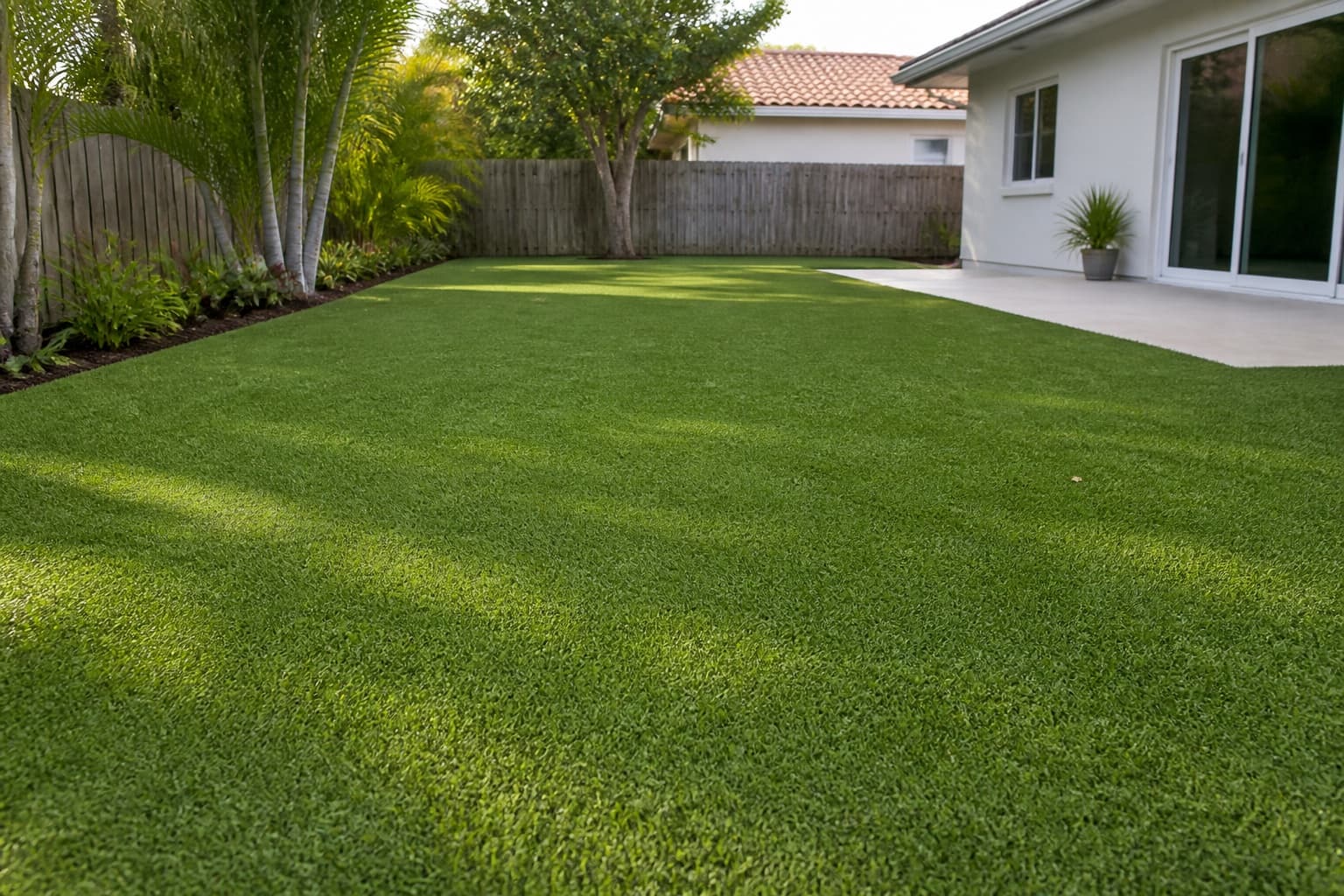
Evaluating Your Patio's Substrate and Existing Drainage
Before selecting artificial turf, thoroughly examine your patio's current surface. Is it concrete, pavers, or an existing deck? Each substrate presents unique challenges and opportunities for artificial turf installation. Concrete slabs often have a slight slope for drainage, which can be beneficial, but they may require additional preparation to ensure water does not pool beneath the turf. Pavers, depending on their stability and joint material, might offer a more permeable base but could also shift over time, affecting the turf's appearance.
Crucially, identify your patio's existing drainage. Small patios, especially those surrounded by walls or structures, can become water traps if not properly managed. Look for storm drains, downspouts, or areas where water naturally flows away. Artificial turf itself does not absorb water; it allows water to pass through its backing. Therefore, the underlying base must be able to drain effectively. If your patio has poor drainage, you will need to address this before turf installation, possibly by adding a drainage layer or modifying the patio's slope. Poor drainage can lead to odor, mildew, and premature wear of the turf.
Selecting the Right Artificial Turf for Patio Use
For small patios, aesthetic appeal and comfort are often primary drivers. Consider turf options that offer a natural look and a soft feel underfoot. Products like Anfield, described as a graceful option with superb durability and brightness, or the environmentally friendly option known for its soft feel, can be suitable. Wembley, noted for its performance and resistance to wear, might be a good choice for patios with moderate foot traffic.
Pile height and density are also important. A shorter pile height (e.g., 0.75 to 1.5 inches) can create a tidier, more manicured look that suits smaller spaces and can be easier to clean. Denser turf can offer a more luxurious feel and better conceal the backing. While some turf systems are designed for high-traffic areas, a small patio typically experiences less intense use, allowing for a wider range of aesthetic choices. Review product specifications for backing materials, as these influence drainage and stability when laid over a hard surface. You can compare four professional artificial turf options, including those suitable for residential applications, through Lumber Plus.
Refer to specific product descriptions for details on appearance and application suitability. For example, Wembley combines performance and resistance to wear, while Stanford features a majestic cross-section for a natural, dense look. Anfield offers superb durability and brightness. The environmentally friendly option provides a soft feel for indoor and outdoor projects.
Base Preparation for Hard Surfaces
When installing artificial turf over a concrete or paved patio, proper base preparation is key to longevity and performance. The surface must be clean, dry, and free of cracks or significant imperfections. Any existing cracks in concrete should be repaired to prevent water intrusion and potential subsidence. For pavers, ensure they are stable and level; loose pavers can create an uneven surface under the turf.
A crushed aggregate base, typically 2-4 inches deep, is often recommended even over hard surfaces, particularly if drainage needs improvement. This layer provides a stable, permeable foundation for the turf. It should be compacted thoroughly and graded to ensure a slight slope (approximately 1-2%) away from any structures to facilitate water runoff. A weed barrier fabric placed over the compacted base can help prevent weeds from growing through the drainage holes in the turf backing.
Installation Techniques for Small Patios
Installing artificial turf on a small patio often involves precise cutting and seaming. Measure the patio dimensions accurately, accounting for any irregularities or curves. Artificial turf typically comes in rolls, so planning the layout to minimize seams and waste is crucial. For small areas, it might be possible to use a single piece of turf, avoiding seams altogether.
When seams are necessary, use manufacturer-recommended seaming tape and adhesive. Proper seaming ensures a seamless appearance and prevents edges from lifting. For edges, the turf can be secured using landscape spikes, adhesive, or by tucking it under existing patio edging, depending on the substrate. Over concrete, adhesive is often preferred for a secure, permanent bond. Ensure that the infill material, if required by the turf product, is evenly distributed after installation to help the blades stand upright and provide stability.
Worked Example: Patio Turf Calculation
Let's consider a hypothetical patio measuring 10 feet by 12 feet. The total area is 120 square feet. Artificial turf rolls typically come in standard widths, such as 15 feet. To cover a 10x12 foot patio with a 15-foot wide roll, you would need a minimum of 12 linear feet of turf from a 15-foot wide roll (15 feet wide x 12 feet long = 180 square feet). This allows for a single, seamless piece that can be cut to fit the 10-foot width.
If the patio were, for example, 16 feet by 12 feet, and you were using a 15-foot wide roll, you would need two cuts. One piece would be 15 feet wide by 12 feet long (180 square feet), and another piece would be 1 foot wide by 12 feet long. While theoretically you only need 192 square feet of coverage, you would purchase two 12-foot lengths from a 15-foot roll, resulting in 24 linear feet of turf (360 square feet purchased) to accommodate the width and create a seam. This highlights the importance of planning for roll widths to minimize waste and seams. Always measure your specific patio and consult roll dimensions for accurate material estimation.
Before you order
- Assess existing patio substrate (concrete, pavers, deck) for condition and stability.
- Verify current drainage points and overall slope of the patio.
- Determine if additional drainage solutions (e.g., aggregate base, modified slope) are needed.
- Choose artificial turf with appropriate pile height, density, and backing for patio use.
- Plan turf layout to minimize seams and optimize roll usage.
- Select appropriate securing methods for the turf (adhesive, spikes, edging).
- Confirm infill requirements for your chosen turf product.
- Consider the aesthetic impact of turf color and texture in a confined space.
Confirm installation details, approved uses and warranty terms in the current instructions for the exact product and profile. Your installer should verify the substrate, structure and applicable project requirements.
Questions to help you decide
Can artificial turf be installed directly over existing concrete?
Yes, artificial turf can often be installed directly over concrete, provided the concrete is clean, dry, and has adequate drainage. It's crucial to ensure the concrete slab has a slight slope for water runoff and that any cracks are repaired. An adhesive is typically used to secure the turf to the concrete. However, for improved drainage and cushioning, an underlayment or a thin layer of compacted aggregate may be beneficial.
How do I ensure proper drainage for artificial turf on a small patio?
Proper drainage is critical. First, assess if your patio already slopes away from structures. If not, you might need to create a slight grade with a compacted aggregate base. The artificial turf itself has drainage holes in its backing, allowing water to pass through. The underlying surface must be permeable or sloped to direct water to a drain or away from the patio area. Avoid installing turf in areas where water consistently pools.
What kind of maintenance does artificial turf on a patio require?
Artificial turf on a patio requires relatively low maintenance. Regular brushing with a stiff-bristled broom can help keep the pile upright and remove debris. For spills or pet waste, promptly clean the area with water and a mild detergent. Ensure any infill material, if used, is evenly distributed. Periodically check for any lifting edges or signs of wear, especially in high-traffic spots.
Ready to Transform Your Patio?
Request a material quote today! Provide your project dimensions, desired turf profile, and ZIP code to confirm current availability and service options for your artificial turf project.
Request a material quote →