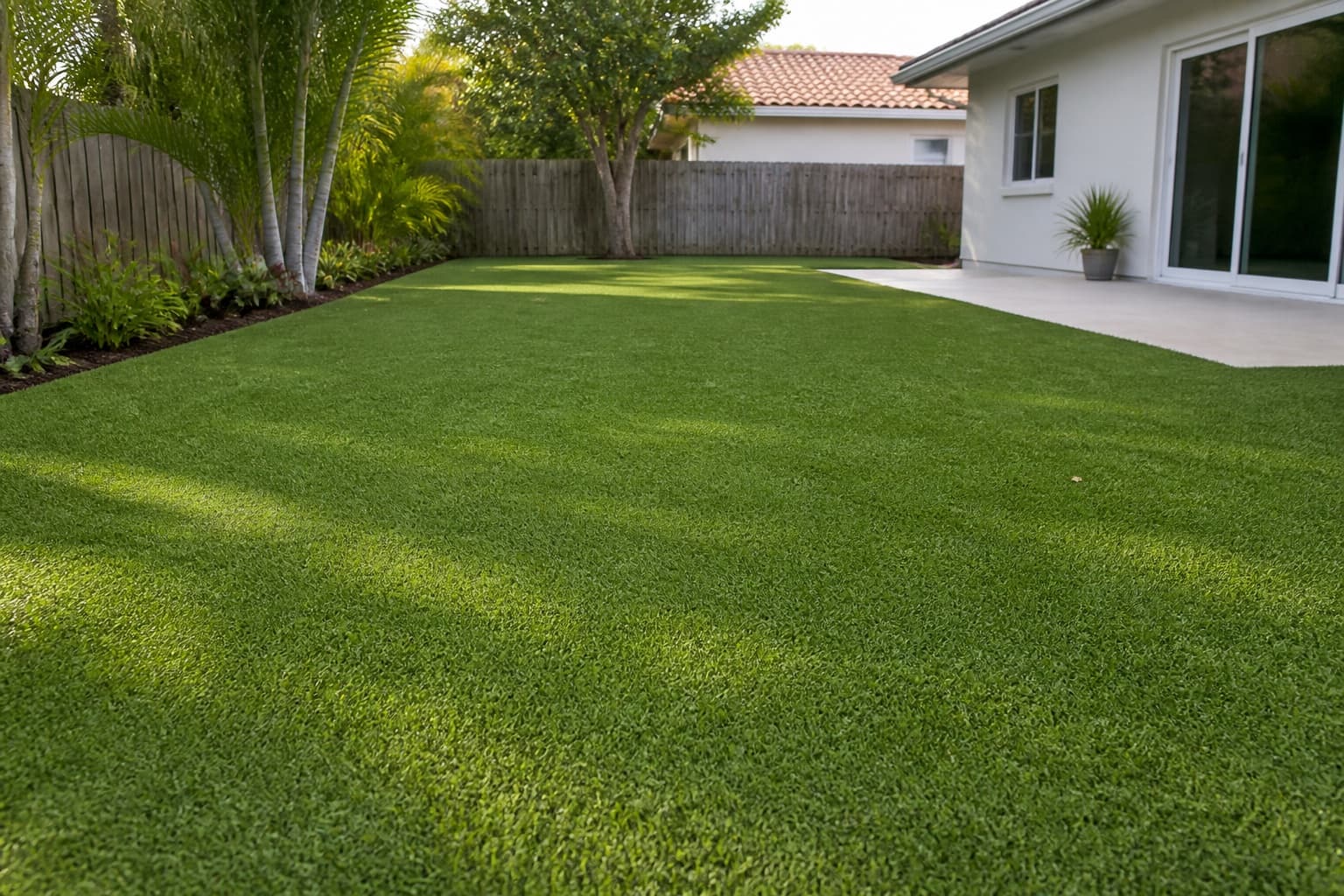
Assessing Your Side Yard: Light, Drainage, and Access
Before selecting any artificial turf, take a detailed look at your side yard's specific conditions. Narrow side yards often receive less direct sunlight due to shadows cast by the house or fences. While this is less critical for artificial turf's growth (as it doesn't grow), it can affect how quickly moisture evaporates and how warm the surface becomes. Consider the predominant shade patterns throughout the day and year.
Drainage is a primary concern. Many side yards are naturally sloped towards the house or neighboring property, or they might have compacted soil. Artificial turf systems require adequate sub-base drainage to prevent water pooling and to manage runoff effectively. Observe where water tends to collect after rain, and note any existing drainage solutions like French drains or downspout extensions. Access is also a practical consideration; how will materials and tools be brought in and out of this confined space?
For example, a side yard that is only 4 feet wide and 50 feet long, with a downspout discharging directly into it, will require careful planning for water management. The existing grade and soil type will influence the choice of base materials and drainage layers.
Base Preparation for Confined Spaces
The foundation beneath your artificial turf is critical for its longevity and performance, especially in a side yard where drainage might be compromised. Start by excavating the existing soil to a depth suitable for your chosen base layers. This usually means removing 3 to 6 inches, depending on the turf product and drainage needs.
A typical base structure involves a geotextile fabric to separate the subgrade from the base material, followed by a compacted layer of crushed aggregate (like decomposed granite or crushed limestone). This aggregate layer provides stability and allows water to percolate through. In side yards with poor drainage, a more permeable base material or an additional drainage cell layer might be beneficial. Ensure the base is sloped slightly (typically 1-2%) away from the house or towards a designated drainage point.
Compacting the base material in a narrow space can be challenging. Smaller compaction tools, such as plate compactors, are often necessary. Hand tamping might be required in very tight corners or along edges. The goal is a firm, level, and permeable surface that supports the turf evenly.
Choosing the Right Artificial Turf Profile
When selecting artificial turf for a side yard, consider its intended use. If it's purely an aesthetic strip or a low-traffic pathway, a shorter pile height might be suitable for easier maintenance and a neat appearance. For pet runs or areas with occasional foot traffic, a more durable profile with a medium pile height may be more appropriate.
Lumber Plus offers several professional artificial turf systems. For instance, the Wembley profile is noted for its performance and resistance to wear and tear, making it a potential option for areas with some foot traffic. The Anfield profile provides durability and a bright green color, which could enhance a shaded side yard. The Stanford collection offers a natural and dense appearance, while the Celtic profile is described as soft, suitable for spaces where comfort is a factor. Your choice should align with the specific demands of your side yard.
Consider the visual impact as well. A side yard is often viewed from windows or a patio. A turf with a natural look and appropriate color can significantly improve the view. You can compare options at:
https://www.lumberplus.com/turf
Planning for Cuts and Seams in Narrow Spaces
Narrow side yards often mean working with long, thin strips of artificial turf, which can simplify some aspects of installation but complicate others. Most artificial turf comes in rolls, typically 12 or 15 feet wide. For a 4-foot-wide side yard, you would need to cut a strip from a wider roll. This generates offcuts, which should be accounted for in your material estimate.
The goal is to minimize seams, as they are potential points of visibility and weakness. If your side yard is narrower than the turf roll width, you will likely run a single strip down the length, requiring only end seams if the length exceeds the roll's maximum. If the side yard is wider than a single strip but still narrow (e.g., 8 feet wide), you might need two parallel strips. Carefully plan where these seams will fall, ideally placing them away from high-traffic areas or prominent sightlines.
Cutting turf requires a sharp utility knife and a straight edge. In a narrow space, it's crucial to measure precisely and make clean, straight cuts to ensure seams fit together tightly. For irregular shapes or around obstacles like AC units or spigots, creating templates from cardboard can help achieve accurate cuts before cutting the turf itself.
Worked Example: Artificial Turf for a 4-foot by 30-foot Side Yard
Let's consider a hypothetical side yard that is 4 feet wide and 30 feet long. The primary goal is a low-maintenance, clean pathway. We'll use artificial turf that comes in 15-foot wide rolls.
1. **Area Calculation:** The total area is 4 ft x 30 ft = 120 square feet.
2. **Roll Requirements:** Since the side yard is 4 feet wide, and the roll is 15 feet wide, we will need to cut a 4-foot strip from the roll. A single 15-foot wide roll can yield a 4-foot by 15-foot section. To cover 30 feet of length, we would need two 4-foot by 15-foot sections, laid end-to-end. This means purchasing one roll of 15-foot by 30-foot (or two 15-foot by 15-foot rolls if available), from which we would cut two 4-foot by 15-foot strips. This will leave significant offcuts (11 feet wide by 30 feet long) that may not be reusable for this project.
3. **Seaming:** With two 4-foot by 15-foot strips, there will be one seam across the 4-foot width, located at the 15-foot mark along the length of the side yard. This seam should be meticulously joined using manufacturer-recommended seaming tape and adhesive.
4. **Base Materials:** Assuming a 4-inch base depth, this project would require approximately 1.48 cubic yards of compacted aggregate (4 ft x 30 ft x 0.33 ft = 39.6 cubic feet, divided by 27 cubic feet/yard). Allow for compaction, often requiring 20-30% more material.
This example illustrates the need for careful measurement and planning to minimize waste and ensure a proper fit, especially when working with standard roll widths that don't perfectly match narrow dimensions.
Before you order
- Measure the exact length and width of your side yard, noting any irregular shapes or obstacles.
- Assess the current drainage: where does water collect? Is there a slope?
- Identify existing utilities (spigots, AC units, vents) that will require careful turf cuts.
- Determine the primary use of the side yard (e.g., pathway, pet run, aesthetic green strip).
- Consider sunlight exposure throughout the day and year for potential heat buildup or prolonged moisture.
- Plan for material delivery and access to the narrow space for installation.
- Select an artificial turf profile that matches your intended use and aesthetic preference.
- Calculate the required turf quantity, accounting for standard roll widths and necessary cuts.
- Estimate base material quantities, factoring in excavation depth and compaction rates.
- Plan the location of any seams to minimize their visibility and impact.
Confirm installation details, approved uses and warranty terms in the current instructions for the exact product and profile. Your installer should verify the substrate, structure and applicable project requirements.
Questions to help you decide
How do I ensure proper drainage in a narrow side yard with artificial turf?
Proper drainage for artificial turf in a narrow side yard starts with a well-prepared sub-base. Ensure the excavated area has a slight slope (1-2%) away from structures or towards a designated drainage point. Install a permeable base layer, such as compacted crushed aggregate, at least 3-4 inches deep. For areas with particularly poor drainage or heavy rainfall, consider adding a specialized drainage mat beneath the turf or incorporating a French drain system along the length of the side yard to direct water away.
What tools do I need for installing artificial turf in a tight space?
For tight spaces, you'll need standard turf installation tools, but often in smaller versions. This includes a sharp utility knife with extra blades for precise cuts, a measuring tape, a straight edge or chalk line for accurate cutting, and a hand tamper or small plate compactor for base compaction. You'll also need a shovel and wheelbarrow for excavation and material transport, along with a broom or power brush for infill application and grooming. Knee pads can be very helpful when working in confined areas.
Can I install artificial turf myself in a narrow side yard?
Installing artificial turf in a narrow side yard can be a DIY project, but it requires careful planning and attention to detail, especially regarding base preparation, drainage, and precise cutting. The physical labor involved in excavation and compacting the base can be significant. If you are comfortable with these tasks and have the necessary tools, it is feasible. However, for the best results, particularly with critical elements like seam integration and proper base grading, professional installation is often recommended to ensure longevity and a polished finish.
Ready to Transform Your Side Yard?
Request a material quote with your project dimensions, desired turf profile, and ZIP code to confirm current availability and service options. Our team can help guide your selection.
Request a material quote →