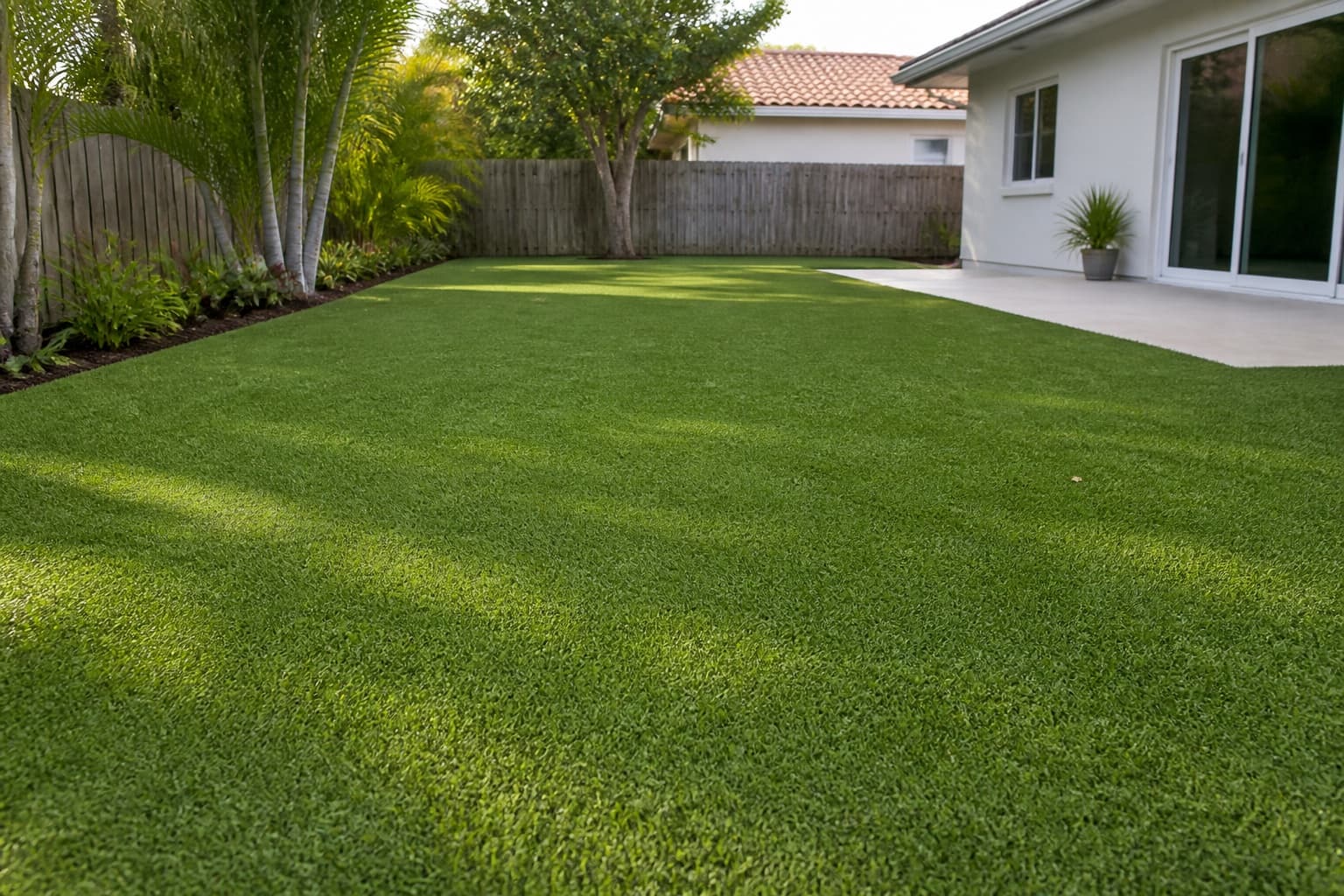
Understanding Shade's Impact on Artificial Turf
Shade affects artificial turf primarily by reducing natural evaporation. This means that after rain, dew, or cleaning, water will linger on the turf surface for longer periods. Extended moisture can contribute to the accumulation of organic debris like fallen leaves, pine needles, or pollen, potentially leading to a less pristine appearance if not managed.
Additionally, areas under trees or overhangs may experience more consistent shedding of leaves, twigs, and other plant matter. While artificial turf itself does not require sunlight, the environment around it does influence its upkeep and longevity. Proper planning can mitigate these effects, ensuring your shaded turf remains attractive and functional.
Selecting Artificial Turf for Shaded Conditions
When selecting artificial turf for a shaded area, prioritize materials known for good drainage and ease of cleaning. The backing material of the turf is crucial; some systems are designed with enhanced drainage features to help water pass through quickly. Consider turf options that do not absorb moisture readily and allow for efficient runoff.
While all artificial turf benefits from proper infill, in shaded areas, the choice of infill can also influence how well the turf drains and dries. Ensure your chosen turf system includes a well-designed drainage layer beneath it to prevent water pooling.
Lumber Plus offers several professional artificial turf systems suitable for various applications. For instance, Wembley is noted for its performance and resistance to wear, making it a robust choice, while Anfield offers superb durability and brightness. Stanford combines high durability with a natural, dense appearance. These options can be reviewed for their specific drainage characteristics and compatibility with your shaded project. See product details at: /turf
Additionally, consider the pile height and density. A turf with a moderate pile height might be easier to clear of debris compared to a very dense, long-pile option, where small leaves or pine needles could become more embedded.
Planning for Drainage in Shaded Areas
Effective drainage is paramount for artificial turf in shaded locations. The sub-base preparation is critical. A properly compacted aggregate base, sloped away from structures, will guide water away from the turf surface and into the surrounding landscape or drainage systems. Without adequate slope and a permeable base, water can accumulate, leading to stagnant moisture.
Consider incorporating a perimeter drainage system, such as a French drain or a channel drain, along the edges of the turf installation if the shade is particularly dense or if the area is prone to heavy rainfall. This ensures that excess water has a clear path to exit the area, preventing saturation of the turf's underlying layers.
For areas under large trees, leaf litter and debris can sometimes clog drainage holes in the turf's backing. Regular inspection and clearing of the turf surface will help maintain optimal drainage performance.
Cleaning and Debris Management
In shaded areas, regular cleaning is more important to prevent organic matter from decomposing on the turf and potentially fostering mildew or odors. Establish a routine for removing leaves, twigs, and other debris.
Use a leaf blower, stiff-bristled broom, or a plastic rake to clear the surface. For stubborn debris or pet waste, a gentle rinse with water is often effective. Ensure that after rinsing, the turf has an opportunity to dry. If the shade is constant, consider using a leaf blower or a squeegee to help move excess water off the turf after cleaning or rain. For pet owners, products like Celtic turf are designed for pet applications, which often includes features for easier cleaning.
For more thorough cleaning, a mild detergent solution can be used, followed by a complete rinse. Always confirm that any cleaning products are safe for artificial turf materials to avoid discoloration or damage. Avoid harsh chemicals or abrasive brushes.
Periodically, especially after heavy leaf fall, it may be beneficial to lightly brush the turf fibers against their grain to help them stand upright and improve drainage through the pile.
Worked Example: Backyard Nook Under a Large Oak
Consider a backyard nook, roughly 10 feet by 12 feet, situated beneath a mature oak tree. This area receives minimal direct sunlight, remaining mostly in shade throughout the day. The primary concerns are leaf litter, slow drying after rain, and maintaining a fresh appearance.
First, for drainage, we'd plan for a 2% slope across the 12-foot dimension, guiding water towards an existing garden bed. The base would consist of a 4-inch layer of compacted crushed granite, creating a permeable foundation. A perforated drain pipe could be installed along the lower edge of the turf area, connecting to a pop-up emitter in the garden, as an extra precaution.
For turf selection, a medium-pile artificial turf with a robust, permeable backing would be suitable. Let's assume a turf like Wembley, known for its wear resistance, is chosen, with a roll width of 15 feet. For a 10x12 foot area, one 15-foot wide roll cut to 12 feet would cover the space with minimal waste. The infill would be a fine-grade, non-absorbent material, brushed evenly into the fibers.
Maintenance would involve daily sweeping or blowing of leaves during autumn, and weekly during other seasons. After rain, a quick pass with a leaf blower set to a low power can help disperse standing water. Monthly, the turf would be rinsed with water, and a mild, pet-safe enzymatic cleaner would be applied if any odors develop, followed by another thorough rinse. Brushing the turf with a stiff broom every few weeks would help keep the fibers upright and aid in drainage.
Before you order
- Assess the degree and duration of shade throughout the day.
- Evaluate existing drainage patterns and soil permeability.
- Determine the primary source of shade (trees, overhangs, structures).
- Select an artificial turf product with good drainage features.
- Plan for a sloped and permeable sub-base.
- Consider additional perimeter drainage if necessary.
- Establish a routine for debris removal (leaves, twigs).
- Choose appropriate cleaning methods and products for shaded turf.
- Plan for occasional brushing to maintain fiber uprightness and drainage.
Confirm installation details, approved uses and warranty terms in the current instructions for the exact product and profile. Your installer should verify the substrate, structure and applicable project requirements.
Questions to help you decide
Can artificial turf develop mold or mildew in shaded areas?
While artificial turf itself is resistant to mold and mildew, prolonged moisture and the accumulation of organic debris in shaded areas can create an environment where these issues might arise on the debris or within the infill. Regular cleaning, ensuring proper drainage, and allowing the turf to dry after rain or cleaning can significantly reduce this risk. If mold or mildew appears, a mild detergent solution or specialized turf cleaner can be used, followed by a thorough rinse.
Will artificial turf in shade look different from turf in full sun?
The turf material itself will typically look the same in terms of color and texture, regardless of shade. However, the perception of its appearance can differ. In deep shade, colors might appear slightly darker or less vibrant than in direct sunlight. The primary difference will be in maintenance; turf in shade may show debris accumulation or retain moisture longer, which can affect its overall pristine look if not regularly cared for.
Do I need special infill for shaded artificial turf?
No specific 'shade' infill is typically required. However, for all artificial turf installations, choosing a non-absorbent infill material is important, especially in shaded areas where drying is slower. Infill materials like silica sand or crumb rubber are common. If pets will use the area, consider infills designed to help neutralize odors, which can be beneficial in slow-drying, shaded environments.
Ready to Transform Your Shaded Space?
Request a material quote for artificial turf. Provide your project dimensions, desired turf profile, and ZIP code to confirm current availability and service options for your area.
Request a material quote →