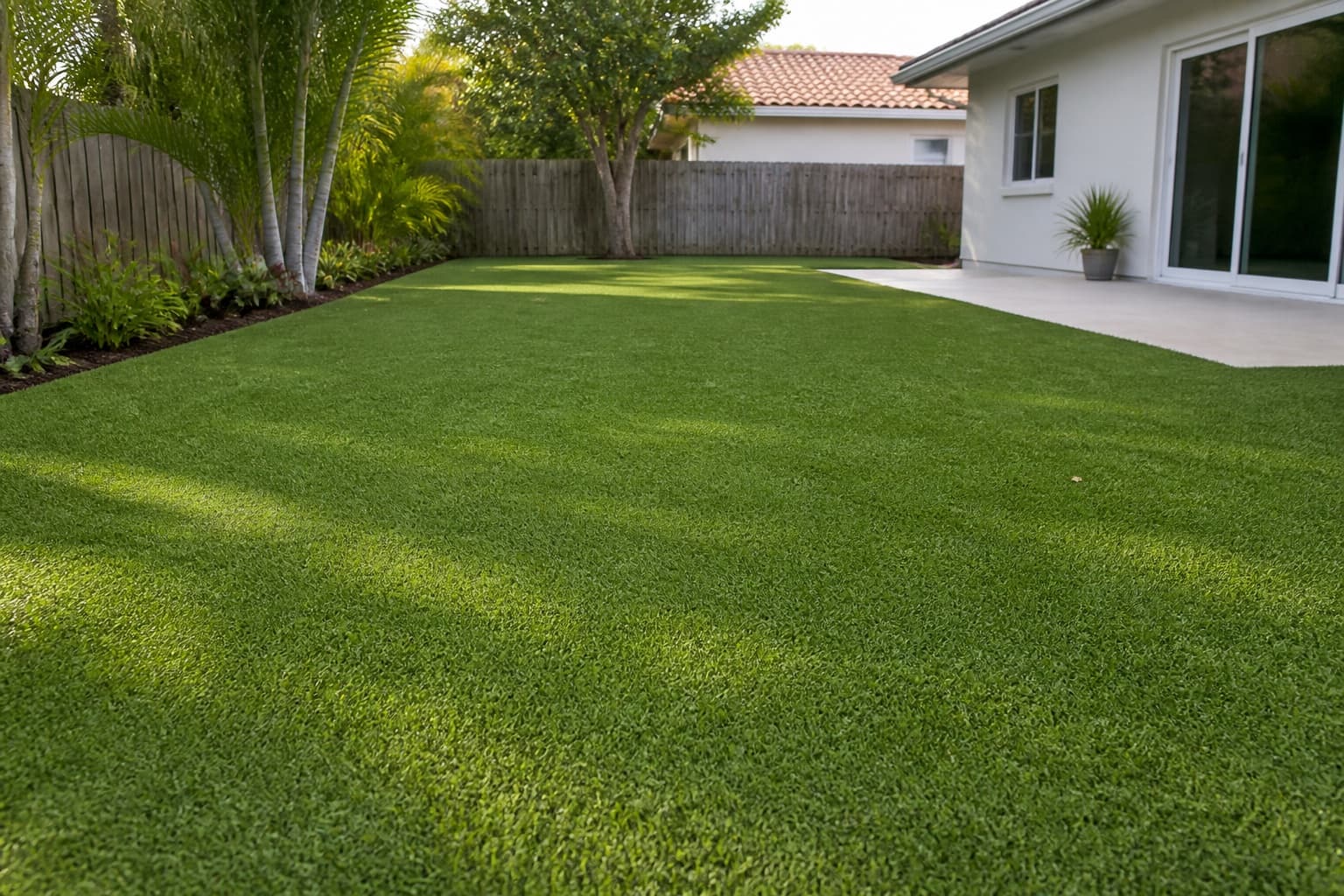
Understanding Artificial Turf Roll Layout
Artificial turf typically comes in large rolls, and for most projects, you'll need more than one. The way you position these rolls relative to each other is the first step in successful seam planning. Visualize your project area and sketch out potential roll placements. The goal is to minimize the number of seams and optimize material use.
Consider the dimensions of your turf rolls and the overall shape of your project area. For rectangular spaces, it's often most efficient to lay rolls parallel to each other. For irregular shapes, you might need to make more cuts, which can increase the number of seams or create more complex seam lines. Always aim to place seams in areas that will experience less foot traffic if possible.
The Importance of Grain Direction
Artificial turf has a "grain" or "pile direction," meaning the individual blades of grass lean in a specific direction. This is a crucial factor for achieving a uniform appearance. If adjacent turf rolls are laid with their grain running in opposite directions, the seam will be highly visible due to the way light reflects off the fibers.
To ensure a consistent look, all turf rolls should be laid with their grain running in the same direction. Typically, for outdoor installations, it's recommended to have the grain lean towards the primary viewing angle (e.g., towards the house or main patio). This usually makes the turf appear fuller and more natural from that vantage point. Before cutting or seaming, unroll sections of turf and observe how the light interacts with the pile to confirm the direction.
Choosing Your Seaming System
The method you use to join turf rolls is critical for durability and appearance. The most common professional method involves seaming tape and adhesive.
Seaming tape is a specialized fabric strip, usually 6 to 12 inches wide, that is laid beneath the edges of the two turf rolls to be joined. A strong, weather-resistant adhesive is then applied to the tape, and the turf edges are carefully pressed down onto it. This creates a secure bond that holds the rolls together. Always use adhesives specifically designed for artificial turf to ensure compatibility and longevity. The choice of adhesive may depend on local climate considerations, such as humidity or temperature fluctuations.
Worked Example: Planning Seams for a Backyard Area
Let's consider a hypothetical backyard project: a rectangular area measuring 20 feet by 15 feet. We plan to use artificial turf rolls that are 15 feet wide and 50 feet long.
Our goal is to cover the 20-foot by 15-foot area. Since the turf rolls are 15 feet wide, we can orient them so the 15-foot width aligns with the 15-foot dimension of our project area. This means we will need two rolls, each cut to 20 feet in length. We will lay these two 15-foot by 20-foot sections side-by-side along the 20-foot length.
This layout results in one primary seam running the entire 20-foot length of the project. Before laying, we would unroll both sections, confirm the grain direction is consistent, and then prepare the sub-base. The seaming tape would be centered under the meeting edges of the two 15-foot wide sections, running for 20 feet. Adhesive would be applied, and the turf edges carefully joined. This approach minimizes seams and utilizes the full width of the roll efficiently.
Preparing for Seaming: Tools and Techniques
Proper preparation is key to a successful seam. Ensure your sub-base is level, compacted, and free of debris. When cutting turf, use a sharp utility knife or specialized turf cutter. Make sure your cuts are straight and clean along the factory edge or a marked line. Overlapping the turf slightly and then making a clean cut through both layers can sometimes help achieve a precise fit for custom shapes, but this technique requires careful execution.
When applying adhesive, follow the manufacturer's instructions for mixing (if applicable) and application. Use a notched spreader to ensure an even coat. After laying the turf onto the adhesive, apply consistent pressure along the seam to ensure a strong bond. A turf roller or even walking carefully along the seam can help achieve this. Allow adequate curing time before heavy traffic.
Finishing Touches and Limitations
After the adhesive has cured, inspect your seams. Minor adjustments or light brushing of the turf fibers can sometimes further conceal the seam. While careful planning and execution can make seams nearly invisible, it's important to understand that in some lighting conditions or from very close proximity, a seam might still be discernible.
Factors like the specific turf product's pile density and blade shape can influence how well seams blend. For example, turf with a very dense, multi-directional pile might naturally hide seams better than turf with a sparse, uniform pile. Always refer to the specific product's installation guide for any unique seaming recommendations or limitations. The Wembley, Stanford, and Anfield turf products offer different densities and blade profiles (S1).
Before you order
- Measure your project area accurately to determine total square footage and dimensions.
- Sketch a roll layout plan to minimize seams and optimize material use.
- Identify the primary viewing angle for your turf area.
- Confirm the grain direction of all turf rolls before cutting or laying.
- Select an appropriate seaming tape and adhesive compatible with your artificial turf.
- Ensure your sub-base is properly prepared, level, and compacted.
- Have a sharp utility knife or turf cutter ready for precise cuts.
- Plan for sufficient curing time for the adhesive before allowing traffic.
Confirm installation details, approved uses and warranty terms in the current instructions for the exact product and profile. Your installer should verify the substrate, structure and applicable project requirements.
Questions to help you decide
Can I install artificial turf without any visible seams?
With careful planning and execution, artificial turf seams can be made nearly invisible. The key is to ensure all rolls are laid with the grain in the same direction, use the correct seaming tape and adhesive, and make precise cuts. However, in certain lighting conditions or upon very close inspection, a seam might still be minimally discernible.
What happens if I lay turf rolls with different grain directions?
If turf rolls are laid with their grain running in different directions, the seam will be highly visible. This is because the light will reflect differently off the turf fibers on each side of the seam, creating a noticeable color and texture difference. Always ensure consistent grain direction for a uniform appearance.
What type of adhesive should I use for artificial turf seams?
You should always use an adhesive specifically designed for artificial turf installation. These adhesives are formulated to bond effectively with turf backing materials and withstand outdoor conditions, including temperature changes and moisture. Consult the turf manufacturer's recommendations or a professional for the best adhesive choice for your specific product and climate.
Ready to Plan Your Artificial Turf Project?
Request a material quote with your project dimensions, desired turf profile, and ZIP code. We can help confirm current availability and service options for professional artificial turf systems like Wembley, Stanford, and Anfield. We offer solutions for residential, pet, and high-traffic applications.
Request a material quote →