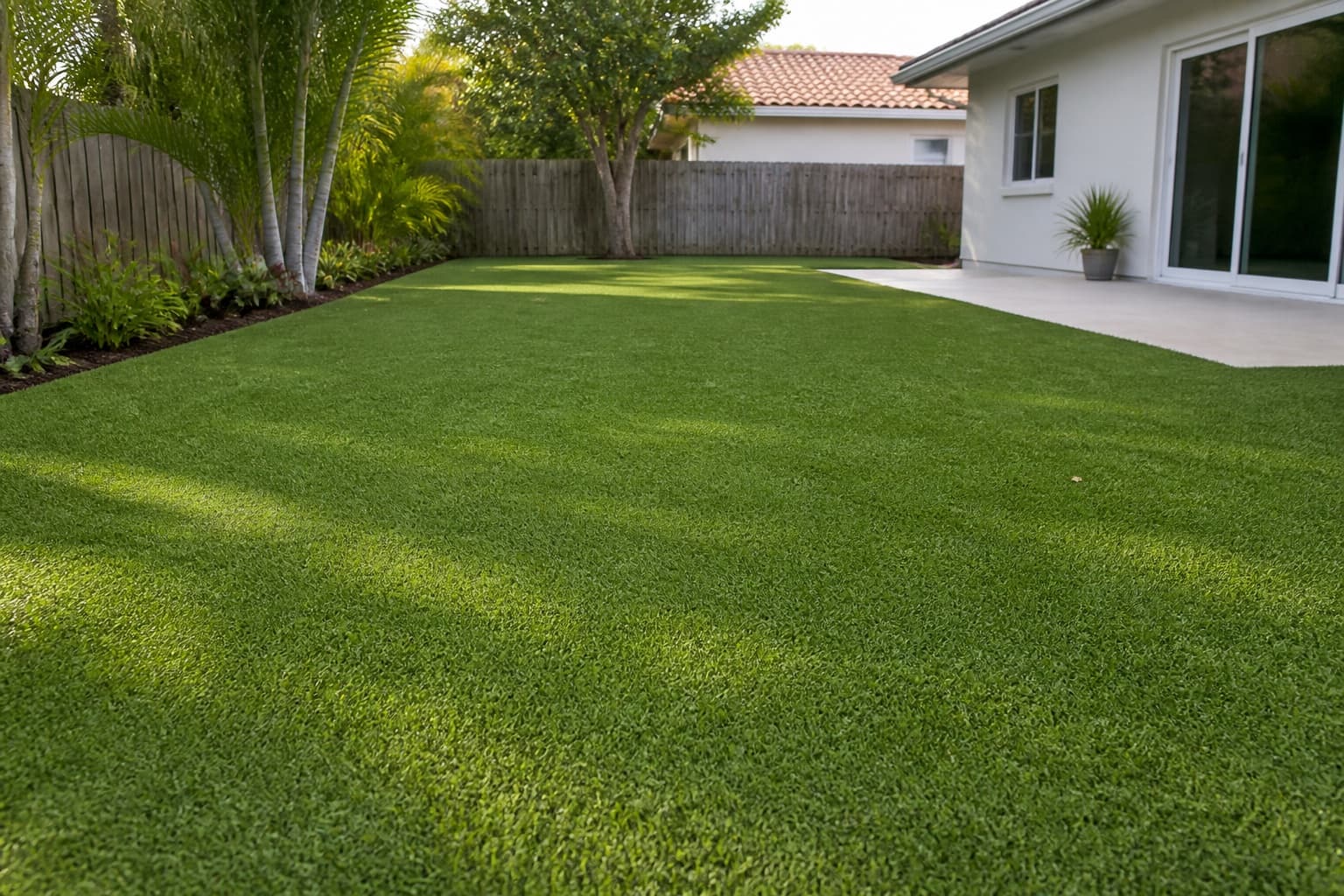
Understanding Water Exposure and Drainage
Artificial turf near a pool will inevitably be exposed to water, whether from splashes, swimmers exiting the pool, or rainwater. Unlike natural grass, artificial turf does not absorb water into the soil beneath. Instead, water must drain through the turf's backing and the underlying base.
Ensure the turf system includes a permeable backing that allows water to pass through efficiently. Proper base preparation is critical; a well-designed drainage layer, typically consisting of crushed rock or gravel, will direct water away from the turf and prevent pooling. This is especially important to avoid stagnant water accumulation, which can become an issue in humid environments or areas with heavy rainfall.
Consider the slope of the area as well. A slight grade away from the pool and structures helps facilitate water runoff and prevent saturation of the turf's base.
Selecting the Right Artificial Turf Profile
When choosing artificial turf for a poolside application, consider the pile height and density. A shorter pile height might be easier to clean and maintain, as it's less likely to trap debris carried out of the pool. Denser turf can offer a more resilient surface under foot traffic, which is common around pools.
Lumber Plus offers various artificial turf options. For example, the Wembley turf is noted for its performance and resistance to wear and tear, making it a potential candidate for areas with moderate foot traffic. Anfield turf is described as offering superb durability, which could be beneficial in high-traffic zones around a pool. The Stanford collection, with its natural and dense appearance, combines durability with aesthetics. For a softer feel, the Celtic option is available.
Reviewing physical samples can help determine the best texture and appearance for your specific project's needs and how it might feel under bare feet.
Maintenance and Cleaning Around a Pool
While artificial turf reduces many lawn maintenance tasks, poolside turf requires specific cleaning considerations. Chlorine or saltwater splashes can leave residues. Regular rinsing with water can help prevent buildup. Debris like leaves, pool toys, or towels should be removed promptly to prevent staining or obstruction of the turf fibers. A leaf blower or a stiff broom can assist with routine cleaning.
For tougher stains or odors, consult the turf manufacturer's guidelines for recommended cleaning agents. Avoid harsh chemicals that could damage the turf fibers or backing. Proper maintenance helps preserve the turf's appearance and functionality over time.
Edge Finishing and Transitions
The transition between the pool deck and the artificial turf needs careful planning to ensure a neat, secure, and safe edge. Edging materials, such as flexible plastic borders, concrete curbs, or decorative pavers, can be used to create a defined separation and hold the turf securely in place.
Consider how the edge will handle foot traffic and potential water runoff. A slight elevation of the turf edge above the pool deck can help prevent debris from washing into the pool. Ensure that any edging chosen is compatible with the turf installation method and provides a stable boundary.
Planning a Hypothetical Poolside Turf Area
Imagine a rectangular pool deck measuring 20 feet by 10 feet. You want to install artificial turf on one side, creating a 5-foot-wide strip along the 20-foot length. This means the turf area will be 20 feet long by 5 feet wide, totaling 100 square feet.
If the artificial turf rolls are typically 15 feet wide, you would need to plan your cuts carefully. For a 20-foot length, you could use a single 15-foot wide roll cut to a 20-foot length, resulting in a 15x20 foot section (300 sq ft). From this, you would cut your 5-foot wide strip. The remaining 10-foot by 20-foot section (200 sq ft) would be an offcut. Alternatively, if smaller rolls are available, planning for minimal waste would involve calculating how many 5-foot by 20-foot sections fit into a standard roll width.
For a 15-foot wide roll, you would need one 20-foot length. You could cut one 5-foot wide strip, leaving a 10-foot wide offcut that could potentially be used for another project or smaller areas. The total purchase would be 15 feet by 20 feet of turf material.
Ensure the base preparation extends across the entire 100 square feet, with proper grading for drainage away from the pool. The edging material would run along the 20-foot length bordering the pool deck and the two 5-foot ends.
Before you order
- Assess the specific water exposure level from splashes and rainfall.
- Verify the turf's backing permeability for efficient drainage.
- Plan for a proper base and sub-base with adequate grading away from the pool.
- Select a turf profile (pile height, density) suitable for foot traffic and cleaning.
- Consider the aesthetic compatibility of the turf with your pool area.
- Research manufacturer-recommended cleaning agents for pool chemical exposure.
- Choose appropriate edging materials for a secure and safe transition.
- Account for roll widths and cuts to minimize material waste.
- Confirm any local regulations regarding artificial turf near water features.
Confirm installation details, approved uses and warranty terms in the current instructions for the exact product and profile. Your installer should verify the substrate, structure and applicable project requirements.
Questions to help you decide
Can chlorine or saltwater damage artificial turf?
While artificial turf is generally durable, prolonged exposure to high concentrations of chlorine or saltwater can potentially affect its appearance over time. Regular rinsing with fresh water is recommended to wash away residues and help maintain the turf's condition.
Does artificial turf get hot around a pool?
Artificial turf can absorb and retain heat, potentially feeling warmer than natural grass, especially in direct sunlight. The degree of heat retention varies by turf type, infill material, and local climate. You can test samples in direct sunlight to get a sense of how warm they become. Consider rinsing the turf with water to cool it down on very hot days.
How do I prevent weeds from growing through poolside artificial turf?
A properly installed artificial turf system includes a weed barrier beneath the base layer. This barrier, combined with a dense turf backing and infill, helps prevent most weeds from growing through. Regular cleaning to remove debris that could harbor seeds on the turf surface also contributes to weed prevention.
Plan Your Poolside Artificial Turf Project
Ready to enhance your pool area with artificial turf? Request a material quote with your project dimensions, desired profile, and ZIP code. We can help you confirm current availability and service options for your specific needs. Start your quote today to explore professional artificial turf systems from Lumber Plus.
Request a material quote →