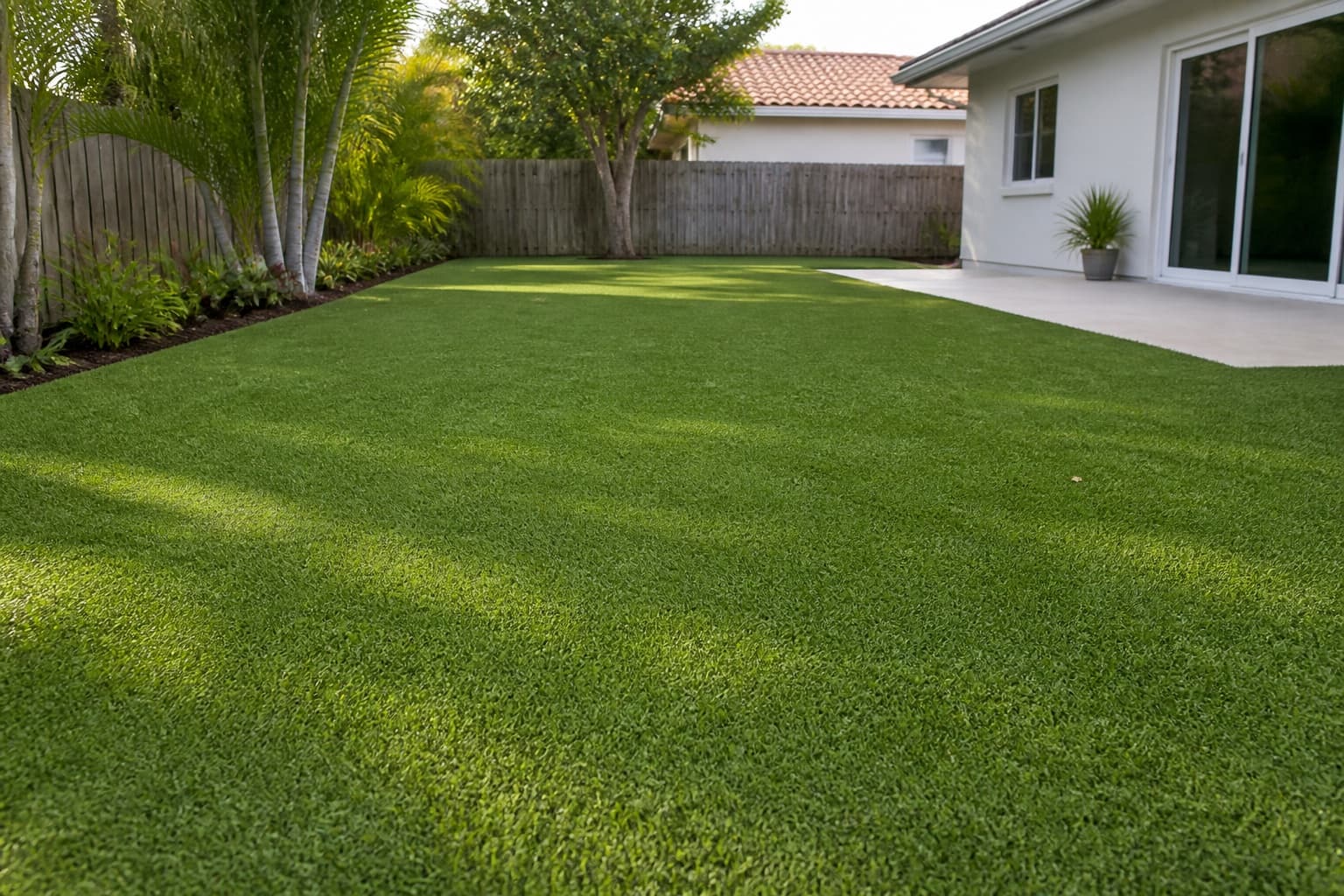
Understanding Pet-Specific Turf Needs
When artificial turf is installed in an area used by pets, especially dogs, its primary function extends beyond visual appeal to include robust performance and hygiene. Pets introduce unique challenges such as concentrated waste, digging, and repetitive activity in specific areas.
The ideal artificial turf for pets should feature a backing designed for superior drainage, a pile height that is easy to clean, and fibers that can withstand consistent use without flattening or breaking down prematurely. The goal is to create a surface that remains clean, dry, and resilient, minimizing odors and simplifying maintenance routines for pet owners.
Unlike turf purely for aesthetics, pet applications demand a system that actively manages moisture and waste, preventing accumulation and promoting a healthier outdoor environment.
Drainage: A Critical Factor for Pet Yards
Effective drainage is paramount for artificial turf installations in pet areas. Pet urine must pass through the turf quickly to prevent odors and bacterial growth. Standard artificial turf may have a solid backing or drainage holes designed for general rainwater runoff, but pet applications often require enhanced drainage capabilities.
Look for turf products specifically marketed for pet use, which may feature permeable backing materials that allow liquids to flow through the entire surface, rather than relying solely on spaced drainage holes. This uniform permeability helps ensure that urine drains efficiently into the prepared sub-base.
The sub-base itself also plays a vital role. A properly constructed drainage layer beneath the turf, typically consisting of compacted crushed rock or gravel, is essential. This layer should be sloped to direct liquids away from structures and facilitate rapid percolation into the ground or a dedicated drainage system. Inadequate drainage can lead to standing liquids, persistent odors, and premature turf degradation.
Cleaning and Maintenance for Pet Turf
Regular cleaning is indispensable for maintaining artificial turf in pet areas. Solid waste should be removed promptly. For liquid waste, a routine rinsing with water is generally recommended. For areas with frequent pet use, consider using a specialized turf cleaner or enzyme-based solution to neutralize odors and break down organic matter.
The texture and pile height of the turf influence cleaning ease. Shorter pile heights (typically 1 inch to 1.5 inches) can be easier to rinse and clear of debris and pet hair. Denser turf can sometimes trap more waste, requiring more thorough cleaning.
An infill material might also be part of your turf system. Some infills are designed to help with odor control and drainage. Always confirm the compatibility of any cleaning products with your specific turf and infill to avoid damage or discoloration.
Choosing the Right Artificial Turf Profile
Lumber Plus offers several artificial turf options that can be considered for pet applications, each with distinct characteristics. The "Professional Artificial Turf Systems" selection includes profiles suitable for residential, pet, and high-traffic uses.
When selecting, consider the specific behaviors of your pets. For example, a highly active dog might benefit from a turf with "great performance and resistance to wear & tear," such as the Wembley profile. If a natural and dense appearance is a priority alongside durability, the Stanford collection, with its "majestic cross-section," could be a suitable choice.
The Anfield profile, noted for "superb durability and a marvelous brightness," offers another option for frequently used spaces. For a soft feel important for pets, consider the general description that some turf offers a "soft feel works perfectly for all indoor and outdoor projects." Always evaluate the specific product's backing and pile density in conjunction with pet use requirements.
Lumber Plus turf profiles:
Wembley: Combines performance and resistance to wear & tear. (Source: S1)
Stanford: Features a majestic cross-section for a natural, dense look with high durability. (Source: S1)
Anfield: Offers superb durability and brightness. (Source: S1)
Worked Example: Planning a Pet-Friendly Turf Area
Let's plan for a 10-foot by 12-foot pet run for a medium-sized dog. The homeowner wants easy cleaning and good drainage.
1. **Dimensions and Layout:** The area is 120 square feet (10 ft x 12 ft). We'll assume a rectangular layout with no complex cuts for this example.
2. **Turf Selection:** The homeowner considers the Wembley profile for its wear resistance, assuming it also offers adequate pet-specific drainage. They confirm with Lumber Plus that this profile is suitable for pet applications and has a permeable backing.
3. **Sub-Base Preparation:** A 4-inch deep sub-base of compacted crushed aggregate is planned, sloped at 1-2% away from the house for drainage. This requires approximately 1.5 cubic yards of aggregate (10 ft * 12 ft * (4/12) ft / 27 cubic feet/yard). A weed barrier fabric will be laid before the aggregate.
4. **Turf Roll Calculation:** If the chosen turf comes in 15-foot wide rolls, a single 15-foot by 10-foot section would cover the area, with 3 feet of width as an offcut (15 ft wide roll x 10 ft length = 150 sq ft). If 12-foot wide rolls are available, a single 12-foot by 10-foot section would fit perfectly (120 sq ft). Always confirm available roll widths.
5. **Infill:** A pet-friendly infill is selected to help with odor control and provide ballast. The manufacturer's recommendation for infill quantity for pet applications will be followed, typically 1-2 pounds per square foot, so for 120 sq ft, 120-240 pounds of infill would be needed.
6. **Edging:** The turf will be secured along its perimeter using landscape edging or stakes, particularly important for preventing a dog from lifting edges.
This example demonstrates how specific product choices and careful planning for drainage and sub-base are critical for a successful pet turf installation.
Before you order
- Confirm the turf product is explicitly rated or recommended for pet use by the manufacturer.
- Verify the turf's backing system for optimal drainage (e.g., permeable backing).
- Consider the pile height for ease of cleaning and pet comfort (shorter piles are often easier to maintain).
- Plan for a sloped, compacted aggregate sub-base to ensure efficient liquid drainage.
- Factor in the need for pet-specific infill, if recommended, for odor control and stability.
- Determine the cleaning regimen: frequency of rinsing, solid waste removal, and use of turf-safe cleaners.
- Measure the area accurately, considering turf roll widths to minimize seams and waste.
- Plan for secure edging to prevent pets from lifting the turf perimeter.
Confirm installation details, approved uses and warranty terms in the current instructions for the exact product and profile. Your installer should verify the substrate, structure and applicable project requirements.
Questions to help you decide
Can all artificial turf be used for pets?
No, not all artificial turf is ideal for pet use. While many types may tolerate some pet activity, turf specifically designed for pets usually features enhanced drainage systems, more durable fibers, and sometimes antimicrobial properties or compatible infills to manage odors and wear. Always check the product specifications and recommendations for pet suitability.
How do I prevent odors in my pet artificial turf?
Preventing odors in pet artificial turf involves a combination of good drainage and regular cleaning. Ensure your turf has a permeable backing and a well-drained sub-base. Promptly remove solid waste, rinse the turf regularly with water, and use enzyme-based or specialized turf cleaners designed to neutralize pet odors. Some infill materials can also help with odor control.
What kind of base is needed for artificial turf with pets?
For artificial turf used with pets, a robust, well-draining base is essential. This typically involves excavating the area, laying a weed barrier, and then installing a compacted layer of crushed aggregate (such as decomposed granite or crushed limestone) that is sloped to facilitate water runoff. The depth of the base can vary but is often 3-6 inches. Proper compaction is crucial for stability and drainage.
Request a Quote for Your Pet-Friendly Artificial Turf Project
Ready to transform your yard into a clean, durable space for your pets? Provide your project dimensions, desired turf profile (e.g., Wembley, Stanford, Anfield), and ZIP code to get a material quote. We can also confirm current availability and service options for your location.
Request a material quote →