Upfront Costs vs. Long-Term Investment
The initial cost of installing artificial turf is typically higher than planting a new natural lawn. This includes the turf material itself, the base preparation (which often involves grading, compaction, and a permeable sub-base), infill materials, and professional installation. However, a natural lawn also has upfront costs, including soil amendments, seed or sod, irrigation system installation, and initial fertilization.
When considering long-term investment, artificial turf often presents a different financial picture. Over its lifespan, artificial turf can reduce ongoing expenses related to water, fertilizers, pesticides, and professional lawn care services. A natural lawn, while potentially cheaper to establish, incurs these recurring costs indefinitely. The decision often comes down to preferring a higher initial outlay for reduced future expenses versus lower initial cost with continuous spending.
Water Conservation and Environmental Impact
One of the most significant advantages of artificial turf, particularly in drought-prone or water-restricted areas, is its minimal water requirement. Once installed, it does not need irrigation to maintain its green appearance. This can lead to substantial water savings compared to a natural lawn, which often requires regular and significant watering, especially during dry periods, to remain healthy and green.
The environmental impact extends beyond water use. Natural lawns often rely on chemical fertilizers and pesticides to control weeds and pests, which can contribute to runoff and impact local ecosystems. Artificial turf eliminates the need for these chemicals. However, it's also important to consider the materials used in artificial turf production and its end-of-life disposal, as these also have environmental implications. The choice involves balancing these different environmental factors.
Maintenance and Time Commitment
Artificial turf dramatically reduces the time and effort spent on lawn maintenance. There's no mowing, edging, or fertilizing required. Routine maintenance typically involves occasional brushing to keep the fibers upright and removing debris. For pet owners, periodic rinsing may be needed to address odors.
A natural lawn, by contrast, demands regular and consistent maintenance. This includes weekly or bi-weekly mowing, watering (potentially daily in hot weather), weeding, pest control, and seasonal fertilization. This ongoing commitment can be a significant factor for individuals with busy schedules or those seeking to minimize yard work.
Appearance and Aesthetics
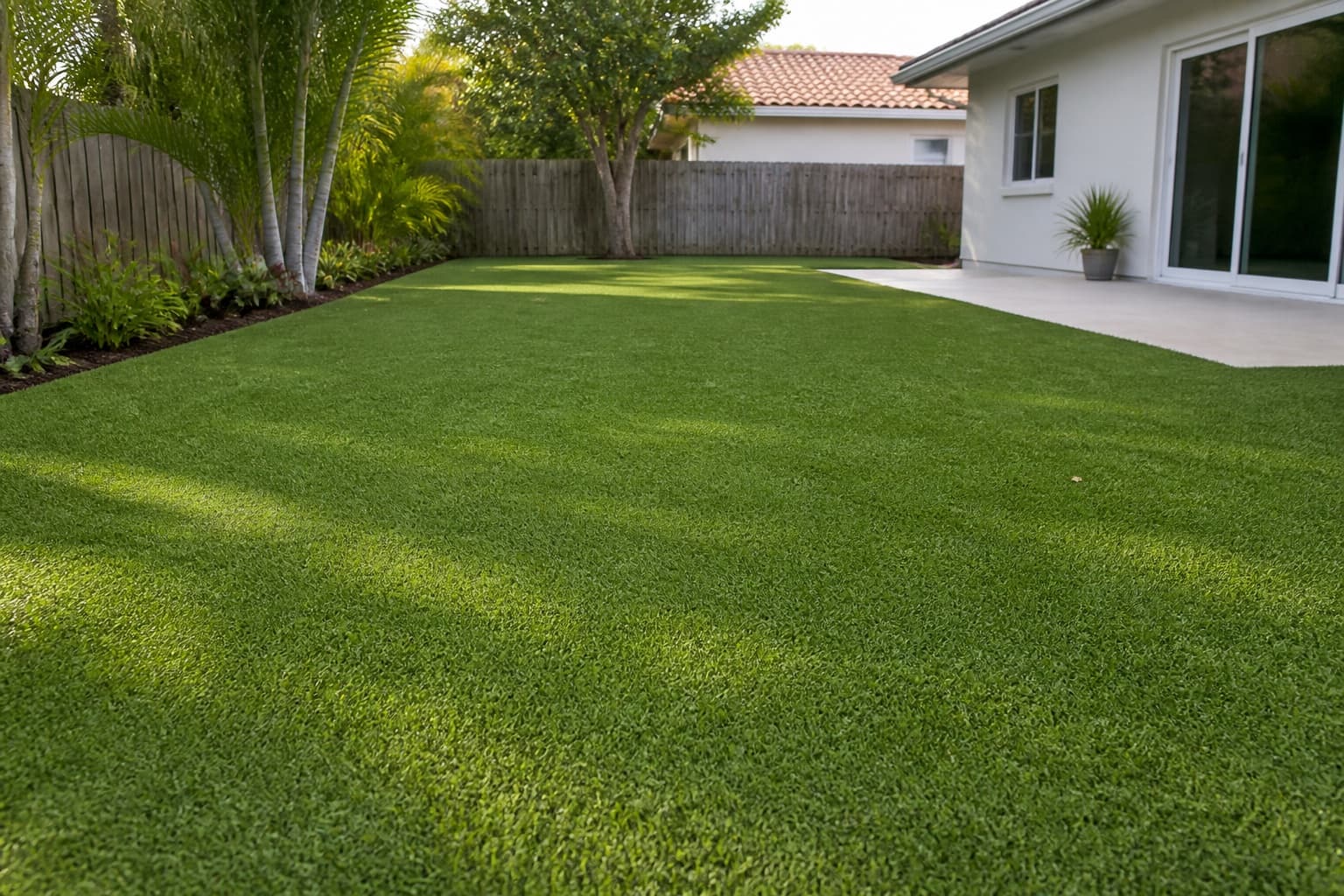
Modern artificial turf products are designed to mimic the look and feel of natural grass. Options like Wembley and Stanford provide a natural and dense appearance, while Anfield offers a bright, graceful look. The turf maintains a consistent green color and uniform height year-round, regardless of weather conditions or seasonal changes. This can be particularly appealing for achieving a perpetually manicured look.
Natural lawns offer the authentic texture and scent of living grass, which many find appealing. However, their appearance can fluctuate with seasons, weather, and maintenance levels. They may develop brown spots, weeds, or uneven growth if not properly cared for. The aesthetic choice often comes down to a preference for consistent, low-maintenance perfection versus the organic, evolving beauty of living grass.
Lumber Plus offers several professional artificial turf systems, including options suitable for residential, pet, and high-traffic applications. The Celtic option, for example, is described as an environmentally friendly choice with a soft feel, suitable for both indoor and outdoor projects, especially for pet owners. Wembley is noted for its performance and resistance to wear and tear, maintaining a green appearance year-round. Stanford offers a majestic cross-section for a natural, dense look with high durability. Anfield provides superb durability and brightness.
Durability and Longevity
Artificial turf is engineered for durability and resistance to wear and tear, making it suitable for high-traffic areas and pet use. Products like Wembley and Stanford are specifically highlighted for their performance and durability. It is designed to withstand various weather conditions without fading or degrading quickly, offering a long lifespan with proper care.
The durability of a natural lawn depends heavily on the grass species, soil conditions, climate, and the level of traffic it receives. High-traffic areas on a natural lawn can quickly become compacted, worn, or muddy, requiring frequent reseeding or repair. While a natural lawn can regenerate, it may struggle in consistently challenging conditions.
Hypothetical Project Example: 500 Sq Ft Backyard
Let's consider our 500-square-foot backyard project. Your goal is a low-maintenance, pet-friendly green space. Currently, your natural lawn requires weekly mowing (1 hour), daily summer watering (30 minutes), and quarterly fertilization/weed treatment (2 hours).
**Natural Lawn Annual Maintenance (Hypothetical):**
Mowing: 52 hours (weekly)
Watering: 180 hours (6 months, 30 min/day)
Fertilization/Weeding: 8 hours (quarterly)
Total Time: 240 hours/year
Estimated Water Use: 25,000 gallons/year (assuming 1 inch of water per week, 500 sq ft)
**Artificial Turf Annual Maintenance (Hypothetical):**
Brushing/Debris Removal: 12 hours (monthly, 1 hour)
Rinsing (for pets): 24 hours (bi-weekly, 1 hour)
Total Time: 36 hours/year
Estimated Water Use: Minimal (for cleaning only)
This comparison illustrates the potential time and resource savings over a single year. Over multiple years, these savings compound, making artificial turf a compelling option for those prioritizing reduced upkeep and water conservation. The initial investment in artificial turf would need to be weighed against these ongoing savings.
Before you order
- What is your budget for initial installation versus ongoing maintenance?
- How much time are you willing to dedicate to lawn care each week/month?
- Is water conservation a high priority for your household or region?
- Do you have pets or anticipate high foot traffic in the area?
- What aesthetic do you prefer: a consistently perfect green or a natural, evolving look?
- Are you comfortable with the environmental implications of both options (materials, water, chemicals)?
- How long do you plan to live in or use the property?
- What are the local regulations or homeowner association rules regarding artificial turf?
Confirm installation details, approved uses and warranty terms in the current instructions for the exact product and profile. Your installer should verify the substrate, structure and applicable project requirements.
Questions to help you decide
Can artificial turf be installed over an existing natural lawn?
No, artificial turf cannot be installed directly over an existing natural lawn. The area must first be cleared of all existing vegetation, and then a proper sub-base needs to be prepared. This typically involves excavating the topsoil, laying down a weed barrier, and then adding and compacting several layers of aggregate to ensure proper drainage and a stable surface for the turf.
How does artificial turf handle pet waste?
Artificial turf can be suitable for pets, with some products designed for pet-specific applications like the Celtic option. Pet urine will drain through the turf and its base, similar to rainwater. Solid waste should be removed promptly, and the area can be rinsed with water or a specialized turf cleaner to prevent odors. Proper infill material and a well-draining base are important for pet-friendly installations.
Does artificial turf get hot in the sun?
Artificial turf can absorb and retain heat, especially darker shades, and may feel warmer to the touch than natural grass in direct sunlight. The degree of heat retention varies by product, infill type, and ambient temperature. Some newer turf technologies aim to mitigate this effect. Occasional rinsing with water can help cool the surface.
Ready to Explore Artificial Turf Options?
Provide your project dimensions, desired profile, and ZIP code to request a material quote. We can also confirm current availability and service options for your area.
Request a material quote →