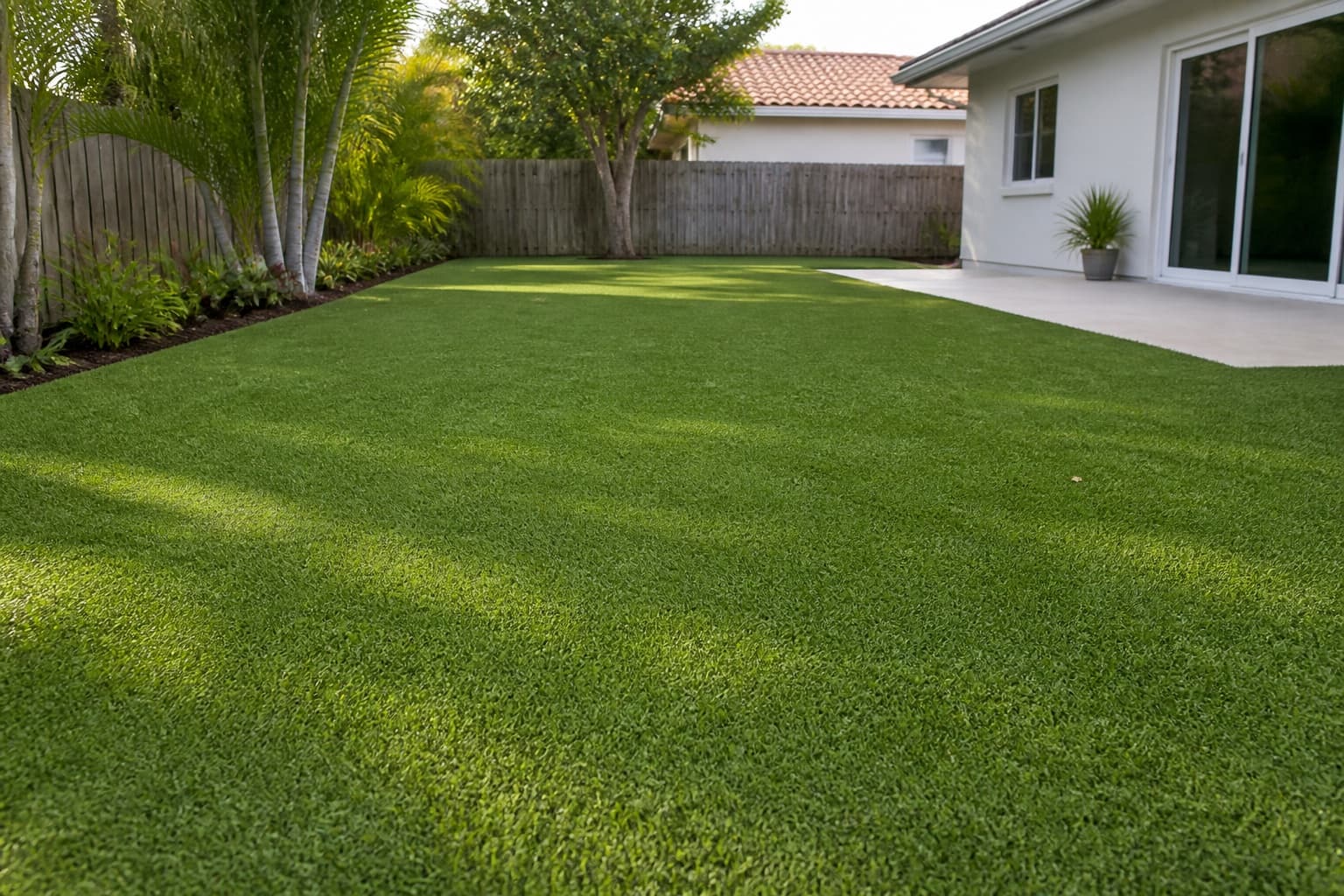
Understanding the Role of Artificial Turf Infill
Infill serves several key functions within an artificial turf system. Primarily, it helps to keep the turf blades standing upright, giving the surface a natural, full appearance. It also adds weight to the turf, preventing wrinkles, ripples, and shifting, especially in areas with varying temperatures or high activity.
Beyond structural support, infill provides a cushioning layer, enhancing comfort underfoot and absorbing impact. This is particularly important for play areas or spaces where people will be walking or spending extended periods. Additionally, infill can help protect the turf's backing from UV degradation and contributes to consistent drainage by allowing water to filter through the system.
Common Types of Artificial Turf Infill
Several types of infill are available, each with distinct characteristics suitable for different applications:
Sand Infill: Often a base layer or mixed with other infills, sand (typically silica sand) provides weight and helps support the turf blades. It is generally cost-effective. However, sand can compact over time and may not offer significant cushioning.
Crumb Rubber Infill: Made from recycled tires, crumb rubber is known for its excellent cushioning properties, making it a popular choice for sports fields and play areas. It also helps with shock absorption and can contribute to a more natural bounce. Its dark color can absorb heat.
Acrylic-Coated Sand: This infill combines the weight of sand with a colored acrylic coating, often green or tan, to make it less visible within the turf. The coating can also help prevent compaction and reduce dust. It offers a balance of support and aesthetics.
Zeofill: A natural infill, Zeofill is often chosen for pet applications due to its ability to absorb ammonia odors from pet urine. It's a porous mineral that traps and neutralizes odors, releasing them through rainfall. It also provides good blade support.
Matching Infill to Your Project Needs
The best infill choice depends heavily on the intended use of your artificial turf area.
For Residential Landscapes: For general landscaping where aesthetics and moderate foot traffic are priorities, acrylic-coated sand or a blend of sand and crumb rubber can offer a good balance of appearance, durability, and comfort. The 'Anfield' turf (LP-1265-Anfield) or 'Stanford' turf (LP-1265-Stanford) could be considered for their natural appearance and durability, paired with an infill that supports their blade structure and maintains visual appeal.
For Pet Areas: If your project involves pets, Zeofill is often recommended due to its odor-absorbing properties. It helps maintain a fresh environment, which is crucial for pet-friendly spaces. Combining Zeofill with a base layer of silica sand can provide both odor control and structural stability. The 'Celtic' turf (LP-1265-Celtic) is described as an environmentally friendly choice for pets, making Zeofill a suitable companion infill.
For High-Traffic or Play Areas: For playgrounds or areas with heavy foot traffic, a blend of crumb rubber and sand is often preferred. The crumb rubber provides superior cushioning and shock absorption, while the sand adds stability. The 'Wembley' turf (LP-1265-Wembley) is noted for its performance and resistance to wear and tear, suggesting it would benefit from an infill system designed for high durability and impact absorption.
Worked Example: Infill Calculation for a Backyard Pet Area
Let's consider a hypothetical backyard project for a pet area measuring 20 feet by 15 feet. The total area is 300 square feet. For a pet area, we'll plan for a two-layer infill system: a base of silica sand for stability and a top layer of Zeofill for odor control.
Assumptions:
Silica Sand: Recommended at a depth of 1.5 pounds per square foot.
Zeofill: Recommended at a depth of 1 pound per square foot.
Calculations:
Silica Sand Needed: 300 sq ft * 1.5 lbs/sq ft = 450 lbs of silica sand.
Zeofill Needed: 300 sq ft * 1 lb/sq ft = 300 lbs of Zeofill.
When ordering, it's advisable to round up to the nearest full bag or unit available from your supplier to account for any minor waste or uneven application. Always confirm specific infill density and coverage recommendations with the turf manufacturer or supplier, as these can vary based on turf pile height and intended use.
Application and Maintenance Considerations
Proper infill application is crucial for the longevity and performance of your artificial turf. Infill should be spread evenly across the turf surface using a drop spreader or similar tool, then brushed into the fibers with a power broom or stiff-bristled push broom. This process ensures the infill settles correctly and helps the blades stand upright.
Over time, infill can settle or migrate, especially in high-traffic areas. Regular brushing helps redistribute the infill and keep the turf looking its best. For pet areas, occasional rinsing of the turf and infill with water can help flush out pet waste and refresh the Zeofill's odor-absorbing properties.
Before you order
- What is the primary use of the artificial turf area (e.g., landscape, pets, play, high traffic)?
- What is the total square footage of your project?
- Are there specific aesthetic requirements (e.g., color of infill)?
- Is odor control a significant concern (e.g., for pet areas)?
- What level of cushioning and shock absorption is desired?
- Have you checked the turf manufacturer's specific infill recommendations for your chosen turf product?
- What are the local climate considerations (e.g., extreme heat absorption for dark infills)?
- What are the long-term maintenance expectations for the chosen infill type?
Confirm installation details, approved uses and warranty terms in the current instructions for the exact product and profile. Your installer should verify the substrate, structure and applicable project requirements.
Questions to help you decide
Is infill always necessary for artificial turf?
While some artificial turf products are designed as 'no-infill' systems, infill is generally recommended and often essential for most artificial turf installations. It provides critical support for the turf blades, adds ballast to prevent movement, and offers cushioning, contributing to the turf's natural appearance and longevity.
Can I mix different types of infill?
Yes, it is common to mix different types of infill to achieve specific benefits. For example, a base layer of silica sand can provide stability and weight, while a top layer of crumb rubber can add cushioning, or Zeofill can be used for odor control in pet areas. Always ensure compatibility and proper layering based on manufacturer guidelines.
How often do I need to replenish artificial turf infill?
The frequency of infill replenishment depends on several factors, including the type of infill, the level of traffic, and environmental conditions. High-traffic areas may require more frequent replenishment than low-traffic zones. Generally, monitoring the turf's appearance and feel will indicate when infill has settled or become sparse and needs to be topped up, often every few years.
Ready to Plan Your Artificial Turf Project?
Contact Lumber Plus for a material quote, providing your project dimensions, desired turf profile, and ZIP code. We can help confirm current availability and service options for artificial turf and infill materials tailored to your needs.
Request a material quote →