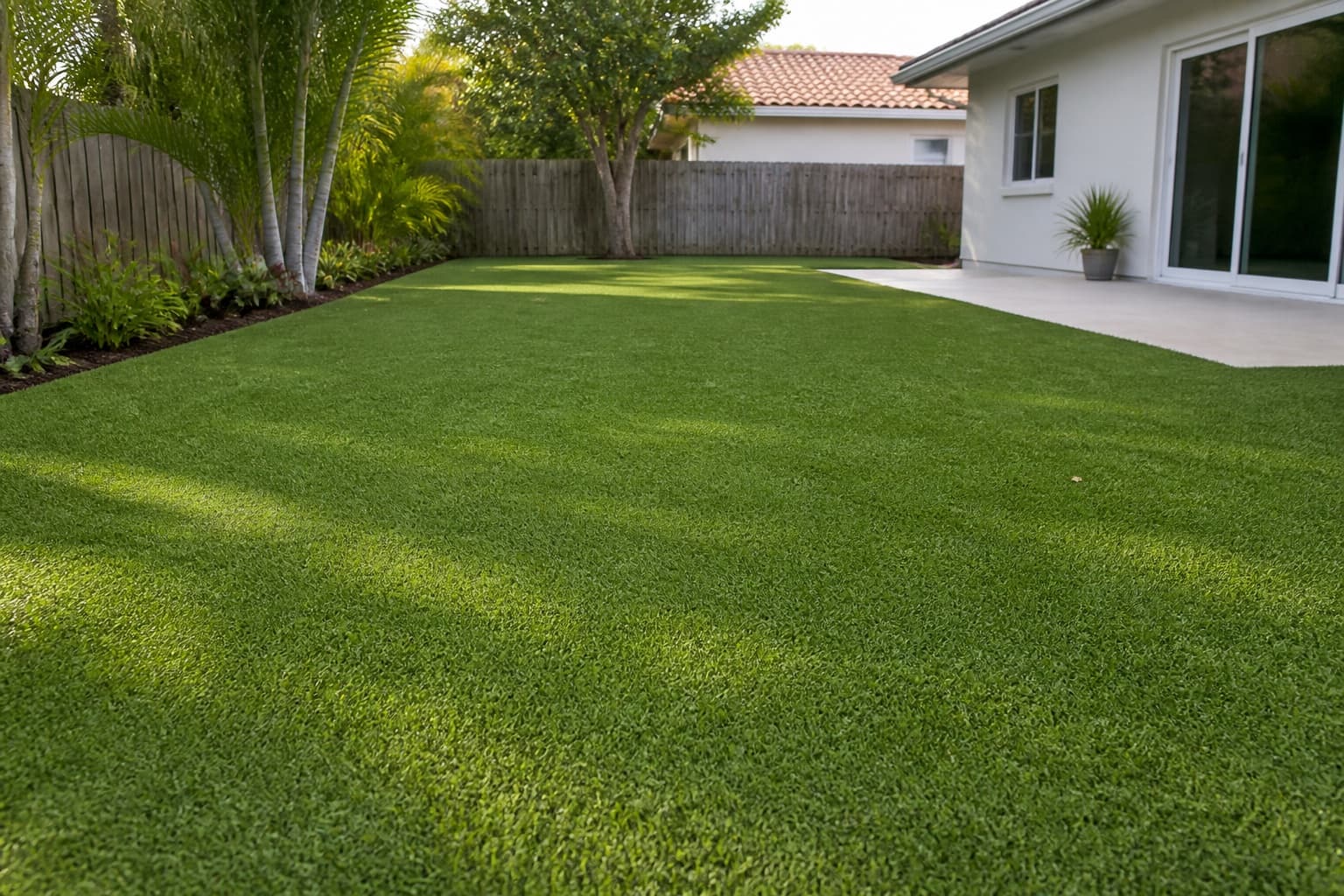
Understanding Full Sun Exposure for Artificial Turf
Full sun exposure for artificial turf means the area receives direct sunlight for six or more hours per day. This can lead to higher surface temperatures compared to shaded areas, and over time, may influence the turf's fibers and backing. The intensity and duration of sunlight can vary based on your project's orientation, local climate, and surrounding structures.
Consider areas like south-facing yards, open rooftops, or pool surrounds that often experience significant sun exposure throughout the day. These conditions require a careful review of product characteristics to ensure long-term satisfaction.
Evaluating Artificial Turf Product Characteristics for Sun
When selecting artificial turf for full sun, certain product attributes become more critical. While all professional artificial turf systems are designed for outdoor use, some may offer characteristics that perform better under intense UV radiation and heat.
The fibers themselves are a key component. The specific polymers used in artificial turf are generally formulated to resist UV degradation. You'll want to review product specifications to understand their UV resistance properties. For example, products like Wembley or Anfield are described with high durability and a beautiful green color to enjoy all year long, which suggests suitability for consistent outdoor exposure. The color stability of the turf is also important; while fading is a natural process for any outdoor material, some products are engineered to maintain their vibrancy longer under harsh sunlight. Examining samples in different lighting conditions can also help you visualize how the turf will appear in your specific sunny environment.
The backing material also plays a role. It provides structural integrity to the turf. Manufacturers often specify the materials used in the backing, which are typically robust enough for outdoor conditions. Proper drainage through the backing is also crucial, especially in sunny areas where evaporation might be rapid after rain, but standing water can still be an issue.
Considerations for Surface Temperature
Artificial turf, like many outdoor surfaces, can absorb and retain heat from direct sunlight. While this is a characteristic of the material, its impact can be managed. The actual surface temperature will depend on factors like ambient air temperature, the intensity and duration of direct sun, and even the specific color and density of the turf fibers.
While specific temperature data is not universally provided, general guidance suggests that darker colors tend to absorb more heat than lighter ones. If surface temperature is a primary concern for your project – for instance, if it's a play area for children or pets – you might consider lighter green shades if available, or plan for alternative cooling strategies such as misting systems or incorporating shaded areas with pergolas or shade sails nearby. It is important to confirm with the manufacturer or supplier if specific heat-reducing infills or backing materials are available and recommended for your chosen product.
Installation Planning for Full Sun Areas
Proper installation is critical for artificial turf in full sun. This includes preparing a stable base that allows for adequate drainage. A well-compacted and level base helps prevent undulations that could become more pronounced with thermal expansion and contraction over time.
Seaming is another important aspect. In areas of high sun exposure, seams need to be meticulously installed to ensure they remain invisible and durable. Professional installation often includes specific techniques and adhesives designed to withstand temperature fluctuations and UV exposure. Ensure that your installer follows manufacturer guidelines for seam preparation and adhesion.
Edge finishing is also vital to prevent lifting or curling, especially in areas where the turf meets other materials like pavers or hardscaping. Secure edging will help maintain the turf's appearance and integrity.
Worked Example: Backyard Play Area in Full Sun
Consider a hypothetical backyard play area measuring 20 feet by 15 feet (300 square feet) that receives direct sunlight for most of the day. The homeowners want a durable, pet-friendly surface. They are considering an artificial turf with a natural look, such as the Celtic or Wembley profiles, which are described as suitable for all indoor and outdoor projects and resistant to wear and tear. The chosen turf comes in 15-foot wide rolls.
First, for a 20-foot by 15-foot area, a single 15-foot wide roll would be cut to 20 feet in length. This would provide the necessary 300 square feet without seams, simplifying installation and reducing potential seam issues in the sun. If the area were 25 feet by 18 feet, for example, two 15-foot wide rolls would be needed, one cut to 25 feet and another cut to 25 feet, resulting in a seam down the middle. This would require careful seam planning. The homeowners would also need to consider a robust base layer to ensure proper drainage and stability under constant sun exposure, and potentially a specific infill material that helps manage surface temperature.
The decision to use a specific turf like Celtic, described as soft and suitable for pets, aligns with the play area use. For a full sun exposure, ensuring the chosen product has strong UV resistance is a priority. While the turf itself is designed for outdoor use, the homeowner might also plan for a shade structure or incorporate trees to provide some relief during peak sun hours, enhancing comfort for users.
Before you order
- Confirm the precise dimensions and orientation of your full sun area.
- Review artificial turf product specifications for UV resistance and color stability.
- Inquire about any specific infill options or backing materials designed for heat management.
- Consider the density and pile height, as these can influence heat retention and appearance.
- Evaluate the need for a professional installer experienced with full sun applications.
- Plan for proper base preparation and drainage relevant to your local conditions.
- Assess the potential for incorporating shade structures or landscaping features.
- Request samples to observe how the turf appears and feels in direct sunlight.
Confirm installation details, approved uses and warranty terms in the current instructions for the exact product and profile. Your installer should verify the substrate, structure and applicable project requirements.
Questions to help you decide
Does artificial turf fade in full sun?
Professional artificial turf systems are engineered with UV-resistant materials to minimize fading. However, like any outdoor material, prolonged exposure to intense sunlight over many years can lead to some gradual color change. Choosing products specifically noted for their durability and color stability, such as Wembley or Anfield, can help maintain appearance longer. Always review the manufacturer's specifications regarding UV resistance.
Will artificial turf get hot in direct sunlight?
Yes, artificial turf can get warm, or even hot, to the touch in direct, intense sunlight, similar to other dark outdoor surfaces like asphalt or paving stones. The actual surface temperature depends on ambient air temperature, sun intensity, and the specific turf product. If surface temperature is a major concern, consider lighter turf shades, planning for shade structures, or exploring cooling methods like misting systems.
Are there special maintenance requirements for artificial turf in full sun?
General maintenance practices for artificial turf, such as periodic brushing and cleaning, apply regardless of sun exposure. In full sun, however, you might notice quicker drying after rain or cleaning. Ensure any infill material is adequately maintained, as it can help with drainage and fiber support. Regular inspection for any signs of wear or seam issues is always a good practice, especially in high-exposure areas.
Ready to Plan Your Artificial Turf Project?
For a material quote tailored to your project dimensions, desired profile, and ZIP code, contact us today. Our team can also confirm current product availability and service options to help you get started.
Request a material quote →