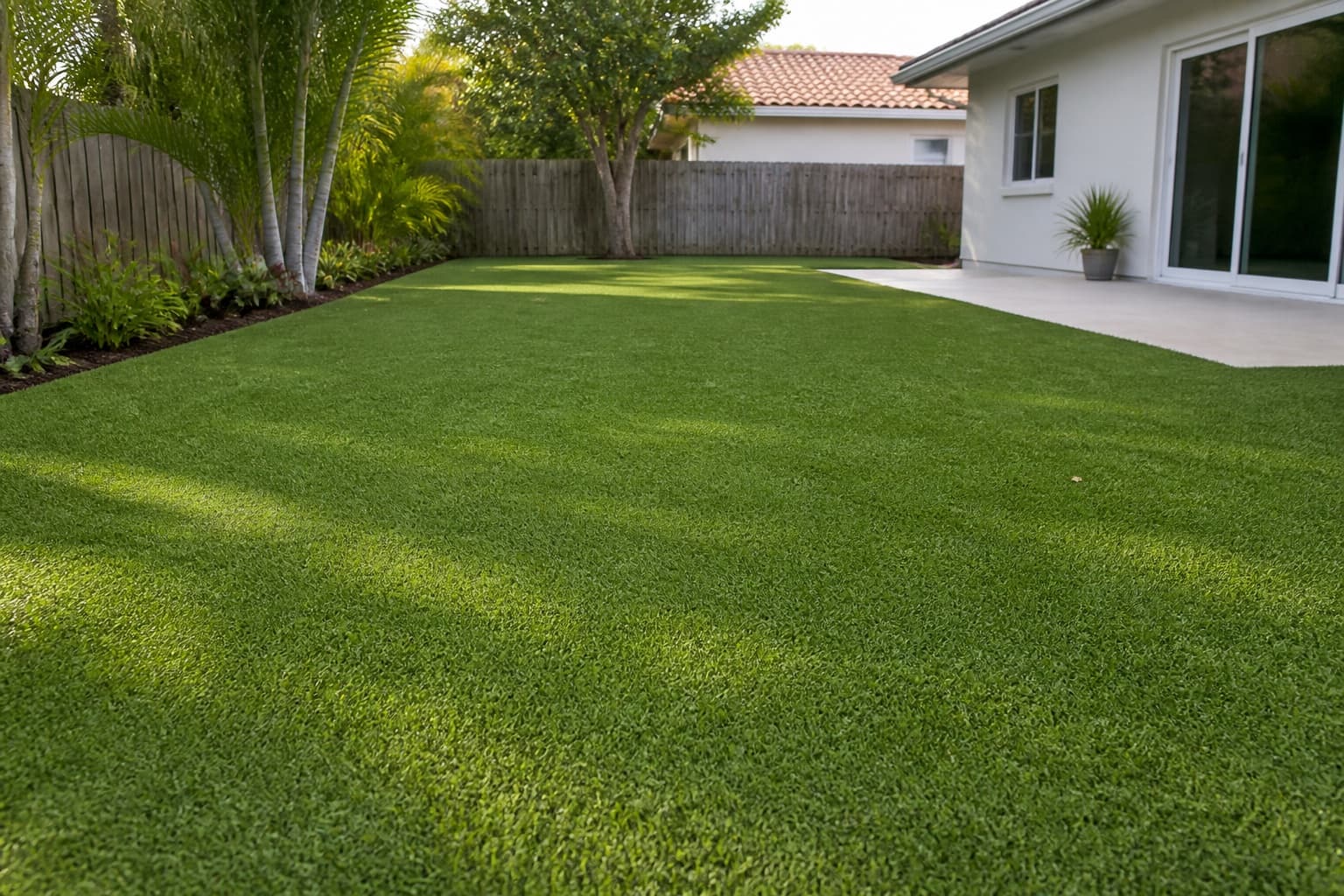
Understanding Artificial Turf Drainage Principles
Artificial turf systems are designed to allow water to pass through the turf backing and into the prepared subgrade below. Unlike natural grass, which absorbs water, artificial turf relies on the underlying base to manage water flow. The primary principle is to ensure that water can move freely through the turf, infiltrate the base, and then drain away from the area without creating standing water or erosion.
Effective drainage planning involves creating a permeable base layer, often using crushed rock or gravel, and ensuring that the entire system has a slight slope. This slope, combined with the permeability of the base, guides water towards a designated drainage point, which could be a storm drain, a French drain, or a landscape area capable of absorbing the runoff.
Preparing the Subgrade for Optimal Drainage
The subgrade, which is the native soil beneath your turf project, forms the foundation of your drainage system. Proper subgrade preparation is crucial. It typically involves compacting the soil to create a stable, even surface and grading it with a slight slope. A general recommendation is a minimum slope of 1-2% (1/8 to 1/4 inch per foot) away from any structures or critical areas.
For areas with poor natural drainage, such as heavy clay soils, additional measures may be necessary. This could include amending the soil with sand or gravel to improve its permeability, or installing a more extensive sub-surface drainage system, such as a network of perforated pipes, to collect and redirect water more effectively.
Choosing and Installing the Base Material
Above the subgrade, a compacted base layer provides both stability and drainage. Common base materials include crushed granite, decomposed granite, or other angular aggregates that compact well but remain permeable. The depth of this base layer can vary, but typically ranges from 3 to 6 inches, depending on the expected traffic and underlying soil conditions.
The base material should be spread evenly, moistened, and then compacted in layers (lifts) to achieve maximum density. Each layer should be compacted thoroughly before adding the next. This creates a firm, stable surface that allows water to percolate through it while supporting the artificial turf.
Tracing Runoff to a Verified Outlet
Identifying and verifying the ultimate destination for your artificial turf's runoff is a non-negotiable step. Water must have a clear, unimpeded path to an appropriate outlet. This could be:
1. **Existing Storm Drains:** If accessible and permitted, connecting to a municipal storm drain system can be an efficient solution. Always confirm local regulations and obtain any necessary permits.
2. **French Drains:** A trench filled with gravel and a perforated pipe, designed to collect and redirect subsurface water. This is effective for areas needing localized drainage improvement.
3. **Landscape Areas:** Directing runoff to a garden bed, permeable patio, or other landscape area that can absorb the water without becoming saturated. Ensure the receiving area has sufficient capacity and is not prone to erosion.
4. **Dry Wells:** An underground structure that temporarily stores and gradually disperses stormwater into the surrounding soil. This is often used when other outlets are not feasible.
It is crucial to physically trace the proposed runoff path to ensure there are no obstructions, negative slopes, or areas where water might accumulate. Consider how heavy rainfall events might impact your drainage plan.
Worked Example: Backyard Artificial Turf Drainage
Consider a hypothetical backyard project: a 20-foot by 15-foot rectangular area (300 sq ft) where artificial turf will be installed. The existing soil is moderately permeable, and there's a slight natural slope of 1% away from the house towards a permeable garden bed at the far end.
**1. Subgrade Preparation:** The existing soil is graded to enhance the 1% slope, ensuring water will flow from the house towards the garden. The subgrade is compacted.
**2. Base Material:** A 4-inch layer of crushed granite is specified. This requires 300 sq ft * (4/12 ft) = 100 cubic feet of material. This will be spread in two 2-inch lifts, moistened, and compacted thoroughly.
**3. Runoff Path:** The design directs all water flowing through the turf and base to the garden bed, which is approximately 5 feet wide and 20 feet long. This garden bed contains well-draining soil and plants that can tolerate moisture. We verify that the garden bed has sufficient capacity to absorb runoff from the 300 sq ft turf area without overflowing onto adjacent paths or saturating the plants.
This example illustrates how a simple, well-planned slope and a permeable receiving area can form an effective drainage solution without complex engineering, provided the subgrade and base are prepared correctly.
Before you order
- Assess existing site drainage: Does water currently pool anywhere?
- Determine subgrade permeability: Is your native soil clay, sand, or loam?
- Plan for a minimum 1-2% slope away from structures.
- Select appropriate base material (e.g., crushed granite) and calculate required depth.
- Identify and verify the final runoff outlet (storm drain, French drain, landscape area, dry well).
- Check local building codes and obtain any necessary permits for drainage modifications.
- Consider the impact of heavy rainfall on your chosen drainage solution.
Confirm installation details, approved uses and warranty terms in the current instructions for the exact product and profile. Your installer should verify the substrate, structure and applicable project requirements.
Questions to help you decide
Do I need a professional to design my artificial turf drainage?
For simple, flat areas with good existing drainage, you may be able to plan it yourself. However, for sloped sites, areas with poor drainage, or projects near foundations or critical structures, consulting a landscape architect or drainage expert is advisable to ensure proper water management and compliance with local regulations.
What if my area has very heavy clay soil?
Heavy clay soil drains poorly. In such cases, you might need to install a more robust drainage system, such as a perforated pipe network beneath your base layer, or amend the subgrade significantly with coarse sand or gravel to improve its permeability. Ensuring a sufficient slope becomes even more critical.
Can I install artificial turf directly over concrete or an existing patio?
Yes, artificial turf can often be installed over concrete or existing patios, provided the existing surface has adequate drainage and a suitable slope. You'll still need to ensure water can pass through the turf and drain off the concrete without pooling. Adding a drainage mat or a thin layer of permeable infill material between the turf and the hard surface can sometimes improve water flow. Always confirm the specific requirements for your chosen turf product and existing surface.
Ready to Plan Your Artificial Turf Project?
Request a material quote with your project dimensions, desired turf profile (such as Wembley, Anfield, Stanford, or Celtic), and ZIP code. Confirm current availability and service options for your area. Explore our professional artificial turf systems, including options for residential, pet, and high-traffic applications. Visit our product page to compare options: Artificial Turf.
Request a material quote →