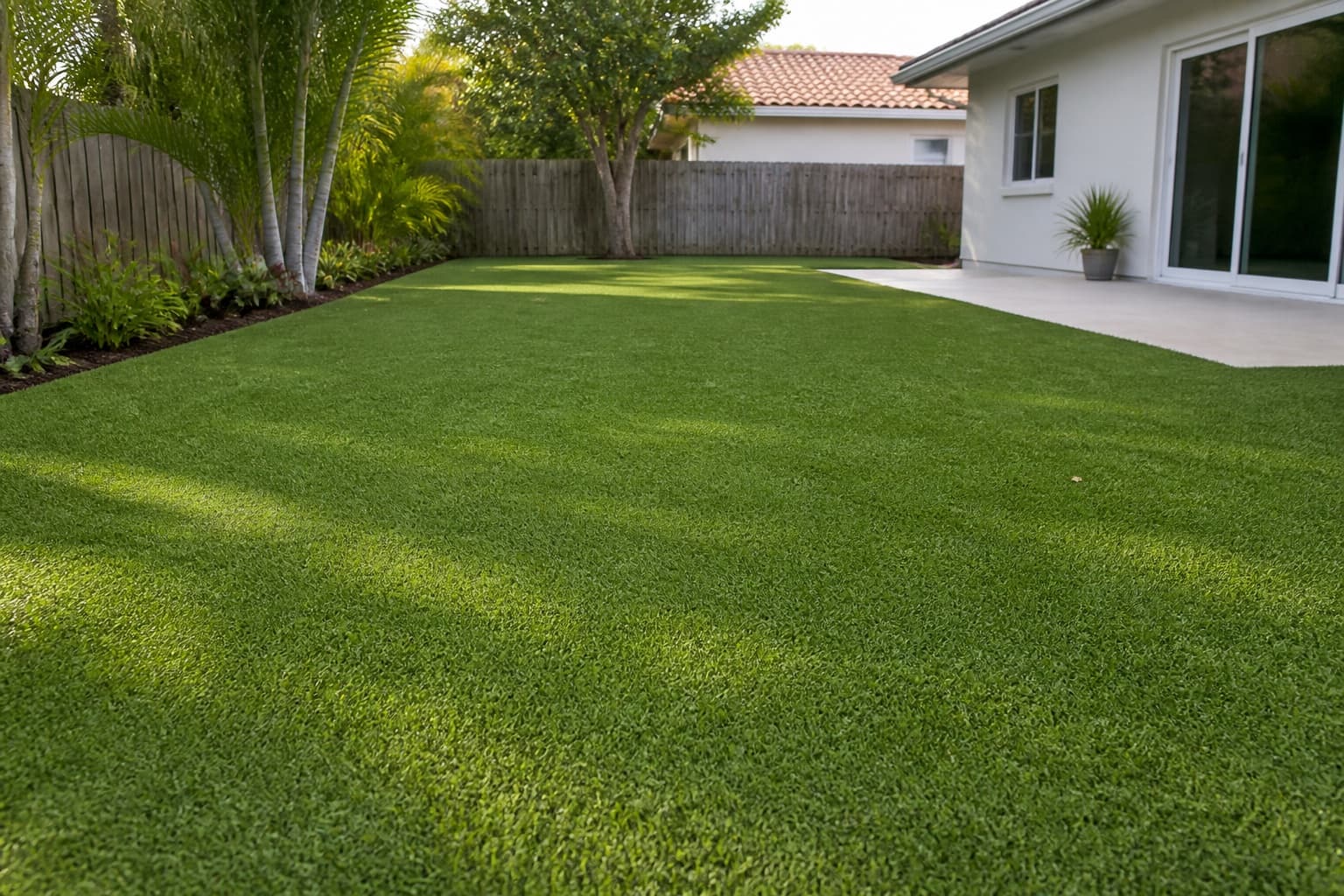
What is Artificial Turf Density?
Artificial turf density refers to the number of individual fibers or stitches per unit area. It's a measure of how tightly packed the turf blades are. A higher density means more fibers are present, resulting in a fuller, often more resilient surface. Conversely, lower density turf has fewer fibers, which can make it feel less plush and potentially show more of the backing.
Density is a critical specification because it directly impacts the turf's appearance, feel, and ability to recover from compression. For instance, a dense turf tends to stand up better to foot traffic and maintain its upright appearance, while a less dense turf might flatten more easily.
It's important to differentiate density from pile height. Pile height is the length of the individual turf blades, while density describes how many of those blades exist within a specific space. Both are important, but they address different aspects of the turf's construction.
Common Density Measurements
Manufacturers typically use a few common metrics to express artificial turf density. Understanding these will help you compare products accurately:
Stitch Rate: This measures the number of stitches per linear unit (e.g., per inch or per 10 cm) along the turf roll. A higher stitch rate indicates more fibers running across the width of the turf.
Gauge: This refers to the distance between rows of stitches on the turf backing. Common gauges include 3/8 inch or 3/4 inch. A smaller gauge means the rows of stitches are closer together, contributing to higher density.
Face Weight: While not a direct measure of stitch density, face weight (measured in ounces per square yard) is often used as an indicator. It represents the weight of the turf fibers themselves, excluding the backing and infill. A higher face weight generally correlates with more fibers and thus, higher density.
Total Weight: This includes the weight of the fibers, backing, and any pre-applied infill. While it gives an overall sense of material, face weight is usually a more specific indicator of fiber density.
Density for Different Applications
The ideal density for your artificial turf depends heavily on its intended use. Matching density to application ensures both aesthetic satisfaction and long-term performance.
Residential Lawns and Low-Traffic Areas: For decorative lawns, pet-friendly backyards, or areas with infrequent foot traffic, a medium to high density turf (e.g., 60-80 oz. face weight) can provide a lush, natural appearance and a soft feel. Products like Anfield, described as a graceful option with superb durability and brightness, would fit this category. (S1)
High-Traffic Areas: For spaces that will see heavy foot traffic, such as commercial courtyards, play areas, or frequently used pathways, a higher density turf is often recommended (e.g., 80 oz. face weight or more). The increased number of fibers helps the turf resist matting and maintain its upright position under constant pressure. Wembley, known for great performance and resistance to wear and tear, is suited for such applications. (S1)
Pet Areas: For pet runs or dog parks, a balance of density and drainage is key. A denser turf can offer more cushion and resilience, but ensure the backing allows for proper drainage. The environmentally friendly turf designed for enjoyment with pets often features a soft feel for both indoor and outdoor projects. (S1)
Aesthetics vs. Performance: While a very high density can look luxurious, it's essential to balance this with the need for drainage and infill penetration. Too dense, and it might impede water flow or make infill application challenging.
Worked Example: Selecting Turf Density for a Family Backyard
Consider a hypothetical backyard measuring 20 feet by 15 feet (300 square feet) that will serve as a multi-purpose family space. It will host children playing, occasional outdoor dining, and a small dog. The goal is a durable, natural-looking turf that feels comfortable underfoot.
Project Requirements:
1. Moderate to heavy foot traffic from children and adults.
2. Needs to withstand dog activity (running, digging attempts).
3. Desired aesthetic: lush, natural green appearance.
4. Priority: Durability and resilience against matting.
Based on these requirements, we would look for a turf with a higher face weight and good stitch density. A product like Stanford, which features a majestic cross-section for a natural and dense look combined with high durability, would be a strong contender. (S1)
Let's assume we find two options:
Option A: Face Weight 65 oz/sq yd, Pile Height 1.5 inches.
Option B: Face Weight 85 oz/sq yd, Pile Height 1.75 inches.
While Option A offers a good balance, Option B's higher face weight (85 oz/sq yd) suggests a greater number of fibers per square yard, leading to superior density. This increased density, combined with a slightly taller pile height, would likely provide better resilience against the children's play and the dog's activity, reducing the likelihood of matting and maintaining a lush appearance over time. The initial investment might be slightly higher, but the enhanced durability aligns better with the long-term project goals for a busy family backyard.
This example illustrates that while specific numbers vary by manufacturer, comparing face weights and understanding their implications for traffic and appearance is a practical approach.
How Density Interacts with Other Turf Characteristics
Density is not a standalone factor; it works in conjunction with other turf specifications to define the product's overall performance and aesthetic.
Pile Height: A high-density turf with a short pile height might feel very firm and compact, suitable for putting greens. A high-density turf with a longer pile height will feel softer and more luxurious, ideal for a premium lawn. Conversely, a low-density turf with a long pile height could appear sparse and be prone to matting.
Fiber Shape and Material: The shape of the individual turf fibers (e.g., C-shape, S-shape, diamond) and their material (e.g., polyethylene, polypropylene) also affect how dense the turf appears and how well it recovers. Some fiber shapes are designed to enhance resilience, working with density to resist flattening.
Backing: The quality and type of backing material are crucial for the turf's overall integrity. A robust backing ensures that the dense fibers remain securely anchored, contributing to the turf's durability. The backing also plays a role in drainage.
Infill Requirements: Denser turf may require less infill to help the blades stand upright, as the fibers themselves provide more support. However, infill is still essential for ballast, cushioning, and protecting the backing from UV rays. Always refer to manufacturer guidelines for specific infill recommendations.
Before you order
- Identify the primary use of the artificial turf area (e.g., decorative, pet area, play zone, high-traffic pathway).
- Consider the expected level of foot traffic and activity.
- Determine your aesthetic preference: Do you prioritize a lush, dense look or a more minimalist appearance?
- Review manufacturer specifications for stitch rate, gauge, and especially face weight (oz/sq yd).
- Compare the density of different turf options, keeping your project's specific needs in mind.
- Consider how density interacts with pile height, fiber shape, and backing for overall performance.
- Account for drainage requirements, particularly in pet areas.
- Request samples to physically assess the feel and appearance of different densities before making a final decision.
Confirm installation details, approved uses and warranty terms in the current instructions for the exact product and profile. Your installer should verify the substrate, structure and applicable project requirements.
Questions to help you decide
Is higher turf density always better?
Not necessarily. Higher density generally means greater durability and a more luxurious, natural appearance, which is often desirable for high-traffic areas or premium residential lawns. However, for some applications, a medium density might be perfectly adequate and more cost-effective. Extremely dense turf can sometimes affect drainage or make infill application more challenging. The "best" density depends on your specific project's needs and budget.
How does density affect the feel of artificial turf?
Density significantly impacts the tactile feel of artificial turf. Higher density turf typically feels softer, more cushioned, and springier underfoot because there are more fibers to absorb impact and provide support. Lower density turf might feel firmer or less plush, and the backing could be more noticeable, especially with shorter pile heights.
Can I determine density just by looking at the turf?
While you can get a general sense of fullness by looking at turf, relying solely on visual inspection can be misleading. Different fiber shapes, colors, and pile heights can make turf appear denser or sparser than it truly is. Always refer to the manufacturer's specifications (like face weight or stitch rate) for an accurate understanding of the turf's actual density. Requesting samples allows you to compare the look and feel alongside the technical data.
Ready to Select Your Artificial Turf?
To get started on your project, request a material quote with your project dimensions, desired turf profile, and ZIP code. Our team can help confirm current availability and service options for professional artificial turf systems like Anfield, Wembley, and Stanford.
Request a material quote →