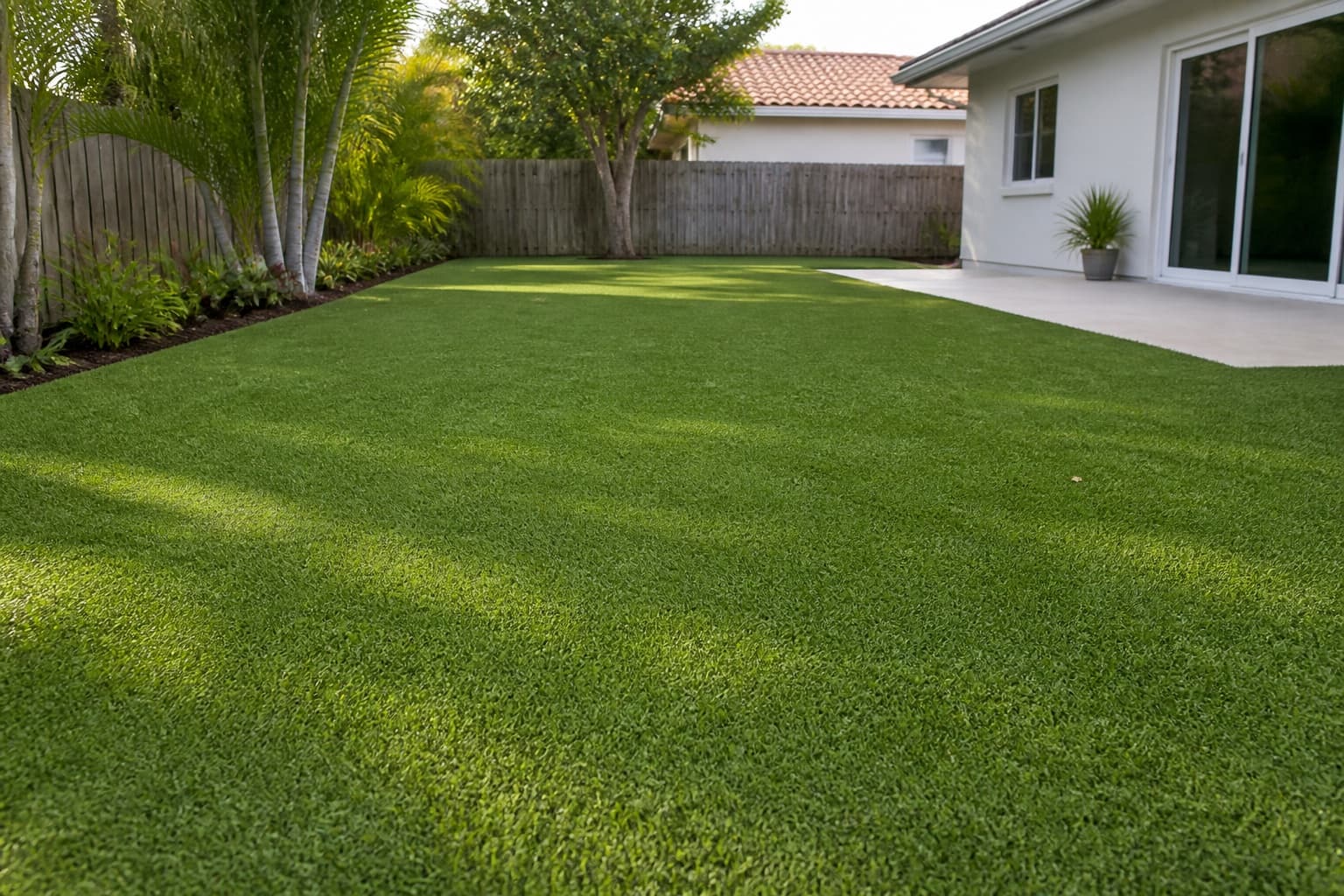
Understanding Courtyard Dynamics for Turf Installation
Courtyards present unique characteristics that influence artificial turf selection and installation. They can range from intimate, fully enclosed spaces to semi-open areas, often serving as transitional zones or focal points. Key considerations include the surrounding structures, existing hardscaping, and the primary purpose of the courtyard.
For example, a courtyard primarily used for quiet contemplation might prioritize a softer, denser turf profile like Anfield or Stanford for a lush, natural appearance. In contrast, a courtyard serving as a high-traffic pathway or play area may benefit from a more resilient option like Wembley, known for its resistance to wear and tear. Understanding these dynamics from the outset helps in making informed product choices and planning for long-term usability.
Planning for Pedestrian Circulation
In a courtyard, circulation paths are critical. Artificial turf can define walkways or fill in areas between pavers and other hardscaping. Consider how foot traffic will flow across the turf and whether pathways need to be reinforced or distinct. High-traffic zones may necessitate turf with a robust pile and backing to withstand constant use.
If the turf will be part of a primary walking path, a shorter, denser pile may be more practical as it resists matting and is easier to maintain. For areas where traffic is lighter, or where the turf is more decorative, a longer, softer pile can offer a more luxurious feel. Always plan for seamless transitions between turf and adjacent surfaces to prevent tripping hazards and ensure a polished look.
Managing Drainage in Enclosed Spaces
Courtyards, especially those with surrounding walls or structures, require careful drainage planning. Artificial turf systems are designed to allow water to pass through, but the underlying base must be correctly prepared to prevent pooling and ensure efficient water runoff. An inadequate drainage plan can lead to standing water, odors, and potential damage to the turf and surrounding structures.
The base preparation typically involves a compacted layer of crushed aggregate, graded to direct water away from the turf area and towards existing drains or permeable surfaces. It is crucial to assess the existing drainage conditions of your courtyard and, if necessary, consult with a professional to ensure proper water management. The turf's backing material also plays a role in drainage; ensure it is designed for effective water permeability.
Addressing Shade and Sunlight Exposure
Courtyards often experience varied sunlight exposure due to surrounding buildings, trees, or pergolas. While artificial turf does not require sunlight to grow, prolonged periods of deep shade can affect its drying time after rain, and intense, direct sunlight can influence its surface temperature. Planning for these conditions is important.
In heavily shaded areas, ensure adequate air circulation to help the turf dry. For areas exposed to significant direct sunlight, consider the turf's color and material composition, as darker shades may absorb more heat. All artificial turf products offered, such as Celtic, Wembley, Stanford, and Anfield, are designed to maintain their appearance and color stability under various light conditions.
The interplay of light and shadow can also highlight or soften the turf's texture and color, adding to the visual appeal of the courtyard. Observe how light moves through your courtyard at different times of the day to anticipate these effects.
A Hypothetical Courtyard Project: The Urban Oasis
Consider a hypothetical urban courtyard, measuring 15 feet by 20 feet, serving as an outdoor dining and relaxation area. The courtyard is bordered by a brick wall on two sides, a house wall on another, and an open walkway on the fourth. The primary goal is to create a low-maintenance, green space that complements existing pavers and a small raised garden bed.
For this 300 square foot area, we might select the Anfield turf for its superb durability and natural brightness, providing a welcoming feel. The courtyard will have a central turf area, with a 2-foot wide paver path leading from the house door to the garden. This means the turf area would be approximately 15 feet by 18 feet, or 270 square feet, accounting for the path.
Drainage is critical; the base will be prepared with a slight slope (e.g., 1/8 inch per foot) towards a perimeter drain along the open walkway. The turf rolls, typically 15 feet wide, would be laid in one continuous piece across the 15-foot dimension, requiring one seam for the 18-foot length if a 15-foot by 18-foot piece is cut from a larger roll. Edges will be secured with edging strips to create a clean finish against the pavers and garden bed. Shaded areas from the house wall will be monitored for drying, ensuring good air circulation.
Before you order
- What is the primary function of the courtyard (e.g., dining, play, relaxation, pathway)?
- How much foot traffic will the artificial turf receive?
- What are the existing drainage conditions, and how will water be managed?
- What are the dimensions of the turf area, and what roll widths are available?
- How will the turf transition to adjacent surfaces (pavers, walls, garden beds)?
- What are the sunlight and shade patterns throughout the day?
- Which turf profile (e.g., Anfield, Wembley, Stanford, Celtic) best suits the courtyard's aesthetic and functional needs?
- Will infill be required, and if so, what type and quantity?
- What type of base preparation is needed for proper installation and drainage?
Confirm installation details, approved uses and warranty terms in the current instructions for the exact product and profile. Your installer should verify the substrate, structure and applicable project requirements.
Questions to help you decide
Can artificial turf be installed directly over an existing patio or concrete slab in a courtyard?
While it is technically possible, it is not always recommended without proper preparation. For optimal drainage and longevity, a permeable base material is usually preferred. If installing over concrete, ensure there are sufficient drainage points and consider a shock pad or drainage mat underneath to facilitate water flow and provide cushioning. Proper base preparation is key to preventing pooling and ensuring the turf performs as intended.
How do I ensure good drainage for artificial turf in a fully enclosed courtyard?
For fully enclosed courtyards, a robust drainage plan is essential. This typically involves excavating the area, installing a compacted base of crushed aggregate with a slight slope, and directing water towards a perimeter drain, channel drain, or an existing storm drain connection. The turf's backing should also be permeable. Consulting a landscape professional for an enclosed courtyard's specific drainage challenges is advisable.
Will artificial turf get too hot in a sunny courtyard?
Like any surface exposed to direct sunlight, artificial turf can absorb heat and become warm. The degree of heat retention can vary based on the turf's color, infill material, and ambient temperature. Lighter colored turf may absorb less heat than darker shades. Infill materials can also influence surface temperature. In very sunny courtyards, consider incorporating shade structures or using a misting system during peak heat to help cool the surface. Always check the specific product information for guidance on heat considerations.
Ready to Transform Your Courtyard?
Request a material quote with your project dimensions, desired turf profile, and ZIP code to confirm current availability and service options for your artificial turf project.
Request a material quote →