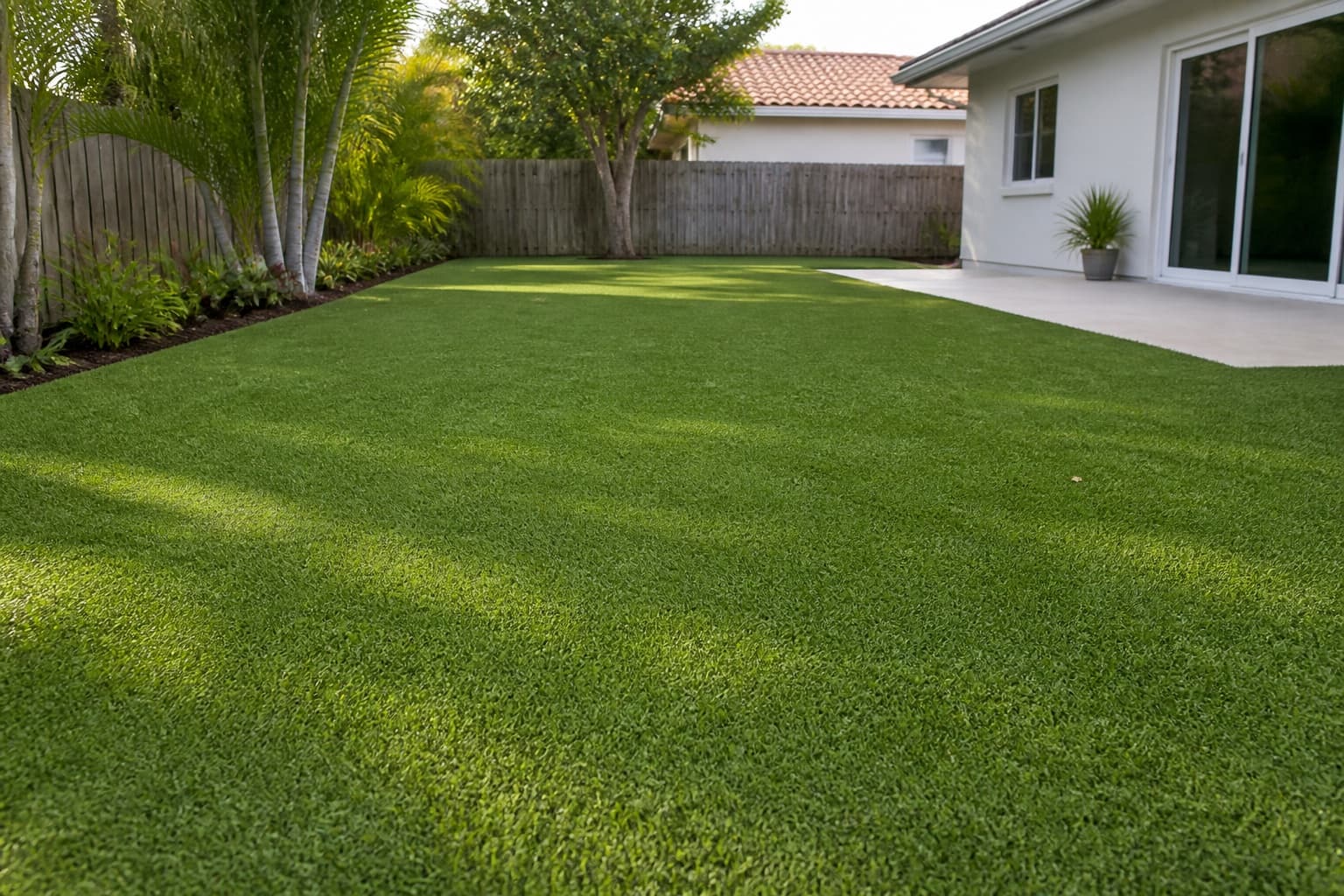
Evaluating Commercial Courtyard Traffic Patterns
Before selecting artificial turf, accurately assess the expected foot traffic in your commercial courtyard. Is it an area for occasional strolls, daily employee breaks, or a high-volume pathway? Commercial courtyards can experience concentrated wear in specific zones, such as entrances, seating areas, or walkways. Understanding these patterns helps in choosing a turf product with adequate durability.
For areas with consistent, heavy foot traffic, a turf designed for high-traffic applications is essential. These products often feature robust backing and resilient fibers that can withstand repeated compression and friction without showing premature wear. Wembley artificial turf is noted for its performance and resistance to wear and tear, making it a potential option for such demanding environments. Anfield turf is also described as providing superb durability.
Consider how the turf will interact with other elements like outdoor furniture, planters, or temporary event setups. These can also contribute to localized stress on the turf, necessitating a more robust product choice.
Selecting Turf for Durability and Appearance
Commercial courtyards require artificial turf that maintains its aesthetic appeal year-round, even under challenging conditions. The choice of turf should balance a natural look with the necessary resilience.
When reviewing options, consider the pile height and density. A denser turf with a moderate pile height can often offer a good balance of durability and a lush appearance. Products like Stanford turf are described as having a majestic cross-section that makes the turf look natural and dense, combining high durability with a beautiful green color. Wembley turf is also noted for its year-round green appearance.
The backing material of the artificial turf is also a critical component for commercial applications, contributing to the turf's stability and longevity. While specific backing details for each product vary, a robust backing system is generally preferred for high-traffic areas to prevent shifting and ensure a consistent surface.
For projects aiming for a softer feel in lower-traffic amenity areas, options like the environmentally friendly turf described for pets and outdoor enjoyment might be considered, though its suitability for heavy commercial traffic should be carefully reviewed.
Planning for Effective Drainage
Proper drainage is paramount for any outdoor commercial space, especially with artificial turf. Water must effectively drain through and away from the turf to prevent pooling, odors, and potential damage to the underlying base. The base preparation beneath the turf is critical for ensuring adequate water permeability.
A well-designed base typically includes a compacted layer of crushed aggregate, providing a stable foundation and facilitating water percolation. The slope of the sub-base should direct water towards designated drainage points. For commercial courtyards, where large impermeable surfaces might surround the turf, integrating trench drains or other catch basins around the turf area can be necessary.
Verify the drainage characteristics of the chosen artificial turf product. Most quality artificial turfs are designed with permeable backing to allow water to pass through. However, the overall drainage system depends heavily on the site's grading and the sub-base construction.
Installation Considerations for Commercial Scale
Installing artificial turf in a commercial courtyard often involves larger areas and more complex geometries than residential projects. Accurate measurements and careful planning of roll widths and seams are essential to minimize waste and ensure a seamless appearance.
Professional installation is highly recommended for commercial projects due to the need for precise cuts, secure seaming, and proper infill application. Seams must be meticulously joined to prevent visibility and ensure durability, especially in high-traffic zones. The infill material helps to keep the turf blades upright, provides ballast, and can contribute to cushioning.
Consider the logistical aspects of delivery and job site access for large rolls of artificial turf and base materials. Planning for these elements in advance can prevent delays and additional costs.
Maintenance for Commercial Courtyard Turf
One of the primary advantages of artificial turf for commercial courtyards is its low maintenance requirement compared to natural grass. However, 'low maintenance' does not mean 'no maintenance.' Regular care is still necessary to preserve its appearance and extend its lifespan.
Routine maintenance typically includes removing debris such as leaves, dirt, and litter with a leaf blower or stiff broom. Periodic brushing of the turf fibers can help maintain an upright pile, especially in areas of heavy foot traffic. This helps prevent matting and keeps the turf looking fresh.
For commercial settings, a planned maintenance schedule is advisable, which might include occasional rinsing to remove dust and minor spills. For tougher stains or spills, consult the manufacturer's cleaning guidelines to ensure compatible and effective cleaning methods are used without damaging the turf. Prompt attention to spills helps prevent them from setting.
Worked Example: Calculating Turf for a Commercial Plaza Courtyard
Imagine a commercial plaza courtyard with an irregular shape, approximately 30 feet by 20 feet, but with a central fountain and two curved planter beds, totaling an estimated turfable area of 500 square feet. The chosen artificial turf comes in rolls 15 feet wide.
To cover this 500 square foot area, considering the 15-foot roll width, a simple area division (500 / 15 = 33.33 linear feet) is insufficient. Instead, a detailed layout plan is needed. For a 30-foot by 20-foot space, two 15-foot wide rolls will be needed to cover the 30-foot dimension. The longest continuous length needed is 20 feet. So, two rolls, each 15 feet wide and 20 feet long, would provide 600 square feet (2 x 15' x 20' = 600 sq ft). This allows for cutting around the fountain and planter beds. The excess 100 square feet provides a buffer for cuts and potential waste from the irregular shapes.
When planning, always account for the roll width and the longest dimension of your turfable area to determine the number of full rolls required. Offcuts from one section might be used in another smaller, adjacent area if planned carefully, but significant waste can occur with complex shapes. For this example, ordering two 15-foot x 20-foot rolls would be a practical approach, totaling 40 linear feet of 15-foot wide turf.
Before you order
- Assess anticipated foot traffic levels (low, moderate, high) in all areas of the courtyard.
- Verify the chosen artificial turf's durability rating for commercial use and high-traffic applications.
- Consider the aesthetic requirements: desired pile height, density, and color for a professional appearance.
- Plan for comprehensive drainage, including sub-base grading and integration with existing drainage systems.
- Determine the most efficient roll width to minimize seams and waste for your specific courtyard dimensions.
- Factor in infill requirements and ensure compatibility with commercial usage.
- Outline a regular maintenance schedule, including cleaning and brushing protocols.
- Confirm manufacturer guidelines for cleaning products and repair procedures.
- Budget for professional installation, especially for complex layouts and larger areas.
Confirm installation details, approved uses and warranty terms in the current instructions for the exact product and profile. Your installer should verify the substrate, structure and applicable project requirements.
Questions to help you decide
How often should commercial artificial turf be cleaned?
The frequency of cleaning depends on the level of use, environmental factors (like falling leaves or dust), and the desired aesthetic. For commercial courtyards, a weekly or bi-weekly routine of debris removal (leaf blowing, sweeping) is often recommended. Deeper cleaning, such as rinsing or addressing spills, should be done as needed.
Can artificial turf be installed over existing concrete or pavement in a courtyard?
Yes, artificial turf can often be installed over existing concrete or pavement. However, proper preparation is crucial. The existing surface must be clean, level, and have adequate drainage. A shock pad or underlayment may be recommended to provide cushioning and improve drainage, depending on the product specifications and desired comfort level. Ensure any cracks or unevenness in the existing surface are addressed before installation.
What kind of infill is best for high-traffic commercial courtyards?
For high-traffic commercial courtyards, a durable and stable infill material is generally preferred. Options like silica sand or specific rubber granules are common. The infill helps to keep the turf blades upright, provides stability, and can contribute to the turf's overall resilience. Always consult the specific product's recommendations for infill type and quantity to ensure optimal performance and longevity.
Request a Material Quote for Your Commercial Courtyard Project
Ready to transform your commercial courtyard? Request a material quote by providing your project dimensions, desired artificial turf profile, and ZIP code. Our team can help confirm current availability and service options for your specific needs.
Request a material quote →