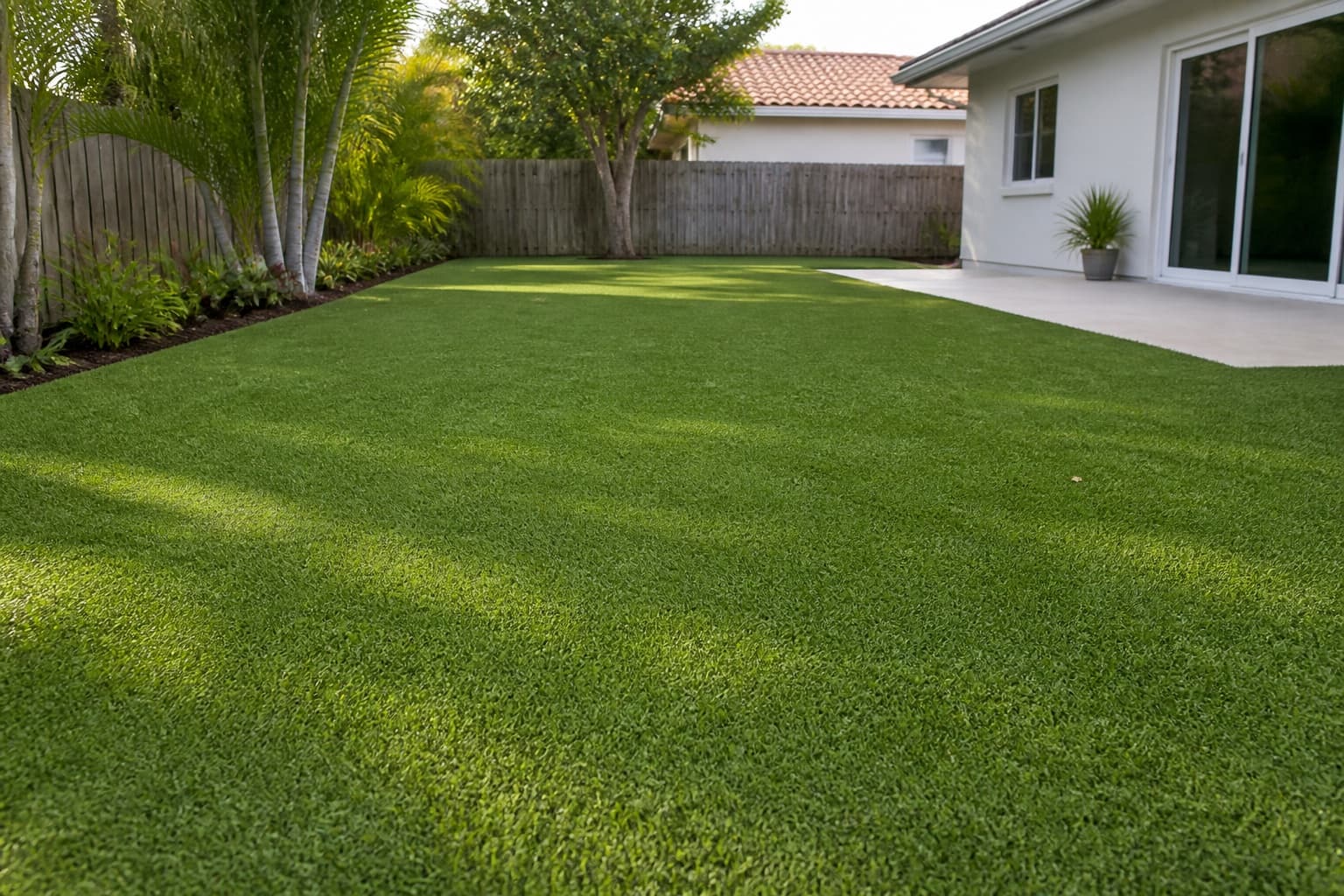
Understanding the Layers of an Artificial Turf Base
A typical artificial turf installation involves several distinct layers, each serving a specific purpose. From the native soil up, these layers work in concert to create a durable and functional surface.
The first step is usually excavating the existing soil to a suitable depth. This ensures there's enough room for the base materials and provides a stable foundation. The depth of excavation will depend on your specific site conditions and the type of base materials chosen.
Next comes the sub-base, often composed of compacted crushed rock or gravel. This layer provides structural stability and is crucial for drainage. Above the sub-base, a finer aggregate layer, such as decomposed granite or crushed limestone, creates a smooth, level surface for the turf itself. This layer is carefully graded and compacted to eliminate irregularities and promote water flow.
Finally, the artificial turf rolls are laid directly on this prepared, compacted surface. The quality of each underlying layer directly influences how the turf performs and looks over time.
Selecting Sub-Base Materials for Drainage and Stability
The choice of sub-base material is paramount for both drainage and structural integrity. Common options include crushed granite, limestone, or other angular aggregates, typically ranging from 3/4 inch down to 3/8 inch in size.
These materials are selected for their ability to compact tightly, creating a stable, permeable layer that allows water to drain effectively. Good drainage is essential to prevent water from pooling under the turf, which can lead to odors, mildew, and potential damage to the turf backing.
When considering materials, also think about the expected traffic on your turf. For areas with heavy foot traffic or where heavy items might be placed, a more robust and deeper sub-base may be necessary to prevent compression and maintain an even surface. Always confirm material specifications with your supplier to ensure they are suitable for artificial turf applications.
The Importance of Compaction and Grading
Proper compaction and grading are non-negotiable for a successful artificial turf installation. Compaction ensures that the base layers are dense and stable, preventing future settling or undulations that can create trip hazards and an unsightly appearance.
Each layer of the base, from the excavated soil to the final leveling course, should be compacted thoroughly using appropriate equipment, such as a plate compactor. Multiple passes in different directions are often needed to achieve optimal density. The goal is to create a firm, unyielding surface.
Grading involves shaping the base to ensure proper water runoff. The surface should have a slight slope, typically 1-2%, away from structures or towards designated drainage points. This prevents water from collecting under the turf, which is crucial for maintaining a dry and clean surface. A laser level or string line can help achieve accurate grading.
Calculating Base Material Quantities: A Hypothetical Example
Accurately calculating the amount of base material needed prevents costly over-ordering or project delays. Here’s a hypothetical example for a rectangular turf area.
Imagine a backyard area measuring 20 feet by 15 feet. We plan for a 4-inch deep compacted sub-base of crushed granite and a 1-inch deep compacted layer of decomposed granite for the leveling course.
For the sub-base: Area = 20 ft * 15 ft = 300 square feet. Desired depth = 4 inches = 4/12 ft = 0.333 ft. Volume = 300 sq ft * 0.333 ft = 99.9 cubic feet. Since aggregates are often sold by the cubic yard, convert: 99.9 cubic feet / 27 cubic feet per cubic yard = 3.7 cubic yards. It's wise to add 10-15% for compaction and waste, so approximately 4.1 to 4.2 cubic yards.
For the leveling course: Area = 300 square feet. Desired depth = 1 inch = 1/12 ft = 0.083 ft. Volume = 300 sq ft * 0.083 ft = 24.9 cubic feet. In cubic yards: 24.9 cubic feet / 27 cubic feet per cubic yard = 0.92 cubic yards. Adding 10-15% for compaction and waste, this becomes approximately 1.0 to 1.1 cubic yards.
Always confirm the bulk density of your chosen materials with your supplier, as this affects the total weight and potentially the quantity needed for volumetric calculations. It's generally better to slightly over-order than to run short during installation.
Integrating Drainage Systems into Your Base
While a permeable base helps with drainage, some projects, especially in areas with heavy rainfall or poor native soil drainage, may benefit from an integrated drainage system. This can include perforated pipes, French drains, or specialized drainage mats placed beneath the sub-base.
These systems capture and redirect water that permeates through the turf and base layers, preventing saturation and ensuring the long-term health of your installation. If your site has a high water table or known drainage issues, consulting with a landscape professional about additional drainage solutions is recommended.
Ensure any integrated drainage components are compatible with the base materials and do not compromise the stability or compaction of the overall system. Proper planning at this stage can prevent significant issues down the line.
Before you order
- Assess existing site drainage and soil conditions.
- Determine required excavation depth for base layers.
- Select appropriate sub-base (e.g., crushed granite) and leveling course (e.g., decomposed granite) materials.
- Calculate exact quantities of each base material, accounting for compaction and waste.
- Plan for proper grading (1-2% slope) for water runoff.
- Identify any need for additional drainage systems (e.g., French drains).
- Confirm availability of compaction equipment.
- Consider edge restraints to contain base materials.
Confirm installation details, approved uses and warranty terms in the current instructions for the exact product and profile. Your installer should verify the substrate, structure and applicable project requirements.
Questions to help you decide
How deep should the base for artificial turf be?
A typical base for artificial turf ranges from 3 to 6 inches in total depth, consisting of a compacted sub-base and a finer leveling course. The exact depth can vary based on factors like expected foot traffic, native soil conditions, and desired drainage performance.
Can I install artificial turf directly on soil?
Installing artificial turf directly on soil is generally not recommended. A properly constructed base provides essential drainage, stability, and a smooth, level surface. Without a base, the turf is prone to uneven settling, poor drainage, and weed growth, which can significantly shorten its lifespan and diminish its appearance.
What is the best material for the top layer of an artificial turf base?
The best material for the top, leveling layer of an artificial turf base is typically a fine aggregate like decomposed granite, crushed limestone, or screenings. These materials compact tightly to create a smooth, firm, and permeable surface that supports the turf evenly and allows for efficient drainage.
Ready to Plan Your Artificial Turf Project?
Get a material quote for your artificial turf base and turf. Provide your project dimensions, desired base materials, and ZIP code to confirm current availability and service options. Explore our full range of artificial turf options, including Wembley, Stanford, and Anfield, for residential, pet, and high-traffic applications.
Request a material quote →