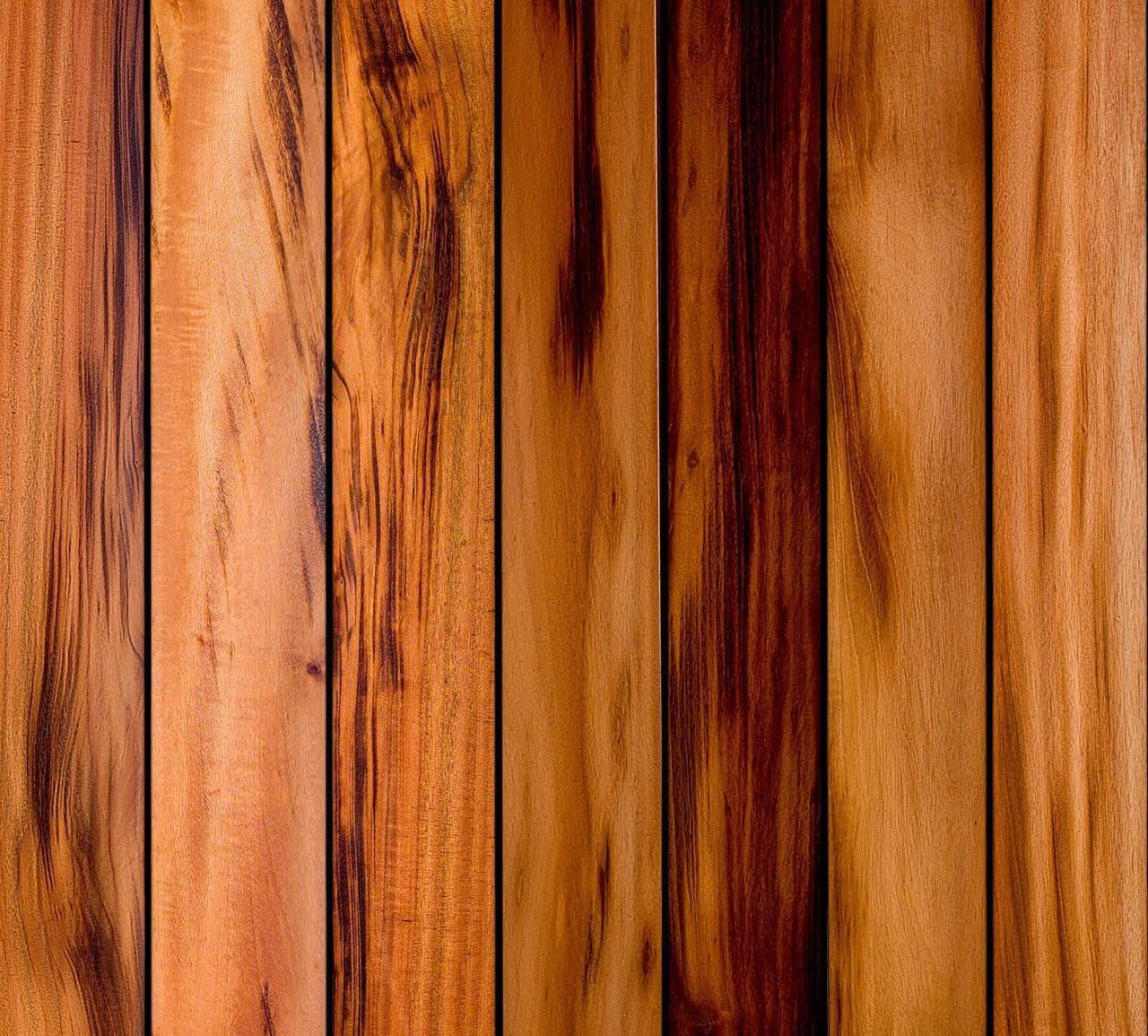
Understanding Tigerwood for Deck Stairs
Tigerwood is a dense exotic hardwood known for its golden-brown hues with dark brown streaks, offering a distinctive appearance. Beyond aesthetics, its density contributes to durability and resistance to rot and decay. These properties make it a suitable material for outdoor applications, including deck stairs, provided the specific profiles and installation methods are appropriate for the intended use.
The material's natural water repellence and resistance to termites are advantageous for any exterior application where exposure to the elements is a factor. However, its hardness also means that working with Tigerwood requires professional-grade tools, carbon-tipped saw blades, and pre-drilling for fasteners. These characteristics are important to consider when planning stair construction, as they influence both the material's performance and the installation process.
Lumber Plus offers Tigerwood decking in a 5/4"x6" profile, which measures 1" x 5.5" actual dimension. This standard decking profile is typically used for deck surfaces. When considering it for stairs, it's essential to understand how this profile integrates into stair components like treads and risers.
Stair Components and Tigerwood Integration
A typical deck stair assembly includes stringers, risers, and treads. Stringers are the angled structural supports that carry the load of the stairs. Risers are the vertical boards that close the space between treads, and treads are the horizontal surfaces you step on.
For treads, standard decking boards can sometimes be used, often in multiples to achieve the required depth. However, dedicated stair treads are often thicker or wider than standard decking to provide enhanced stability and a more comfortable stepping surface. When using Tigerwood decking boards as treads, consider using two or more boards per tread, ensuring they are adequately supported and fastened. This approach allows the distinctive Tigerwood appearance to extend throughout the stair structure.
Risers can also be clad with Tigerwood decking boards, either as solid pieces or by ripping boards to the appropriate height. Using the same material for risers and treads helps maintain a consistent aesthetic with the main deck. The exact dimensions and fastening methods will depend on the stringer design and local building codes.
Structural Support for Tigerwood Deck Stairs
Regardless of the tread material, the structural integrity of the stairs depends on robust stringers. Stringers must be adequately sized and spaced to support the anticipated live and dead loads, including the weight of the Tigerwood treads and risers, as well as people using the stairs. The density and weight of Tigerwood should be factored into the overall load calculations for the stringers.
Common stringer materials include pressure-treated lumber or other structural timbers approved for outdoor use. For open-riser stairs, the stringers are often visible, and their finish should complement the Tigerwood. For closed-riser stairs, the stringers are concealed by the risers. Always consult with a qualified builder or engineer to ensure your stringer design meets all structural requirements and local building codes.
Fastening Tigerwood treads and risers securely to the stringers is critical. Given Tigerwood's hardness, pre-drilling is necessary to prevent splitting and ensure fasteners are properly seated. Stainless steel fasteners are recommended for outdoor applications to resist corrosion and staining.
Local Building Codes and Stair Requirements
Deck stairs are subject to specific building code requirements that dictate dimensions such as tread depth, riser height, handrail height, and guardrail design. These codes are in place to ensure safety and can vary by jurisdiction. Before starting any stair project, it is essential to review the local building codes.
Common code requirements include a consistent rise and run for all steps, minimum tread depth, and maximum riser height. Guardrails are typically required for stairs exceeding a certain height, and handrails are often mandatory for a specified number of risers. The specific dimensions of Tigerwood decking boards (1" x 5.5" actual for 5/4"x6" profile) must be accommodated within these code requirements, potentially by using multiple boards per tread or by adjusting stringer design.
Permits are often required for deck construction, including stairs. Obtaining the necessary permits and having plans reviewed by local authorities ensures your project complies with all safety and structural regulations.
Worked Example: Calculating Tigerwood Treads for a Small Staircase
Let's consider a hypothetical staircase requiring three steps, each with a finished tread depth of 11 inches.
Each Tigerwood board is 5.5 inches wide. This meets our target 11-inch tread depth while allowing for proper drainage and board expansion.
If the stairs are 48 inches wide, each tread will require two 48-inch long pieces of Tigerwood. For three steps, you would need a total of six 48-inch long pieces. Assuming Tigerwood is available in various lengths, you would select the most efficient lengths to minimize waste. For example, if 12-foot (144-inch) boards are available, one 12-foot board could yield three 48-inch pieces (144 / 48 = 3). Therefore, for six 48-inch pieces, you would need two 12-foot boards. This calculation helps in estimating the material quantity needed.
This example demonstrates how to integrate standard Tigerwood decking profiles into stair construction, emphasizing the need to account for board dimensions, spacing, and the overall desired tread depth.
Before you order
- Confirm local building codes for stair dimensions (tread depth, riser height, guardrails, handrails).
- Determine the desired finished tread depth and riser height.
- Select appropriate stringer material and verify structural capacity for Tigerwood treads.
- Decide on open-riser or closed-riser design.
- Calculate the number of Tigerwood decking boards needed for treads and risers, accounting for cuts and waste.
- Choose appropriate fasteners (stainless steel, pre-drilling required for Tigerwood).
- Plan for proper drainage and ventilation around stair components.
- Consult with a professional builder or architect for complex designs or if unsure about code compliance.
Confirm installation details, approved uses and warranty terms in the current instructions for the exact product and profile. Your installer should verify the substrate, structure and applicable project requirements.
Questions to help you decide
Can I use standard Tigerwood decking boards for stair treads?
Yes, standard Tigerwood decking boards (e.g., 5/4"x6" profile) can be used for stair treads. Typically, two or more boards are laid side-by-side to achieve the required tread depth. Ensure adequate structural support from the stringers and follow all local building codes for tread dimensions and spacing.
What kind of fasteners should I use for Tigerwood stairs?
Due to Tigerwood's density and outdoor exposure, stainless steel fasteners are recommended. Pre-drilling is essential for all fastener locations to prevent splitting the wood and ensure secure attachment.
Do I need a permit for deck stairs?
Most deck construction, including the addition or modification of stairs, requires a building permit. Always check with your local building department to understand specific requirements, obtain necessary permits, and ensure your plans comply with all local codes and safety regulations.
Request a Quote for Your Tigerwood Deck Stair Project
Ready to build your Tigerwood deck stairs? Request a material quote by providing your project dimensions, desired Tigerwood profile, and ZIP code. Confirm current availability and service options to get started.
Request a material quote →