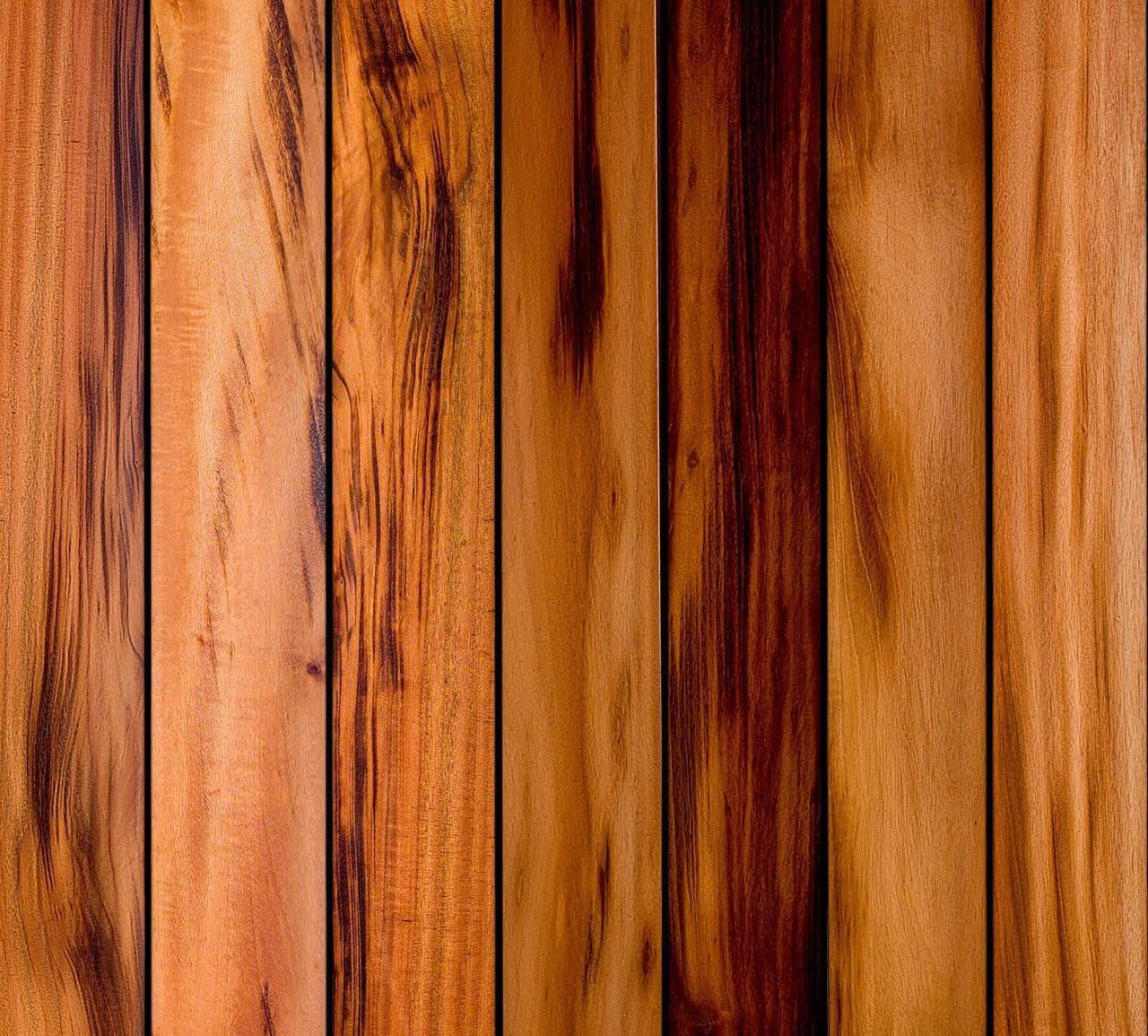
Understanding Tigerwood Decking Materials
Tigerwood decking is characterized by its distinctive golden-brown base with dark, irregular streaking, reminiscent of tiger stripes. This Brazilian hardwood is noted for its density and natural resistance to decay and moisture. It is available in various profiles, such as 5/4"x6" (actual 1" x 5.5"), and typically comes in lengths ranging from 3 to 24 feet. These characteristics are important when calculating material quantities.
When planning your material order, consider the actual dimensions of the boards. For instance, a nominal 5/4"x6" board is typically milled to an actual 1"x5.5". This slight difference can impact the number of boards needed to cover a specific area. It is also important to account for potential waste due to cuts, defects, or future repairs. Over-ordering by 10-15% is a common practice to ensure you have enough material for the project and any unforeseen issues.
The density of Tigerwood (air dry density of 4.92 lbs/bf, specific gravity of 0.91) means it requires specific tools and techniques for installation. Carbon-tipped saw blades and pre-drilling are typically needed. This can influence the type of fasteners you choose and the labor time required for installation.
Calculating Decking Board Quantities: A Worked Example
Let's consider a hypothetical rectangular deck measuring 12 feet by 16 feet. This gives us a total area of 192 square feet. We plan to use 5/4"x6" Tigerwood decking boards, which have an actual width of 5.5 inches (or 0.458 feet).
First, calculate the linear feet of decking needed. If we lay the boards along the 16-foot length, we need to determine how many 5.5-inch wide boards fit across the 12-foot width. Twelve feet is 144 inches, so 144 inches / 5.5 inches per board = approximately 26.18 boards. Since you can't use a fraction of a board, you'd need 27 boards to cover the width. Each of these boards would be 16 feet long. Therefore, 27 boards * 16 feet/board = 432 linear feet.
To account for cuts, waste, and future repairs, add a waste factor, typically 10-15%. For this example, we'll use 15%: 432 linear feet * 1.15 = 496.8 linear feet. You would then round up to the nearest full board length available. If boards are available in 16-foot increments, you would need 31 boards (496.8 / 16 = 31.05, rounded up). This ensures you have enough material for the project.
Remember that this calculation provides an estimate. The actual quantity may vary based on the specific layout, board lengths available, and any intricate design elements like diagonal patterns or picture-frame borders, which can increase waste.
Essential Accessories and Fasteners
Beyond the decking boards themselves, a Tigerwood deck project requires several accessories. Fasteners are critical. Due to Tigerwood's density, pre-drilling is typically recommended for face-fastening, or specialized hidden fastening systems designed for dense hardwoods may be necessary. Consider corrosion-resistant screws appropriate for exterior use.
For the finished look, fascia boards, trim pieces, and stair treads made from Tigerwood or a complementary material will be needed. These components add to the overall material cost and should be factored into your budget.
Don't forget finishing products. While Tigerwood is naturally durable, applying a suitable exterior oil or sealer can help preserve its natural color and protect it from UV exposure. These products have coverage rates that will help you estimate the quantity needed for your deck's surface area.
Labor and Installation Costs
Labor costs are a significant part of any decking project. The density and hardness of Tigerwood mean that installation can be more labor-intensive compared to softer woods or composite materials. Professional installers may charge more for working with dense hardwoods due to the specialized tools and techniques required, such as pre-drilling every screw hole.
Factors influencing labor costs include the complexity of the deck design (e.g., multiple levels, intricate patterns, built-in features), site accessibility, and the need for old deck demolition and disposal. Always obtain detailed quotes from multiple contractors, ensuring they specify what is included (e.g., demolition, framing, decking installation, cleanup).
If you are undertaking a DIY project, you'll save on professional labor but will need to budget for tool rentals (e.g., specialized saws, drills), safety equipment, and your own time investment. Even for DIY, consider consulting with a professional for critical structural elements or challenging cuts.
Contingency and Other Indirect Costs
A crucial, yet often overlooked, part of any project budget is a contingency fund. This is typically an additional 10-15% of the total estimated cost set aside for unexpected expenses. For a decking project, this could include replacing damaged boards, additional fasteners, unforeseen substructure repairs, or changes to the design mid-project.
Beyond direct materials and labor, consider other indirect costs. These might include permits required by your local municipality, waste disposal fees for old materials or construction debris, and potential delivery charges for your Tigerwood decking and other supplies. Some projects may also incur costs for temporary storage of materials if they cannot be kept on-site.
By planning for these variables upfront, you can avoid budget overruns and ensure a smoother project experience. A well-managed contingency fund provides a buffer against the unknowns inherent in construction.
Before you order
- Have I accurately measured my deck area and accounted for board width for linear foot calculations?
- Have I added a waste factor (10-15%) to my material quantities for cuts and potential errors?
- Have I identified all necessary accessories, including fasteners, joist tape, and fascia boards?
- Have I considered finishing products like sealers or oils and calculated their required quantities?
- Have I obtained multiple quotes from contractors that detail all labor components?
- If DIY, have I budgeted for tool rentals and safety equipment?
- Have I included a contingency fund (10-15% of the total budget) for unexpected expenses?
- Have I accounted for permits, waste disposal, and material delivery charges?
- Have I confirmed the exact profile and available lengths of Tigerwood decking before finalizing my material list?
- Do I have a plan for material storage on site, considering Tigerwood's density and weight?
Confirm installation details, approved uses and warranty terms in the current instructions for the exact product and profile. Your installer should verify the substrate, structure and applicable project requirements.
Questions to help you decide
Why is a waste factor important when budgeting for Tigerwood decking?
A waste factor, typically 10-15%, accounts for material lost due to cuts, miscuts, damaged boards, or design adjustments. Tigerwood's density means precise cuts are important, and having extra material prevents project delays if a board needs to be replaced or if your layout requires more intricate cuts.
Does Tigerwood decking require special fasteners?
Yes, due to its high density, Tigerwood often requires specific installation methods. For face-fastening, pre-drilling is generally recommended to prevent splitting, and corrosion-resistant screws designed for dense hardwoods should be used. Some hidden fastening systems are also designed to accommodate the hardness of exotic woods.
How does Tigerwood's density affect installation costs?
Tigerwood's density and hardness can increase labor costs. Installers may charge more because it requires specialized tools like carbon-tipped saw blades and more time for tasks such as pre-drilling every fastener. This impacts the overall installation time and, consequently, the labor expense compared to softer decking materials.
Ready to Plan Your Tigerwood Deck Project?
Request a material quote with your project dimensions, exact profile, and ZIP code. Confirm current availability and service options for Tigerwood decking. We can help you estimate material quantities for your specific project needs.
Request a material quote →