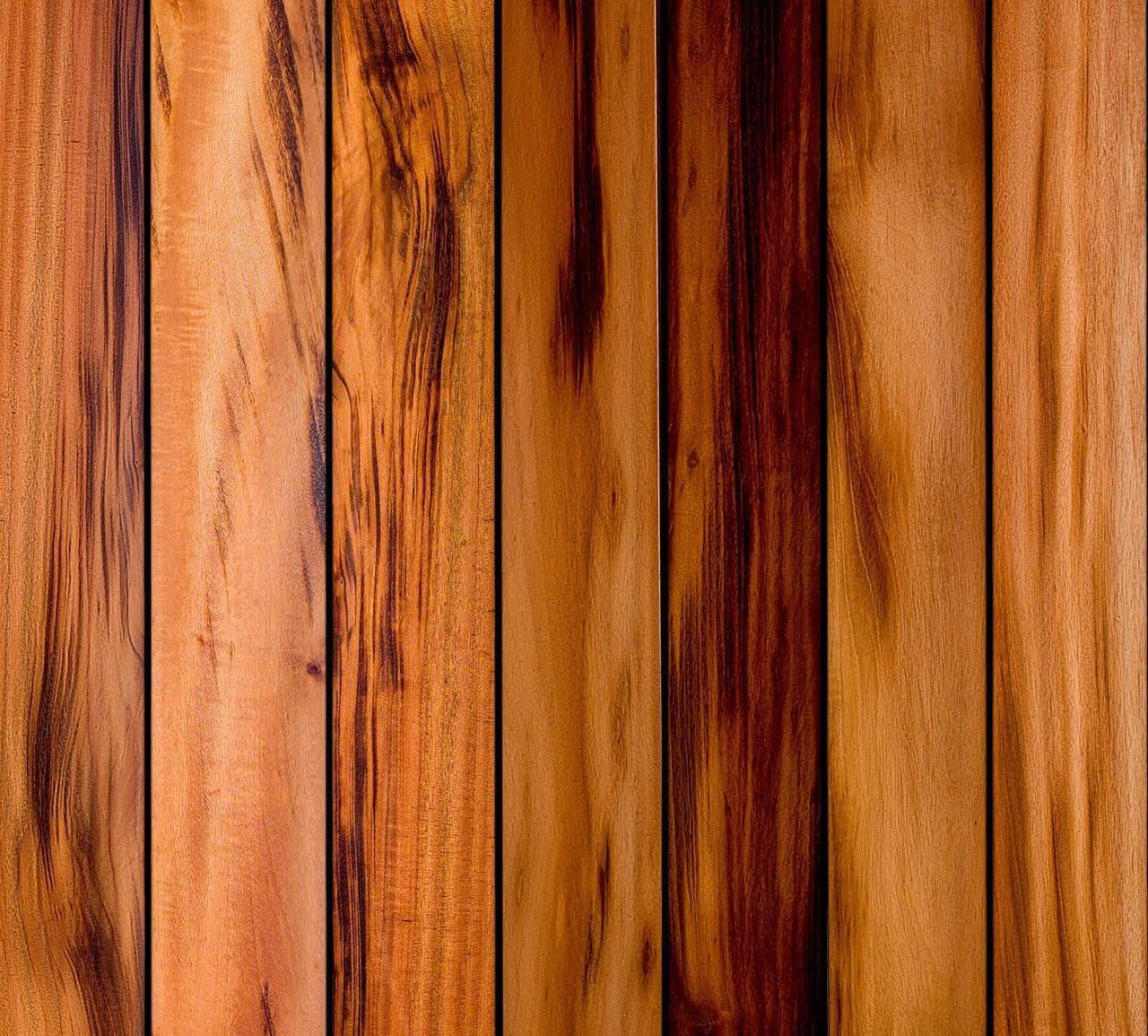
Understanding Tigerwood's Core Characteristics
Tigerwood, known botanically as Astronium graveolens and sometimes called Goncalo Alves, originates from Brazil. It is recognized for its unique aesthetic and inherent strength. Its golden-brown base color, contrasted by dark brown streaks, gives it its common name and distinctive appearance. This exotic hardwood offers a combination of durability and natural resistance.
Key physical properties include an air dry density of 4.92 lbs/bf and a specific gravity of 0.91. These characteristics contribute to its classification as a very durable wood. Tigerwood is noted for its resistance to termites and moisture, attributes that are beneficial for outdoor applications like decking. Its natural oils also contribute to its water-repellent qualities. This material is also known for its hardness and scratch resistance, making it suitable for areas with regular foot traffic.
Many suppliers, including Lumber Plus, are committed to environmentally responsible harvesting practices to help ensure the longevity of the forests where Tigerwood is sourced. Always confirm the sustainability practices of your chosen supplier.
Decking Board Dimensions and Profiles
When selecting Tigerwood decking, the available dimensions and profiles are crucial. These details dictate how the boards will look, how they will be installed, and their compatibility with your project's structural framework. Tigerwood decking is typically offered in a specific profile and range of lengths.
A common profile for Tigerwood decking is 5/4"x6". This nominal dimension corresponds to an actual milled size of 1 inch by 5.5 inches. Understanding the difference between nominal and actual dimensions is important for accurate project planning, especially when calculating coverage and spacing. Boards are available in lengths ranging from 3 feet to 24 feet, which provides flexibility for various deck sizes and design layouts, minimizing the need for excessive butt joints or waste.
All Tigerwood decking supplied is Kiln Dried (KD). Kiln drying is a controlled process that reduces the moisture content of the wood, which can contribute to greater stability and reduced warping or checking after installation compared to air-dried lumber. Confirming the drying method is an important specification for long-term performance.
Approved Applications for Tigerwood Decking
Tigerwood's inherent properties make it suitable for a range of applications beyond just decking. Its durability, hardness, and resistance to moisture mean it can perform well in various demanding environments. For decking and flooring, its resistance to scratches and water, combined with its dramatic striped appearance, makes it a popular choice for outdoor surfaces that are expected to last.
Other approved uses for Tigerwood include cabinetwork and high-class furniture, where its unique figure can be showcased. It is also used for turned goods, wood-ware, interior and exterior joinery, interior paneling, heavy carpentry, musical instruments, and sculpture. While this guide focuses on decking, understanding its broader suitability highlights the material's versatility and robust nature.
Installation Considerations and Limitations
While Tigerwood is considered easy to work with in terms of its general machining properties, its high density does introduce specific installation considerations. Due to its hardness, professional-grade tools are typically required. This includes using carbon-tipped saw blades to ensure clean cuts and extend blade life. Pre-drilling is also necessary for fasteners to prevent splitting the wood.
Another point to note is that gluing Tigerwood can be challenging due to its density and natural oils. If your project design requires glued joints, it is essential to consult with an experienced installer or adhesive manufacturer for specific recommendations. These factors are not limitations on the material's use but rather important specifications for successful installation, ensuring the long-term performance and appearance of your Tigerwood deck.
Worked Example: Calculating Tigerwood Decking for a Project
Let's consider a hypothetical deck project: a rectangular deck measuring 10 feet wide by 12 feet long. The decking boards will run parallel to the 10-foot width, meaning each board needs to be 10 feet long.
The available Tigerwood decking profile is 1 inch x 5.5 inches (actual dimensions).
First, convert the 12-foot length to inches: 12 feet * 12 inches/foot = 144 inches. Now, divide the total length by the effective width per board: 144 inches / 5.625 inches/board = 25.6 boards. Since you cannot purchase a fraction of a board, you would need to purchase 26 boards that are each 10 feet long. If you plan a picture-frame border or other intricate cuts, consider adding 10-15% for waste. For this simple layout, 26 boards of 10-foot length would be the minimum purchase.
This example assumes standard joist spacing and a straightforward layout. Always verify your specific joist spacing and any local building code requirements before finalizing your material order. Also consider ordering a few extra boards for future repairs or unexpected cuts.
Before you order
- Have I confirmed the actual dimensions (width and thickness) of the Tigerwood decking boards?
- Do the available board lengths accommodate my project's dimensions with minimal waste?
- Is the decking material Kiln Dried (KD), as specified for optimal stability?
- Are my installation tools (e.g., saw blades, drills) appropriate for dense hardwoods?
- Have I considered the need for pre-drilling all fastener locations?
- Is Tigerwood suitable for all intended applications in my project (e.g., decking, stairs, fascia)?
- Have I calculated an appropriate waste factor for cuts and potential repairs?
- Do I understand the maintenance requirements for Tigerwood to preserve its appearance and lifespan?
- Have I obtained a material quote based on exact dimensions and quantities?
Confirm installation details, approved uses and warranty terms in the current instructions for the exact product and profile. Your installer should verify the substrate, structure and applicable project requirements.
Questions to help you decide
What are the typical dimensions of Tigerwood decking boards?
Tigerwood decking is commonly available in a nominal 5/4"x6" profile, which translates to an actual dimension of 1 inch thick by 5.5 inches wide. Lengths typically range from 3 feet to 24 feet.
Is Tigerwood decking suitable for all climates, including coastal or winter exposure?
Tigerwood is highly durable and resistant to moisture and termites, making it a robust choice for outdoor use. Its natural oils contribute to its water repellency. For specific climate exposures like coastal areas or regions with harsh winters, proper installation, ventilation, and a consistent maintenance schedule are important to ensure optimal performance. Always confirm specific product guidelines for extreme conditions.
Does Tigerwood decking require special tools for installation?
Yes, due to its high density and hardness, installing Tigerwood decking typically requires professional-grade tools. This includes using carbon-tipped saw blades for cutting and pre-drilling all fastener holes to prevent splitting the wood. Gluing can also be challenging and may require specialized adhesives or techniques.
Ready to Plan Your Tigerwood Decking Project?
Request a material quote today. Provide your project dimensions, desired profile, and ZIP code to confirm current availability and service options for Tigerwood decking. Our team can help you finalize your order based on your specific project needs.
Request a material quote →