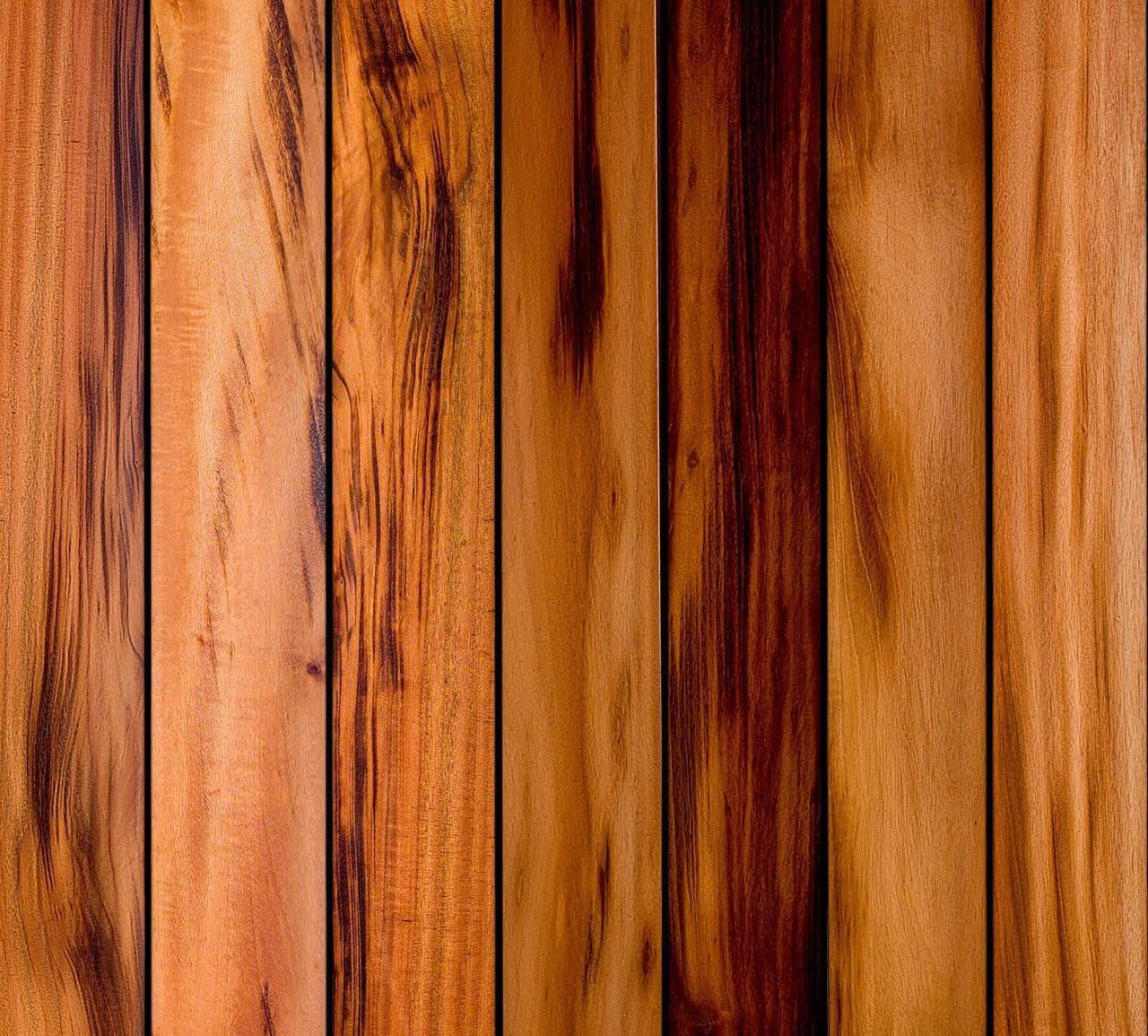
Why Board Spacing Matters for Tigerwood Decking
Proper spacing between Tigerwood deck boards serves several essential functions. First, it facilitates drainage, preventing water from pooling on the deck surface and potentially leading to issues like mildew or premature wear. Second, it accommodates the natural expansion and contraction of the wood. All wood, including dense hardwoods like Tigerwood, will absorb and release moisture, causing slight changes in dimension. Adequate gaps allow for this movement without boards buckling or creating excessive stress on fasteners.
Without correct spacing, boards can rub against each other, leading to wear, or even buckle if they expand without room. Conversely, gaps that are too wide can create tripping hazards and allow debris to accumulate more easily. The goal is to find a balance that supports both the performance and appearance of your Tigerwood deck.
Understanding Tigerwood's Characteristics and Their Impact on Spacing
Tigerwood (Astronium graveolens), also known as Goncalo Alves, is a Brazilian hardwood celebrated for its density and durability. This density also contributes to its resistance to moisture and termites, making it a robust choice for outdoor applications.
While Tigerwood is moisture resistant, it is not impervious to moisture content changes. Like all hardwoods, it will acclimate to the local environment. When installing Tigerwood, it's important to consider the moisture content of the boards at the time of installation and the typical humidity levels of your project location. Boards installed too tightly in a dry environment may expand and buckle when exposed to higher humidity, while boards installed with large gaps in a humid environment may shrink and create larger-than-desired gaps when the air dries out.
The specific gravity of Tigerwood is 0.91, and its air dry density is 4.92 lbs/bf. These properties highlight its stability, but do not eliminate the need for careful spacing. Always refer to the specific installation guidelines provided with your particular Tigerwood decking product for precise recommendations based on its milling and intended application.
Product-Specific Spacing Guidelines for Tigerwood Decking
However, this is a general reference and the exact gap required will be outlined in the manufacturer's specific installation instructions for the product you purchase.
Some manufacturers may specify a particular gapping tool or spacer size to achieve the recommended distance. It's crucial to use these tools consistently during installation to ensure uniform spacing across the entire deck surface. Deviating from these instructions can compromise the deck's performance and potentially affect any product warranties.
Always review the most current installation documentation for your Tigerwood decking. These documents often include details on fastening methods (such as hidden fasteners or face screws), which can also influence spacing recommendations. For instance, some hidden fastening systems may inherently establish a consistent gap.
Worked Example: Calculating Spacing for a Hypothetical Tigerwood Deck
Let's consider a hypothetical deck project using 1" x 5.5" Tigerwood decking boards.
Imagine you are decking an area that is 10 feet (120 inches) wide. To determine the number of boards and gaps needed, you would first consider the board width. Each board is 5.5 inches wide.
Let's assume we want to fit as many full boards as possible.
This leaves a remaining width of 120 - 119.25 = 0.75 inches. This small remaining space could be absorbed by slightly adjusting the end gaps or by ripping the last board to fit, depending on aesthetic preference and structural integrity.
Factors Influencing Spacing Adjustments
While manufacturer guidelines are paramount, certain environmental factors might prompt a re-evaluation of the recommended spacing, always in consultation with a professional or the product supplier.
For projects in consistently wet or humid environments, such as near a pool or in a coastal area, a slightly larger gap (within the manufacturer's permissible range) might be considered to ensure optimal drainage and accommodate potential expansion from higher moisture absorption. Conversely, in very arid climates, a slightly smaller gap might be acceptable if the wood is expected to remain drier and shrink slightly.
The type of fastening system also plays a role. Hidden fasteners often have built-in spacing mechanisms, which simplify the process. When face-fastening, manual spacers are typically used to achieve the desired gap. Always ensure your chosen fasteners are compatible with Tigerwood's density and the desired spacing.
Consider the overall design and aesthetic. While functional spacing is crucial, a consistent gap also contributes to a clean, professional appearance. Any adjustments should be minimal and uniformly applied across the deck.
Before you order
- Consult the specific manufacturer's installation guide for your Tigerwood decking product.
- Consider the local climate and anticipated moisture exposure.
- Select appropriate fastening methods that align with spacing requirements.
- Plan your deck layout to account for board widths and calculated gaps.
- Obtain necessary gapping tools or spacers to maintain consistent spacing.
- Verify the moisture content of the boards upon delivery, if possible, and allow for acclimation if recommended.
Confirm installation details, approved uses and warranty terms in the current instructions for the exact product and profile. Your installer should verify the substrate, structure and applicable project requirements.
Questions to help you decide
Does Tigerwood decking expand and contract?
Yes, like all natural wood products, Tigerwood decking will expand and contract due to changes in environmental moisture and humidity. While Tigerwood is a very dense and stable hardwood, proper spacing is still necessary to accommodate this natural movement and prevent issues like buckling or excessive gapping.
Can I use the same spacing for all hardwood decking types?
No, it is not recommended to use a universal spacing for all hardwood decking types. Each species has unique properties, including density and moisture resistance, that influence how it reacts to environmental conditions. Always consult the specific manufacturer's installation guidelines for the particular hardwood decking product you are using, whether it's Tigerwood, Ipe, or another species.
What happens if I don't use the correct spacing?
Incorrect spacing can lead to several problems. If gaps are too small, boards may buckle or warp as they expand, creating an uneven surface or putting stress on fasteners. If gaps are too large, they can become tripping hazards, collect debris, or allow too much water to pass through, potentially affecting the sub-structure. Proper spacing ensures optimal drainage, wood stability, and the long-term integrity of your deck.
Ready to Plan Your Tigerwood Decking Project?
Request a material quote today. Provide your project dimensions, desired Tigerwood profile, and ZIP code to confirm current availability and service options for your decking needs. Our team can help ensure you have the correct materials and guidance for a successful installation.
Request a material quote →