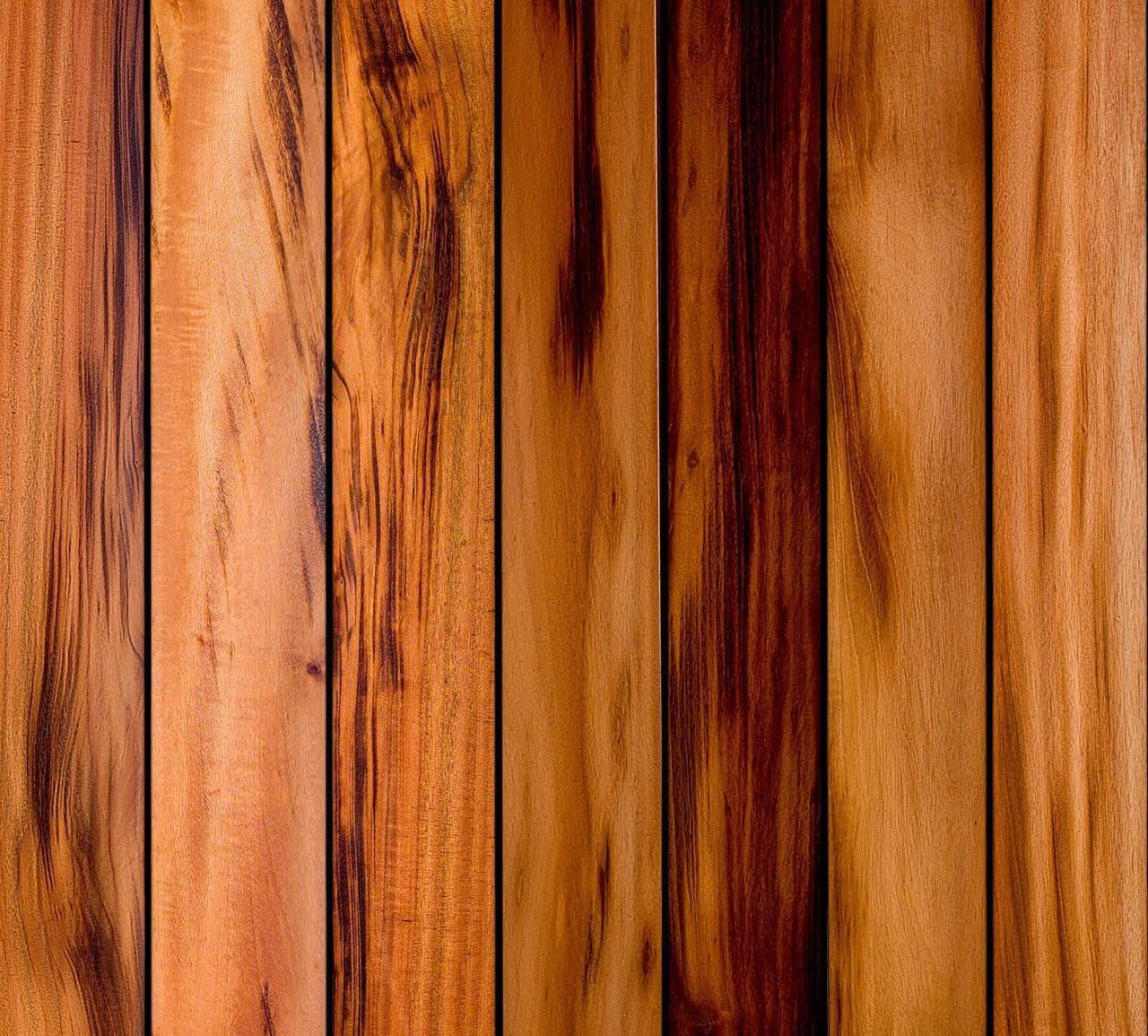
Confirming the Species: Is it Really Tigerwood?
While you may believe your deck is Tigerwood, sometimes original documentation is lost or assumptions are made. Tigerwood (Astronium graveolens) is known for its distinct golden-brown color with dark brown to black streaking, resembling tiger stripes. Its natural oils contribute to its moisture and termite resistance. Other exotic hardwoods, such as Ipe, Cumaru, or Massaranduba, have different colors, grain patterns, and densities.
To confirm, examine an undamaged section of your deck. Look for the characteristic streaking. If possible, compare a small sample from an inconspicuous area (like an offcut from the original installation, if available) against known Tigerwood samples. Observing the end grain can also provide clues, as different species have unique cellular structures.
Matching the Profile and Dimensions
Decking boards come in various profiles and dimensions. The most common profile for Tigerwood decking is a nominal 5/4"x6", which typically mills down to an actual 1" x 5.5" board. However, older decks or those sourced from different suppliers might have slightly different actual dimensions or unique milling profiles (e.g., grooved edges for hidden fasteners, or specific radius edges).
Carefully measure the width and thickness of your existing boards. Use a caliper for precision, if available. Also, inspect the board edges. Are they smoothly rounded, or more sharply defined? If your deck uses hidden fasteners, the new boards will need to be compatible with that system, often requiring a specific grooved profile. If face-fastened, the surface profile still needs to match.
Understanding the Impact of Aging and Weathering
New Tigerwood boards will likely have a more vibrant, fresh appearance compared to existing boards that have been exposed to sun, rain, and foot traffic for years. Over time, Tigerwood, like other hardwoods, naturally weathers. If left untreated, it will typically silver or gray. If it has been regularly oiled or sealed, its original rich tones will be better preserved, but the color will still deepen and change with age.
When installing new boards, expect an initial color difference. This is normal. The new boards will gradually begin to weather and blend with the older ones. Applying the same finish (if any) to the new boards as used on the rest of the deck can help accelerate the blending process. Consider cleaning the entire deck before applying a fresh coat of finish to achieve a more uniform appearance post-repair.
Sourcing Replacement Boards and Batch Variations
Even when ordering the correct species and profile, wood is a natural product, and variations can occur between batches. These variations might include subtle differences in grain pattern, color intensity, or the prominence of the characteristic dark streaks. While Lumber Plus sources Tigerwood (Astronium graveolens) from Brazil, natural variations are inherent.
When requesting replacement boards, provide as much detail as possible about your existing deck. Photos of the damaged board and surrounding areas can be helpful. If possible, inquire about the current batch of Tigerwood and compare it to your existing material. Ordering a few extra boards beyond your immediate need can provide spares for future repairs and allow for careful selection during installation to best match the surrounding boards.
Worked Example: Replacing Damaged Boards
Let's consider a hypothetical scenario: A 10-foot by 12-foot Tigerwood deck, installed five years ago, has two boards near a planter showing signs of rot due to consistent moisture exposure. The original deck used 1" x 5.5" (actual dimensions) Tigerwood boards, face-fastened, with a clear sealant applied annually.
First, confirm the species. The homeowner checks old photos and confirms the characteristic streaking of Tigerwood. Next, they measure the damaged boards: 1 inch thick and 5.5 inches wide, with slightly rounded edges. The damaged boards are 8 feet and 10 feet long respectively.
The homeowner decides to replace these two boards and orders one 8-foot and one 10-foot board of 1" x 5.5" Tigerwood (actual dimensions) from Lumber Plus. They also order an additional 12-foot board to allow for cutting and selection. Upon delivery, the new boards appear lighter and more vibrant than the existing deck. After installation, the homeowner cleans the entire deck and applies a fresh coat of the same clear sealant, which helps the new boards begin to integrate visually. Over the next few months, sun exposure and weathering will further blend the new and old sections.
Before you order
- Confirm the species: Is it definitely Tigerwood (Astronium graveolens)?
- Measure exact dimensions: What is the actual width and thickness of your existing boards?
- Identify the profile: Are the edges rounded, square, or grooved for hidden fasteners?
- Assess current finish: Is the deck raw, oiled, or sealed? Note the color and sheen.
- Consider the age: How old is the deck? This impacts expected color variation.
- Determine required lengths: Measure the exact lengths of the boards needing replacement.
- Order extra material: Account for potential cutting errors and future repairs.
Confirm installation details, approved uses and warranty terms in the current instructions for the exact product and profile. Your installer should verify the substrate, structure and applicable project requirements.
Questions to help you decide
Can I mix different hardwood species when repairing my deck?
While technically possible, mixing different hardwood species is generally not recommended for repairs if you want a consistent appearance. Each species has unique color, grain, and weathering characteristics. Even if new boards are stained, they may not match the existing Tigerwood over time as they age differently. For the best aesthetic match and performance, stick with Tigerwood.
Will new Tigerwood boards ever perfectly match my old ones?
Perfectly matching the color and appearance of aged Tigerwood with new boards upon installation is unlikely due to natural weathering. New boards will typically be brighter and more vibrant. However, over time, with exposure to the elements and consistent maintenance (such as applying the same finish), the new boards will gradually weather and blend with the older decking. The degree of blending depends on environmental factors and maintenance practices.
What tools do I need to replace Tigerwood decking boards?
Tigerwood is a dense hardwood, so professional-grade tools are recommended. You'll likely need a circular saw with a carbon-tipped blade for clean cuts, a drill for pre-drilling pilot holes (essential to prevent splitting), and appropriate fasteners (either deck screws for face-fastening or hidden fastener clips compatible with your board profile). A pry bar and hammer may be needed for removing damaged boards. Always wear appropriate safety gear.
Ready to Repair Your Tigerwood Deck?
Request a material quote with your project dimensions, exact profile, and ZIP code to confirm current availability and service options. Accurate measurements and identification are key to a successful repair.
Request a material quote →