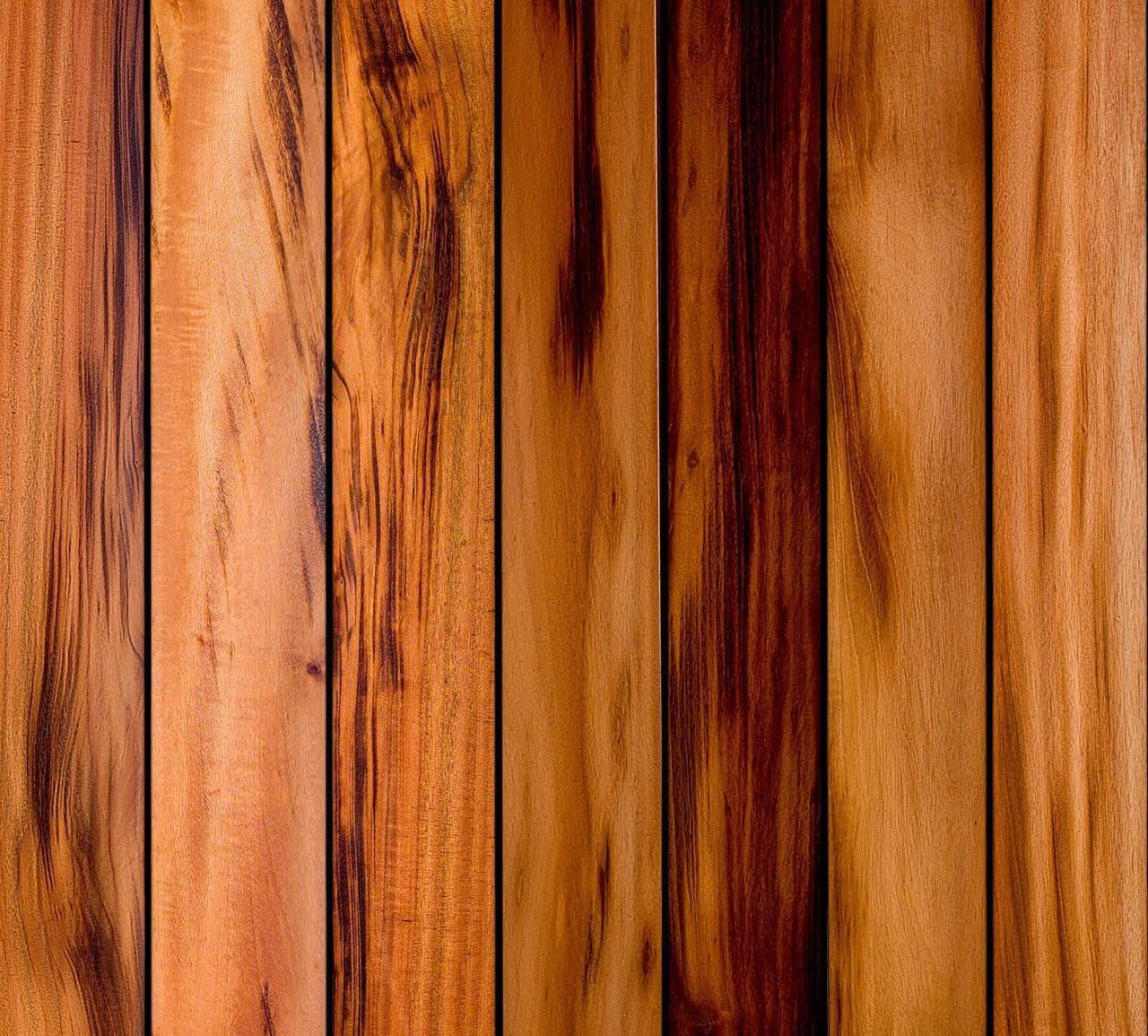
Why Consider Tigerwood for a Pool Surround?
Tigerwood (Astronium graveolens), also known as Goncalo Alves, is an exotic hardwood originating from Brazil. It is characterized by its unique golden-brown base color contrasted with dark brown streaks, giving it a "tiger-like" appearance. This dramatic figure makes it a popular choice for high-visibility outdoor applications like pool surrounds.
Beyond its visual appeal, Tigerwood is recognized for its durability and resistance to moisture. These properties contribute to its ability to withstand the demanding conditions often found around swimming pools, including splashes and humidity. Its natural oils also provide a degree of water repellence, which can be beneficial in a wet environment.
When planning a pool surround, the material's ability to resist the elements and maintain its appearance over time is paramount. Tigerwood's inherent characteristics align well with these requirements, offering both beauty and resilience.
Understanding Tigerwood's Appearance and How it Evolves
Tigerwood's signature look features golden-brown hues with distinct dark brown streaks. This natural variation ensures that each deck board is unique, contributing to a dynamic and visually interesting surface around your pool. The initial color of newly installed Tigerwood is vibrant and pronounced.
Over time, like many natural hardwoods, Tigerwood will undergo a process of weathering when exposed to sunlight and the elements. Without regular application of a UV-inhibiting finish, the wood will gradually lighten and develop a silvery-gray patina. Some homeowners prefer this weathered look, as it can blend harmoniously with natural outdoor settings. However, if maintaining the original rich colors and dramatic striping is desired, a suitable UV-protective finish will need to be applied and periodically reapplied as part of a regular maintenance schedule. It is important to consider this aesthetic evolution when making your material selection for a pool surround.
Planning for Wet Conditions and Drainage
A pool surround is inherently a wet area, subject to splashes, rainfall, and foot traffic from wet swimmers. While Tigerwood is naturally moisture resistant, proper planning for drainage is crucial to ensure the longevity and performance of the decking.
Adequate spacing between deck boards is necessary to allow water to drain through the deck surface and prevent pooling. Consult the manufacturer's specific installation guidelines for recommended board spacing, as this can vary. Additionally, ensure the underlying deck structure provides proper slope away from the pool and house foundation to facilitate water runoff and prevent moisture accumulation underneath the deck. Good ventilation beneath the deck is also important to help dry out any moisture and prevent potential issues. Consider incorporating a drainage system underneath the deck if the site conditions or local climate warrant it. This proactive approach helps manage moisture effectively and supports the long-term integrity of the Tigerwood decking.
Installation Considerations for Tigerwood Decking Around a Pool
Installing Tigerwood decking requires attention to detail, especially in a pool surround application. Due to its density and hardness, professional-grade tools, such as carbon-tipped saw blades, are recommended for cutting. Pre-drilling is essential for all fasteners to prevent splitting the wood. Gluing Tigerwood can be difficult due to its density, so relying on appropriate fasteners is key.
For a pool surround, consider using hidden fastening systems to create a smooth, uninterrupted surface that is comfortable underfoot and visually appealing. If face-fastening is chosen, ensure high-quality stainless steel screws are used to resist corrosion from moisture and pool chemicals. Proper board spacing, as discussed, is critical for drainage and to accommodate natural wood movement. All cut ends should be sealed with an end-grain sealant to minimize moisture absorption and reduce the potential for checking or splitting. Always refer to the specific installation instructions provided with your Tigerwood decking product.
Complementary products such as high-quality deck screws, end-grain sealer, and a suitable deck finish can be found in the Lumber Plus Decking Accessories section, or within the Hardwood Decking category for other compatible options like Ipe Decking (/decking/hardwood/ipe) or general Decking (/decking) accessories.
Maintenance for a Tigerwood Pool Surround
Maintaining a Tigerwood pool surround involves routine cleaning and, if desired, periodic finishing to preserve its appearance. For general cleaning, a mild soap and water solution, along with a soft-bristle brush, can remove dirt, debris, and pool chemical residues. Regular cleaning helps prevent the buildup of grime and keeps the surface looking fresh. Avoid harsh chemicals or abrasive cleaners that could damage the wood or its finish.
If you wish to retain Tigerwood's original golden-brown and striped appearance, a UV-protective finish or deck oil should be applied. The frequency of reapplication will depend on the product used, the amount of sun exposure, and local climate conditions. Finishes also offer some protection against moisture penetration. For those who embrace the natural weathering process, maintenance primarily involves cleaning. Regardless of whether a finish is applied, keeping the deck free of standing water and debris will contribute to its longevity. You can find general decking maintenance supplies in our main Decking (/decking) section, or explore our Hardwood Decking (/decking/hardwood) for specific wood care products.
Worked Example: Calculating Tigerwood Decking for a Rectangular Pool Surround
Let's consider a hypothetical rectangular pool surround project. The pool itself measures 15 feet by 30 feet. The homeowner wants a 4-foot wide Tigerwood deck surrounding all four sides of the pool. The Tigerwood decking boards are available in a 1" x 5.5" profile.
First, calculate the total area of the pool and the surrounding deck. The overall dimensions (pool + deck) will be (15 + 4 + 4) feet by (30 + 4 + 4) feet, which is 23 feet by 38 feet. The total area is 23 ft * 38 ft = 874 square feet. The pool area is 15 ft * 30 ft = 450 square feet. Therefore, the decking area needed is 874 sq ft - 450 sq ft = 424 square feet.
Next, we calculate the lineal feet of decking needed. For a 1" x 5.5" board, the coverage per lineal foot is 5.5 inches / 12 inches/foot = 0.4583 square feet. To find the lineal feet, divide the total square footage by the coverage per lineal foot: 424 sq ft / 0.4583 sq ft/LF = 925.16 lineal feet. Given that boards come in various lengths (e.g., 3-24 ft), and accounting for cuts and waste, it is prudent to add a waste factor, typically 10-15%. For this example, let's use 10% waste: 925.16 LF * 1.10 = 1017.68 lineal feet. This would be the estimated purchase quantity in lineal feet.
When ordering, consider the available lengths to minimize waste. For instance, if using primarily 12-foot and 16-foot boards, a detailed cut plan would optimize material use. Always round up to the nearest full board length. This example provides an estimate; actual quantities will depend on specific board lengths purchased and the complexity of the deck design, including any picture framing or diagonal layouts.
Before you order
- Assess the desired aesthetic: Do you prefer the rich, original Tigerwood color or a weathered gray patina?
- Review local building codes for pool deck materials and installation requirements.
- Plan for adequate drainage and ventilation beneath the deck to manage moisture.
- Consider the type of fasteners (hidden vs. face-fastened) and ensure they are suitable for wet conditions.
- Budget for professional installation due to Tigerwood's hardness and specific tooling requirements.
- Commit to a maintenance schedule for cleaning and, if desired, refinishing.
- Verify the exact profile and lengths of Tigerwood decking available for your project.
Confirm installation details, approved uses and warranty terms in the current instructions for the exact product and profile. Your installer should verify the substrate, structure and applicable project requirements.
Questions to help you decide
Is Tigerwood decking slippery when wet?
While all deck surfaces can become slick when wet, especially with pool water or algae, Tigerwood's natural characteristics do not inherently make it more slippery than other smooth wood surfaces. Regular cleaning to remove any organic buildup and proper drainage can help maintain a safer surface. Some homeowners may consider textured finishes or strategically placed non-slip strips if enhanced traction is a primary concern. Always exercise caution on any wet surface.
Will pool chemicals damage Tigerwood?
Tigerwood is resistant to moisture, but prolonged exposure to concentrated pool chemicals or highly chlorinated water can potentially affect its surface or finish over time. It is advisable to rinse off any chemical splashes promptly with fresh water. Regular cleaning helps remove chemical residues and preserve the wood's integrity. If a finish is applied, ensure it is compatible with exposure to mild pool chemicals.
How does Tigerwood compare to other hardwoods for pool surrounds?
Tigerwood is comparable to other dense exotic hardwoods like Ipe (/decking/hardwood/ipe) in terms of durability and moisture resistance. Its primary distinction is its unique, dramatic striped figure. While Ipe is known for its consistent deep brown tones, Tigerwood offers a more varied and striking appearance. Both are excellent choices for demanding outdoor applications, including pool surrounds, but the aesthetic preference for color and grain pattern often guides the final decision. Other decking options, such as composite (/decking/composite) or PVC (/decking/pvc), offer different material properties and maintenance profiles.
Ready to Transform Your Pool Area with Tigerwood Decking?
Request a material quote today by providing your project dimensions, desired Tigerwood profile, and ZIP code. Our team can help confirm current availability and service options for your project.
Request a material quote →