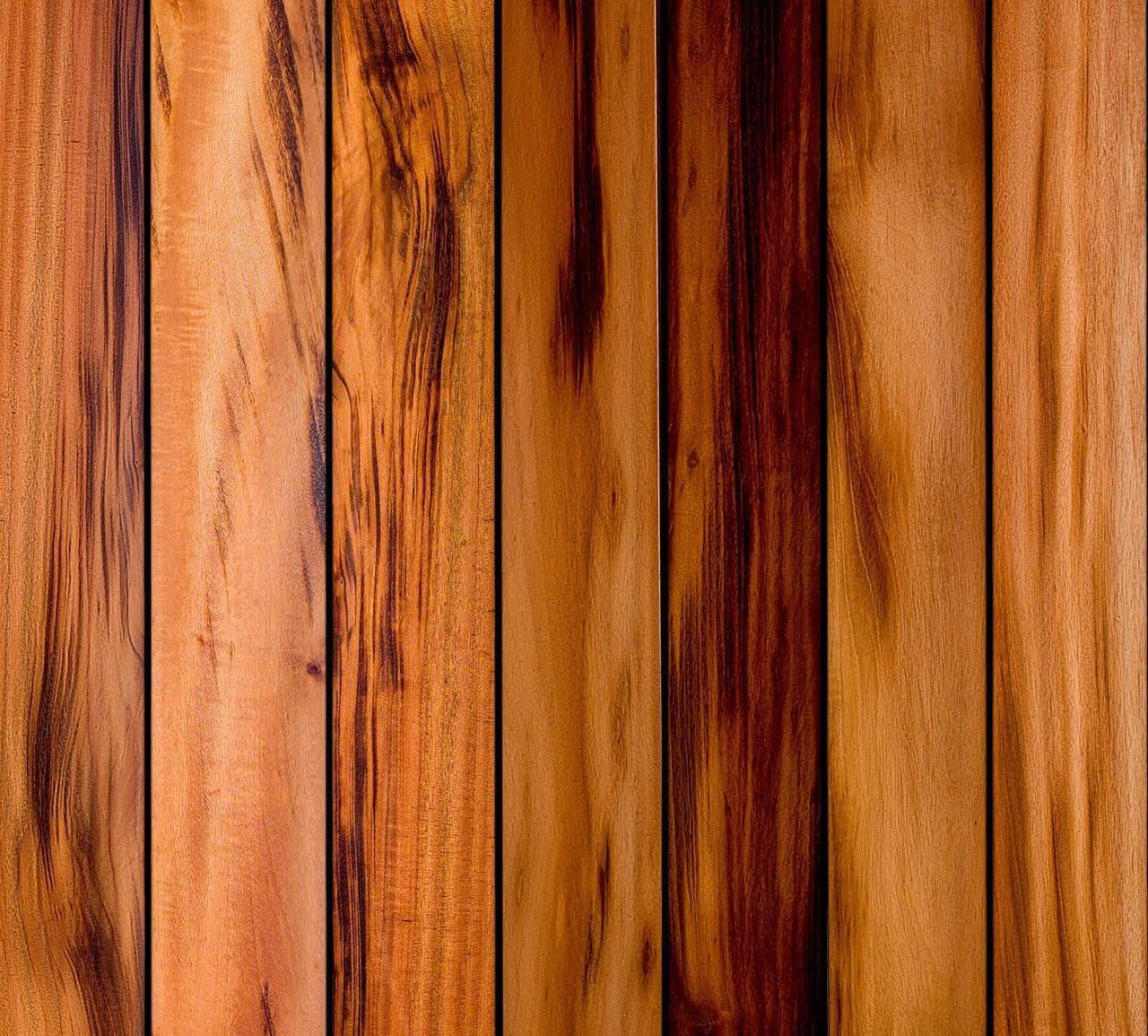
Why Choose Tigerwood for an Outdoor Kitchen Deck?
Tigerwood (Astronium graveolens) is a dense exotic hardwood known for its striking golden-brown hues contrasted by dark brown streaks, giving it a distinctive 'tiger-stripe' appearance. Beyond its unique look, Tigerwood offers properties that can be beneficial for outdoor kitchen areas.
It is recognized for its durability and resistance to moisture and termites. This natural resilience can be an advantage in outdoor settings where spills and exposure to the elements are common. Tigerwood is naturally water repellent due to its oils, which contributes to its longevity in exterior applications. Its hardness also provides resistance to scratches and wear from foot traffic and moving furniture.
The material's aesthetic can create a focal point, complementing various outdoor kitchen styles from rustic to contemporary. However, its density also means it requires specific installation techniques, such as pre-drilling and using professional-grade tools.
Layout and Clearances for Appliances
The layout of your outdoor kitchen on a Tigerwood deck needs to account for appliance dimensions, required clearances, and accessibility. Grills, refrigerators, sinks, and other kitchen components often have minimum clearance requirements from combustible surfaces, including decking. Always consult the manufacturer's specifications for each appliance.
For example, a built-in grill may require specific non-combustible material directly beneath and around it, or a minimum distance from any wooden surface. Even if Tigerwood is dense, it is still a wood product. Plan the placement of appliances to ensure adequate ventilation and safe distances from deck railings or walls. Consider the workflow within the kitchen triangle (sink, prep area, grill) to optimize usability and reduce unnecessary movement.
Ensure there is ample space for opening appliance doors, drawers, and lids without obstruction. Walkways around the kitchen area should be wide enough for comfortable movement, especially when carrying food or serving. A common recommendation is at least 36 inches for pathways, and more for high-traffic zones.
Structural Support for Heavy Kitchen Elements
Outdoor kitchen components, especially stone countertops, masonry features, and large grills, can be significantly heavier than typical deck furniture. The deck structure beneath these elements must be designed to support the concentrated loads.
A standard residential deck is often designed for a live load of 40 pounds per square foot (psf) and a dead load of 10 psf. Heavy outdoor kitchen units, however, can easily exceed these values. It is crucial to have a structural engineer or experienced contractor assess the specific loads of your planned kitchen and design the deck framing accordingly.
This may involve increasing the size or number of joists, adding blocking, or incorporating additional footings and beams directly beneath the heavy components. Do not rely on the decking boards themselves to distribute significant point loads; the underlying frame is critical. Ensure that any pedestals or support systems for appliances are properly anchored and integrated with the deck's substructure.
Integrating Non-Combustible Materials
While Tigerwood offers durability, it is a combustible material. Near heat sources like grills, pizza ovens, or fire pits, non-combustible surfaces are often required for safety and code compliance. This typically involves materials like stone, concrete pavers, or specialized fire-rated boards.
Plan for a distinct zone of non-combustible material around any open flame or high-heat appliance. This zone should extend beyond the appliance's footprint according to manufacturer recommendations and local building codes. For example, a grill might require a non-combustible pad extending at least 18 inches in front and to the sides.
The transition between Tigerwood decking and these non-combustible sections should be well-planned for both safety and aesthetics. Consider using a picture-frame border of Tigerwood around the non-combustible area to create a clean, finished look, or use a flush transition with metal edging for a contemporary feel.
Worked Example: Grill Island Integration
Let's consider a hypothetical 8-foot by 10-foot Tigerwood deck where a grill island will be installed. The grill unit within the island is 30 inches wide.
First, determine the total non-combustible area needed. So, a 6.5-foot by 6-foot non-combustible pad is required around the grill.
This non-combustible pad will be centered within the 8-foot width of the deck, leaving (8 - 6.5) / 2 = 0.75 feet (9 inches) of Tigerwood on either side. Along the 10-foot length, if the island starts 2 feet from one edge, the pad will occupy 6 feet, leaving 2 feet of Tigerwood at the other end. The remaining deck area will be covered with Tigerwood decking boards, profile 1"x5.5" (which is 5/4"x6" nominal).
For the structural aspect, if the grill island weighs 800 pounds and occupies 15 square feet (6.5 ft x 2.5 ft), its distributed load is 800 lbs / 15 sq ft = approximately 53 psf. This might involve doubling joists or reducing their spacing in that section, and ensuring adequate footing support.
Maintenance and Longevity
However, proper maintenance is still important, especially in an outdoor kitchen environment where grease, food spills, and foot traffic are common.
Regular cleaning of the Tigerwood decking is recommended to remove dirt and spills. For an outdoor kitchen, promptly cleaning up grease or food residue can help prevent staining. While Tigerwood is naturally water repellent, applying a suitable deck oil or sealant can help maintain its golden-brown hues and protect the surface from UV exposure, which can cause the wood to gradually silver over time. Always ensure any cleaning or sealing products are compatible with exotic hardwoods.
Periodically inspect the decking around the kitchen area for any signs of wear, loose fasteners, or damage, particularly near heavy appliances or high-traffic zones. Addressing minor issues promptly can help extend the life of your Tigerwood deck.
Before you order
- Verify all local building codes and fire safety regulations for outdoor kitchens and decking materials.
- Obtain manufacturer specifications for all outdoor kitchen appliances, noting clearance requirements.
- Consult a structural engineer or experienced contractor for deck framing design to support appliance loads.
- Plan the exact footprint and dimensions of the non-combustible zone around heat sources.
- Select compatible non-combustible materials that integrate aesthetically with Tigerwood.
- Consider the workflow and traffic patterns around the outdoor kitchen for optimal layout.
- Factor in ventilation requirements for grills and other appliances.
- Choose appropriate fasteners and installation methods for Tigerwood decking around kitchen features.
- Plan for regular cleaning and maintenance of Tigerwood decking, especially for spills.
- Confirm the availability of Tigerwood decking in the required profiles and lengths for your project.
Confirm installation details, approved uses and warranty terms in the current instructions for the exact product and profile. Your installer should verify the substrate, structure and applicable project requirements.
Questions to help you decide
Is Tigerwood decking suitable for direct placement under a grill?
No, Tigerwood is a wood product and is combustible. While durable, it should not be placed directly under a grill or other high-heat appliance. A non-combustible material, such as stone, concrete, or a specialized fire-rated pad, is required beneath and around such appliances according to manufacturer guidelines and local building codes. Plan for adequate clearances to ensure safety.
How do I ensure my deck can support a heavy outdoor kitchen island?
To ensure your deck can support a heavy outdoor kitchen island, it is essential to have the deck's substructure designed or reinforced by a qualified structural engineer or experienced contractor. Standard deck framing may not be sufficient for concentrated heavy loads. This often involves increasing the size or number of joists, adding extra beams, and ensuring robust footings directly beneath the heavy elements of the kitchen.
What maintenance does Tigerwood decking need in an outdoor kitchen setting?
Tigerwood decking in an outdoor kitchen setting benefits from regular cleaning to remove food spills, grease, and dirt promptly. This helps prevent staining and maintains its appearance. While Tigerwood is naturally resistant to moisture, applying a suitable deck oil or sealant can help preserve its color against UV exposure. Periodically inspect for any wear or damage, especially around high-traffic or heavy appliance areas.
Ready to Plan Your Tigerwood Outdoor Kitchen Deck?
Request a material quote with your project dimensions, desired Tigerwood profile (e.g., 1"x5.5" nominal), and ZIP code. We can help you confirm current availability and service options for your outdoor kitchen project. Visit our product page for more details on Tigerwood decking: /decking/hardwood/tigerwood. Explore other decking options like Ipe (/decking/hardwood/ipe) or composite decking (/decking/composite) for comparison.
Request a material quote →