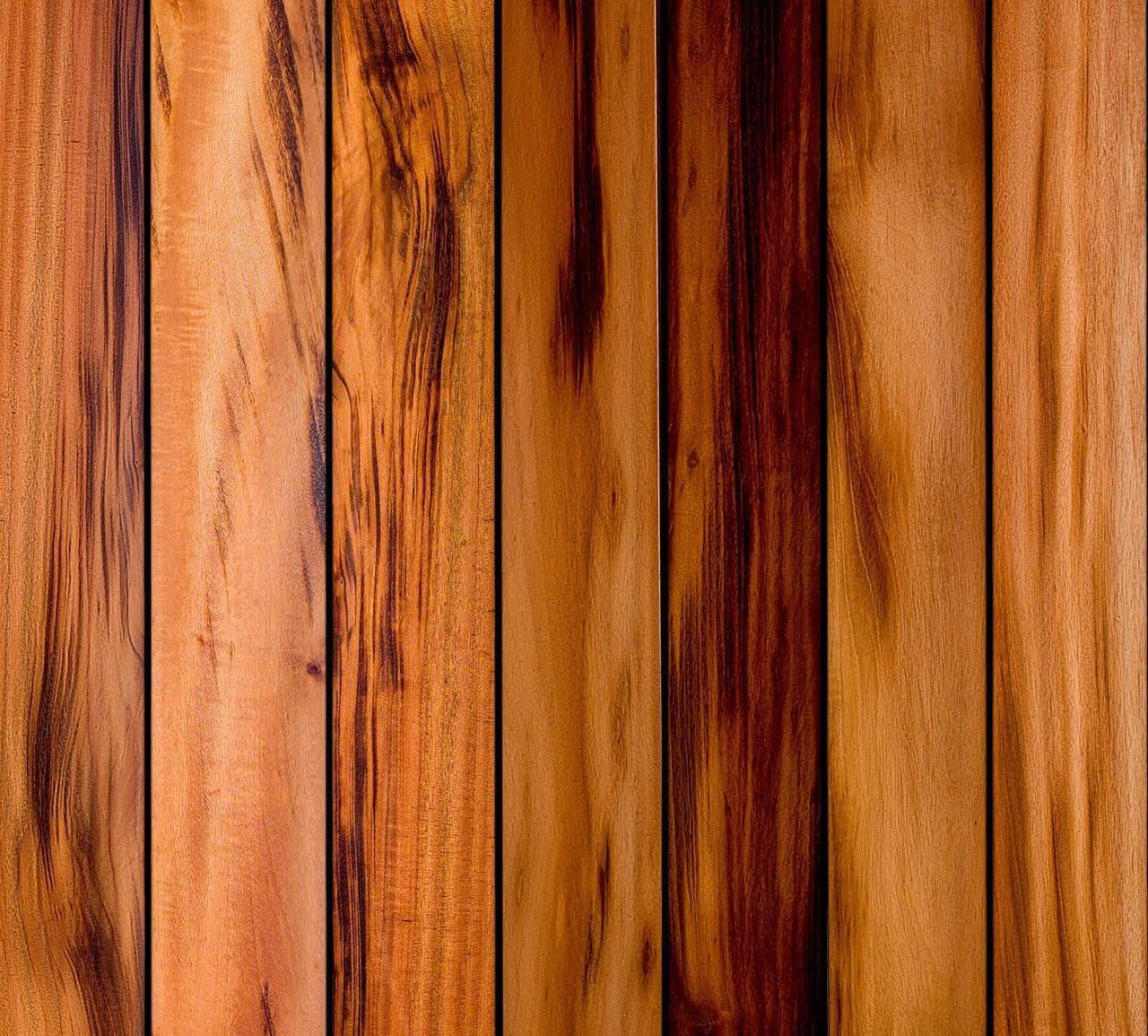
Understanding Tigerwood Decking Characteristics
Tigerwood (Astronium graveolens), also known as Goncalo Alves, is a dense exotic hardwood from Brazil. It is recognized for its unique golden-brown color with contrasting dark brown streaks, giving it a distinctive appearance. Beyond its aesthetic, Tigerwood is known for its durability, resistance to termites, and natural moisture resistance, making it suitable for outdoor decking applications. Its natural oils contribute to its water-repellent properties.
When planning transitions, consider Tigerwood's inherent characteristics. Its density and hardness mean it is a stable material, but like all natural wood, it will respond to environmental conditions. Planning for proper ventilation beneath the deck and managing water runoff away from the decking and its substructure are crucial for longevity.
Available in profiles such as 5/4"x6" (1" x 5.5" finished size), Tigerwood decking typically comes in lengths from 3 to 24 feet. These dimensions are important when calculating how the decking will meet other surfaces and what framing or support structures will be needed at the transition points.
Planning Levels and Elevations
One of the most critical aspects of any material transition is managing changes in elevation. A well-planned transition avoids trip hazards and directs water flow effectively. For a ground-level deck, you might aim for the top of the decking to be flush with an adjacent patio or slightly above a lawn. For elevated decks, the transition to ground-level landscaping will involve stairs or ramps.
When connecting to paving, consider a slight difference in height to allow for drainage. The deck surface can be marginally higher than the patio to prevent water from pooling against the deck boards. If transitioning to a lawn or garden, ensure the decking is elevated enough to prevent soil contact and to allow for proper air circulation beneath the deck. A common practice is to keep the bottom of the lowest deck board at least 6 inches above grade.
For projects where the deck meets an existing concrete slab or paver patio, measure the finished height of both surfaces precisely. This will dictate the height of your deck joists and ledger board (if applicable). If the deck is to be flush, specialized framing may be required to accommodate the decking thickness and maintain a consistent plane.
Drainage and Water Management
Effective drainage is essential at any transition point to prevent water accumulation, which can lead to material degradation, especially for wood. When a Tigerwood deck meets a paved surface, design a slight slope away from the deck on the paved side, or incorporate a linear drain at the junction. This prevents water from sitting against the deck's edge.
For transitions to soft landscaping like lawns or garden beds, ensure the ground slopes away from the deck. Consider installing a gravel French drain or a shallow swale along the deck perimeter to manage runoff. This helps protect the deck substructure from excessive moisture and prevents soil erosion around the deck base.
Remember that Tigerwood, while moisture-resistant, benefits from good ventilation and drainage to maintain its appearance and structural integrity over its long lifespan. Proper water management at transitions contributes to the overall health of the entire outdoor living space.
Edge Details and Material Separation
The way different materials meet visually defines the quality of the transition. For a clean edge where Tigerwood decking meets paving, consider a discreet border material such as a metal strip, a thin paver course, or a treated lumber edge. This creates a clear line and can accommodate slight differential movement between the materials.
When transitioning to a lawn or garden, a robust edge is crucial to prevent soil and mulch from encroaching on the deck and to simplify maintenance. Options include a concrete curb, a treated wood timber, or a course of natural stone or brick pavers. This provides a clear separation, making it easier to mow or edge around the deck without damaging the Tigerwood.
For a more integrated look, some designs might incorporate planting beds directly adjacent to the deck, using a low retaining wall or raised planter box to contain the soil. In such cases, ensure adequate drainage within the planter and consider a moisture barrier between the soil and any deck components.
Worked Example: Deck to Patio Transition
Imagine a new Tigerwood deck measuring 10 feet by 12 feet that needs to connect to an existing 8-foot by 12-foot concrete patio. The finished surface of the concrete patio is 4 inches below the intended finished surface of the deck. This elevation difference needs to be managed for a smooth transition.
First, determine the deck framing height. This allows the 1-inch decking to sit even with the patio.
For drainage, the concrete patio already has a slight slope away from the house. To prevent water from pooling at the deck edge, a linear drain will be installed along the 12-foot length where the deck meets the patio. This drain will capture any water running off the deck or landing on the patio near the transition, directing it away from the deck substructure.
For the edge detail, a thin, dark gray aluminum trim strip, 1/8 inch thick and 1 inch tall, will be installed flush with the top of the concrete patio, butting against the first Tigerwood deck board. This provides a crisp visual separation and a durable edge that can withstand foot traffic and minor impacts. The first deck board will be face-fastened to the joist to ensure a secure connection at this critical edge.
Before you order
- What is the existing elevation difference between the deck area and the adjacent surface?
- How will water drain away from the transition point on both the deck and the adjacent surface?
- What materials will be used for the adjacent paving, lawn, or garden?
- What type of edge detail will visually and physically separate the Tigerwood deck from the adjoining material?
- Are there any local building codes or accessibility requirements that impact the transition design?
- How will the deck substructure be protected from moisture and soil contact at the transition?
- What maintenance considerations are there for the chosen transition materials and design?
Confirm installation details, approved uses and warranty terms in the current instructions for the exact product and profile. Your installer should verify the substrate, structure and applicable project requirements.
Questions to help you decide
How do I prevent water from pooling where my Tigerwood deck meets a patio?
Ensure the patio has a slight slope away from the deck. You can also install a linear drain along the junction to collect and divert water. For very flat areas, consider a slightly raised deck surface relative to the patio to encourage runoff.
What is the recommended clearance between Tigerwood decking and soil?
This allows for adequate ventilation and helps prevent moisture damage and insect issues for the deck substructure.
Can I use Tigerwood decking as a border for a patio?
While Tigerwood decking is durable, using it directly as a ground-level border for a patio where it might be in constant contact with soil or moisture is not ideal without proper substructure and drainage. It's better suited as the main decking surface, with a dedicated border material like stone, concrete, or treated lumber providing the transition.
Start Planning Your Tigerwood Deck Transition
Ready to integrate Tigerwood decking into your outdoor design? Request a material quote with your project dimensions, desired profile, and ZIP code to confirm current availability and service options. Our team can help you select the right materials for a durable and beautiful transition.
Request a material quote →