Understanding Fascia and Trim Boards
Fascia boards are typically installed vertically along the perimeter of the deck frame. Their primary role is aesthetic, covering the exposed joists and rim joists, creating a clean, finished appearance. Trim boards, on the other hand, can refer to various accent pieces used to define edges, corners, or create decorative borders, such as a picture-frame effect around the main decking area.
For Tigerwood decking, the choice of fascia and trim can either blend seamlessly with the deck surface or provide a deliberate contrast. The material's durability and moisture resistance, characteristic of Tigerwood, extend to these finishing elements, making them suitable for long-term outdoor exposure.
Choosing Compatible Materials for Fascia
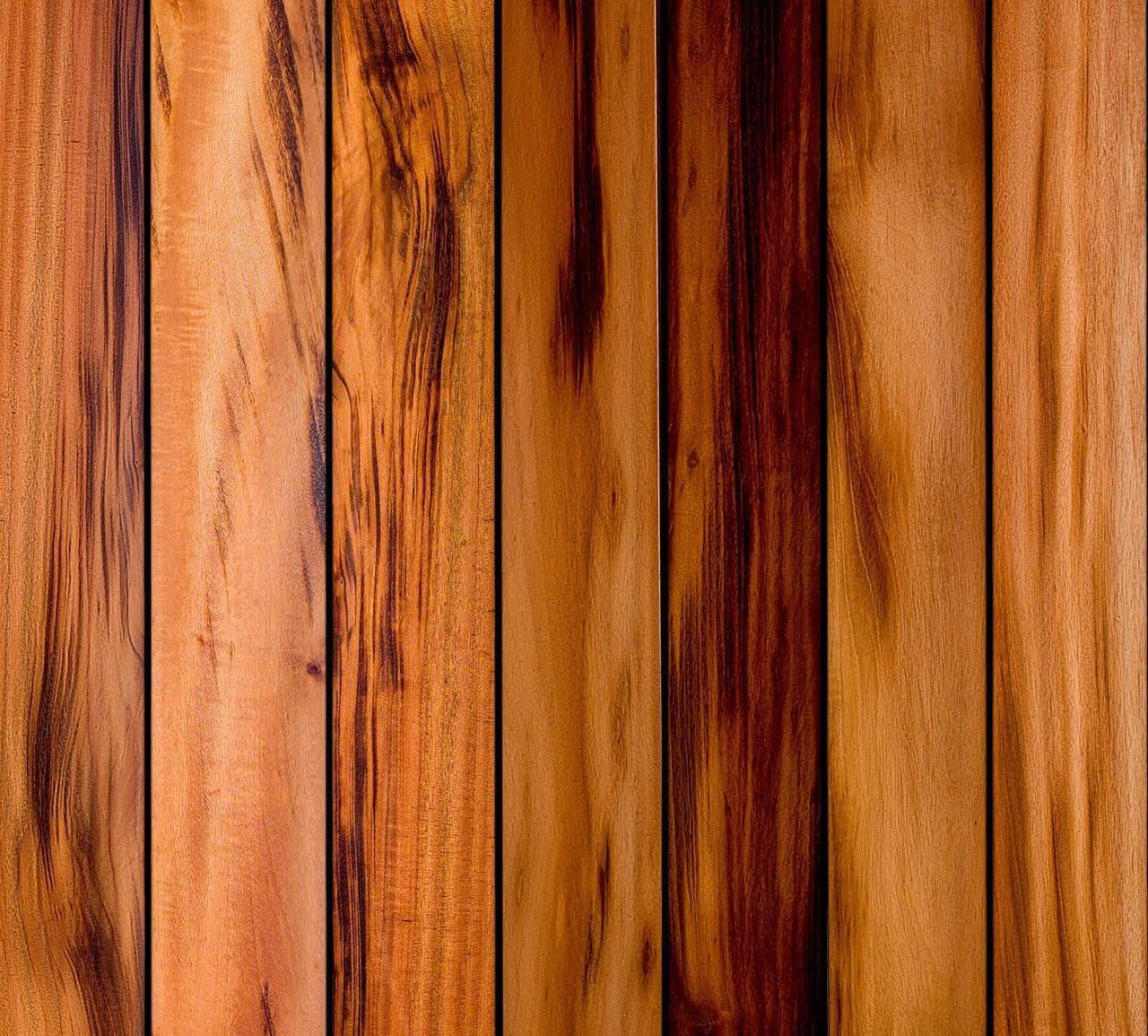
The most straightforward approach for fascia is to use Tigerwood itself. This creates a uniform look, where the rich golden-brown and dark streaked patterns continue from the deck surface to its edges. Tigerwood's natural oils contribute to its water repellency and resistance to termites and moisture, making it a durable choice for fascia applications. Using the same species ensures consistent weathering and maintenance requirements.
Alternatively, some projects opt for a contrasting material for fascia, such as a painted or stained cedar, composite, or PVC product. This can create a visual break or highlight architectural features. If choosing a different material, ensure its durability and dimensional stability are appropriate for outdoor use and compatible with the expected exposure conditions.
Tigerwood Profiles for Fascia and Trim
Tigerwood decking is available in profiles such as 5/4"x6" (actual 1" x 5.5"). These boards can often be used for fascia, depending on the desired thickness and the height of the deck's rim joist.
When using Tigerwood decking boards as fascia, consider the visible edge. Some installers prefer to orient the boards so that the smooth, finished face is outward, matching the deck surface. Others might use the grooved side if the boards are designed for hidden fasteners, though this is less common for fascia where a clean face is usually desired.
Fastening Fascia Boards
Proper fastening is critical for fascia boards, as they are subject to different stresses than deck boards. Face-fastening is common for fascia, using screws that are appropriate for exterior hardwood applications. Pre-drilling is essential when working with dense hardwoods like Tigerwood to prevent splitting and ensure a clean installation.
Consider using stainless steel fasteners for their corrosion resistance, which helps prevent unsightly staining on the Tigerwood over time. Spacing considerations for fascia are generally less critical than for deck boards, but allowing for some expansion and contraction is still advisable.
Worked Example: Fascia Calculation for a Small Deck
Let's consider a hypothetical deck project: a rectangular deck measuring 10 feet by 12 feet, with a single step along one 10-foot side. We plan to use 1"x5.5" Tigerwood decking boards for both the deck surface and the fascia.
For the fascia around the main deck, three sides will need coverage: two 12-foot sides and one 10-foot side. The total linear footage for the main deck fascia is 12 + 12 + 10 = 34 linear feet. This means 34 linear feet x 2 boards = 68 linear feet of Tigerwood for the main deck fascia.
For the single step (10 feet long, let's assume a 7-inch rise), one 1"x5.5" board would cover most of the rise. We would need 10 linear feet for the step fascia. In total, for this project, you would need approximately 68 + 10 = 78 linear feet of 1"x5.5" Tigerwood material for fascia. When ordering, it's prudent to add 10-15% for cuts, waste, and unforeseen needs. If Tigerwood is available in 10-foot lengths, you would need 8-9 boards to cover 78 linear feet, plus waste.
Before you order
- What is the total linear footage required for fascia and trim?
- Will Tigerwood decking boards be used for fascia, or a different material?
- Are multiple boards needed vertically to cover the full joist depth?
- What fastening method will be used (face-fastening with pre-drilling is recommended for Tigerwood)?
- Are stainless steel fasteners selected to avoid staining?
- Have you accounted for waste (typically 10-15%) in your linear footage calculations?
- Will any decorative trim or picture-framing elements be used, and what material will they be?
- Does the chosen fascia material align with the overall aesthetic and maintenance plan for the deck?
Confirm installation details, approved uses and warranty terms in the current instructions for the exact product and profile. Your installer should verify the substrate, structure and applicable project requirements.
Questions to help you decide
Can I use standard Tigerwood deck boards as fascia?
Yes, standard Tigerwood deck boards, such as the 1"x5.5" profile, can be used for fascia. This ensures a consistent look and material performance. You may need to use multiple boards stacked vertically to cover the full height of your deck's rim joists.
Do I need to pre-drill when installing Tigerwood fascia?
Yes, pre-drilling is essential when installing Tigerwood fascia. Pre-drilling prevents splitting of the wood and ensures that fasteners drive in cleanly and securely.
What type of fasteners should I use for Tigerwood fascia?
For Tigerwood fascia, it is recommended to use stainless steel screws. Stainless steel fasteners resist corrosion, which helps prevent black stains or streaking on the wood surface over time, maintaining the aesthetic appeal of the Tigerwood.
Ready to Plan Your Tigerwood Decking Project?
Request a material quote with your project dimensions, exact profile, and ZIP code. Confirm current availability and service options for your Tigerwood decking and coordinating fascia materials.
Request a material quote →