Understanding Courtyard Constraints and Opportunities
Courtyards, by their nature, are often enclosed or semi-enclosed spaces. This can mean limited direct sunlight, which impacts drying times, and close proximity to building foundations or other permanent structures. These constraints are also opportunities to create intimate, functional outdoor rooms.
When planning a courtyard deck, consider the existing footprint, the path of sunlight and shade throughout the day, and how rainwater currently drains. A well-designed Tigerwood deck can transform an underutilized courtyard into a welcoming extension of your living space, but careful planning is essential to address these site-specific conditions.
Tigerwood: A Durable Choice for Courtyard Environments
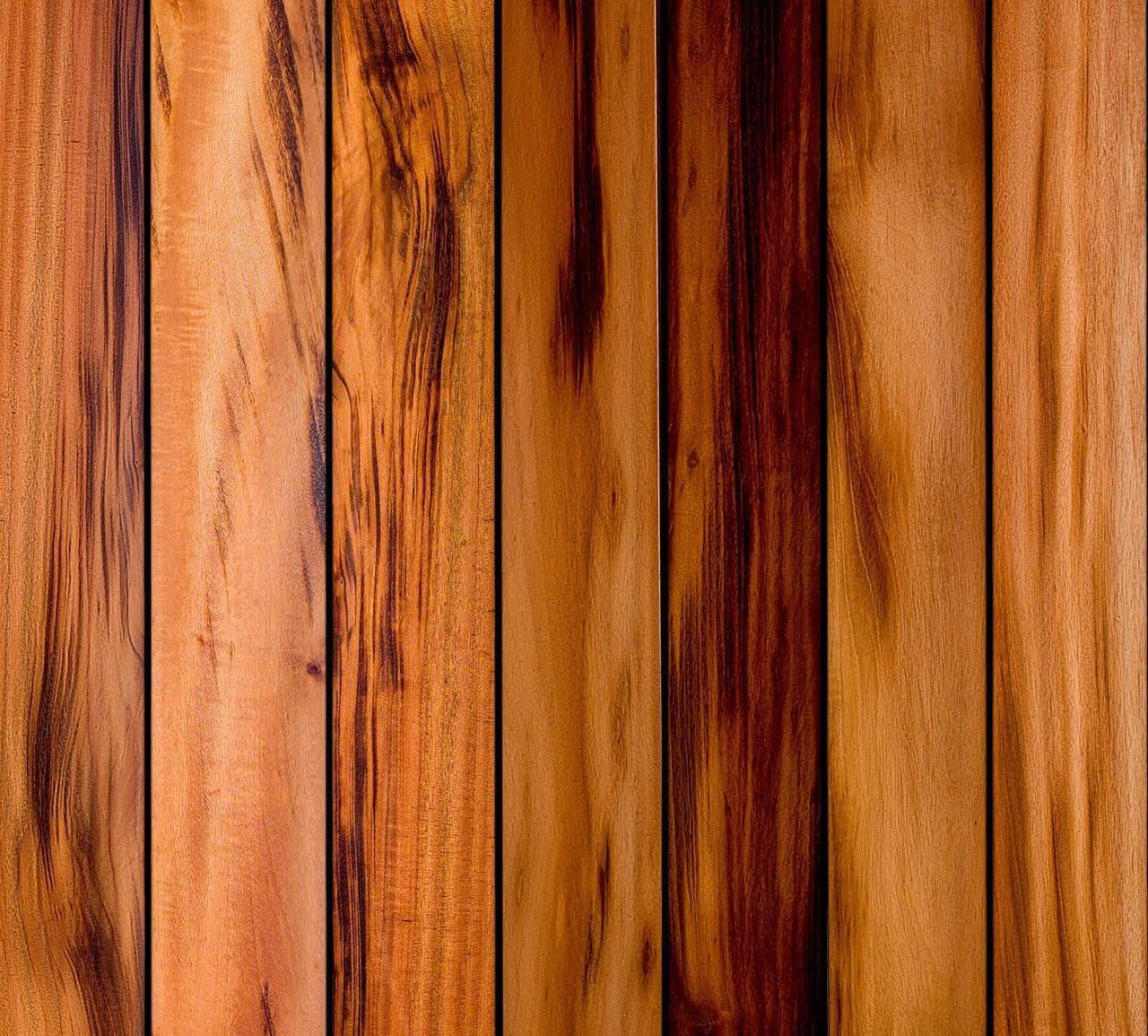
Tigerwood (Astronium graveolens) is an exotic hardwood known for its striking appearance and robust characteristics. Its golden-brown base color with contrasting dark brown streaks creates a dramatic, natural pattern.
Beyond aesthetics, Tigerwood is recognized for its durability and resistance to moisture and termites, making it a suitable material for outdoor applications, particularly in areas that might experience varying levels of sun exposure and moisture. Its natural oils contribute to its water repellency, which can be an advantage in partially shaded courtyards where drying might be slower.
With an air dry density of 4.92 lbs/bf and a specific gravity of 0.91, Tigerwood offers a hard and scratch-resistant surface. This can be beneficial for high-traffic areas within a courtyard, such as pathways to a door or around seating arrangements.
Lumber Plus offers Tigerwood decking in a 5/4"x6" profile (1" x 5.5" actual dimensions) in lengths ranging from 3 to 24 feet, typically kiln-dried (KD).
Designing for Drainage and Ventilation
Proper drainage is critical for any outdoor deck, especially in enclosed courtyards where water runoff can be concentrated. Tigerwood, while moisture-resistant, still benefits from good ventilation to prevent standing water and ensure the longevity of the deck and its substructure.
Design your deck with a slight slope (typically 1/8 to 1/4 inch per foot) away from any adjacent structures to direct water towards a designated drainage area. Ensure sufficient spacing between deck boards to allow water to pass through freely. The manufacturer's specific guidelines for board spacing should always be followed.
Adequate airflow beneath the deck is also important. If the courtyard has solid walls or foundations on multiple sides, consider incorporating vents into the deck skirting or designing the deck to be elevated enough to allow for cross-ventilation. This helps prevent moisture buildup and promotes faster drying.
Maximizing Usable Space in a Compact Courtyard
Courtyards often present limited square footage, so every design decision should aim to maximize functionality without overcrowding the space. Consider integrating built-in benches or planters directly into the deck design. This creates cohesive zones for seating or greenery and eliminates the need for freestanding furniture that can take up valuable floor space.
For a small courtyard, a simple, uncluttered deck layout often works best. A single-level deck can make the space feel larger and more open. If the courtyard has varying elevations, a multi-level deck can define different areas, such as a dining zone and a lounging spot, but this should be approached carefully to avoid making the space feel too busy.
Reflective surfaces, such as light-colored walls or strategically placed mirrors, can help brighten a shaded courtyard and make it appear more spacious.
Worked Example: A 10'x12' Courtyard Deck with Tigerwood
Imagine a courtyard measuring 10 feet wide by 12 feet long, bordered by a house wall on one 12-foot side and a garden wall on the opposite 12-foot side. The two 10-foot ends are open to other landscape features. We want to install a Tigerwood deck that provides a clear seating area and allows for proper drainage.
For this example, we will use 5/4"x6" (1" x 5.5" actual) Tigerwood decking boards. To calculate the number of boards needed, we'll run the boards parallel to the 12-foot length, minimizing cuts. The deck width is 10 feet, which is 120 inches.
Each board is 5.5 inches wide.
Number of boards needed across the 10-foot width: 120 inches / 5.625 inches per board = approximately 21.33 boards. We will round up to 22 boards to ensure full coverage.
Each board needs to be 12 feet long. So, we need 22 boards, each 12 feet long. Total lineal footage: 22 boards * 12 feet/board = 264 lineal feet. When ordering, it is advisable to add 10-15% for waste, cuts, and future repairs. So, 264 * 1.15 = approximately 304 lineal feet. You would request a quote for 304 lineal feet of 5/4"x6" Tigerwood decking.
The deck should be sloped away from the house wall, perhaps a 2-inch drop over the 10-foot width (1/5 inch per foot), directing water towards the open end of the courtyard for efficient runoff. Ensure the substructure allows for this slope and maintains adequate ventilation underneath.
Before you order
- Assess current courtyard dimensions and existing structures (walls, windows, doors).
- Map sun exposure and shade patterns throughout the day and year.
- Evaluate existing drainage and plan for deck runoff.
- Determine the primary function of the deck (dining, lounging, pathway).
- Consider integrating built-in features like benches or planters.
- Confirm the desired finished height of the deck relative to adjacent thresholds.
- Calculate required lineal footage of Tigerwood decking, including waste factor.
- Plan for substructure materials and fasteners compatible with Tigerwood.
- Research local building codes for deck construction, especially for enclosed spaces.
Confirm installation details, approved uses and warranty terms in the current instructions for the exact product and profile. Your installer should verify the substrate, structure and applicable project requirements.
Questions to help you decide
Is Tigerwood suitable for shaded courtyards?
Yes, Tigerwood is suitable for shaded courtyards. Its natural oils contribute to its moisture resistance, which can be beneficial in areas that receive less direct sunlight and may dry slower. However, adequate ventilation beneath the deck and proper board spacing for drainage remain important to prevent moisture buildup.
How do I maintain the appearance of Tigerwood in a courtyard?
Tigerwood can be maintained with periodic cleaning to remove dirt and debris. To preserve its golden-brown hues and dark streaks, an appropriate deck oil or sealer can be applied. If left untreated, Tigerwood will naturally weather to a silver-gray patina over time. Regular sweeping and occasional washing with a mild cleaner are generally recommended.
What profiles and lengths are available for Tigerwood decking?
Lumber Plus typically offers Tigerwood decking in a 5/4"x6" profile, which measures 1" x 5.5" in actual dimensions. Lengths are generally available from 3 to 24 feet, allowing for flexibility in design and minimizing butt joints for most courtyard sizes. It is often supplied kiln-dried (KD).
Ready to Plan Your Tigerwood Courtyard Deck?
For a material quote tailored to your project dimensions, exact profile needs, and ZIP code, or to confirm current availability and service options, contact us through our website.
Request a material quote →