Understanding Tigerwood's Natural Properties for Coastal Environments
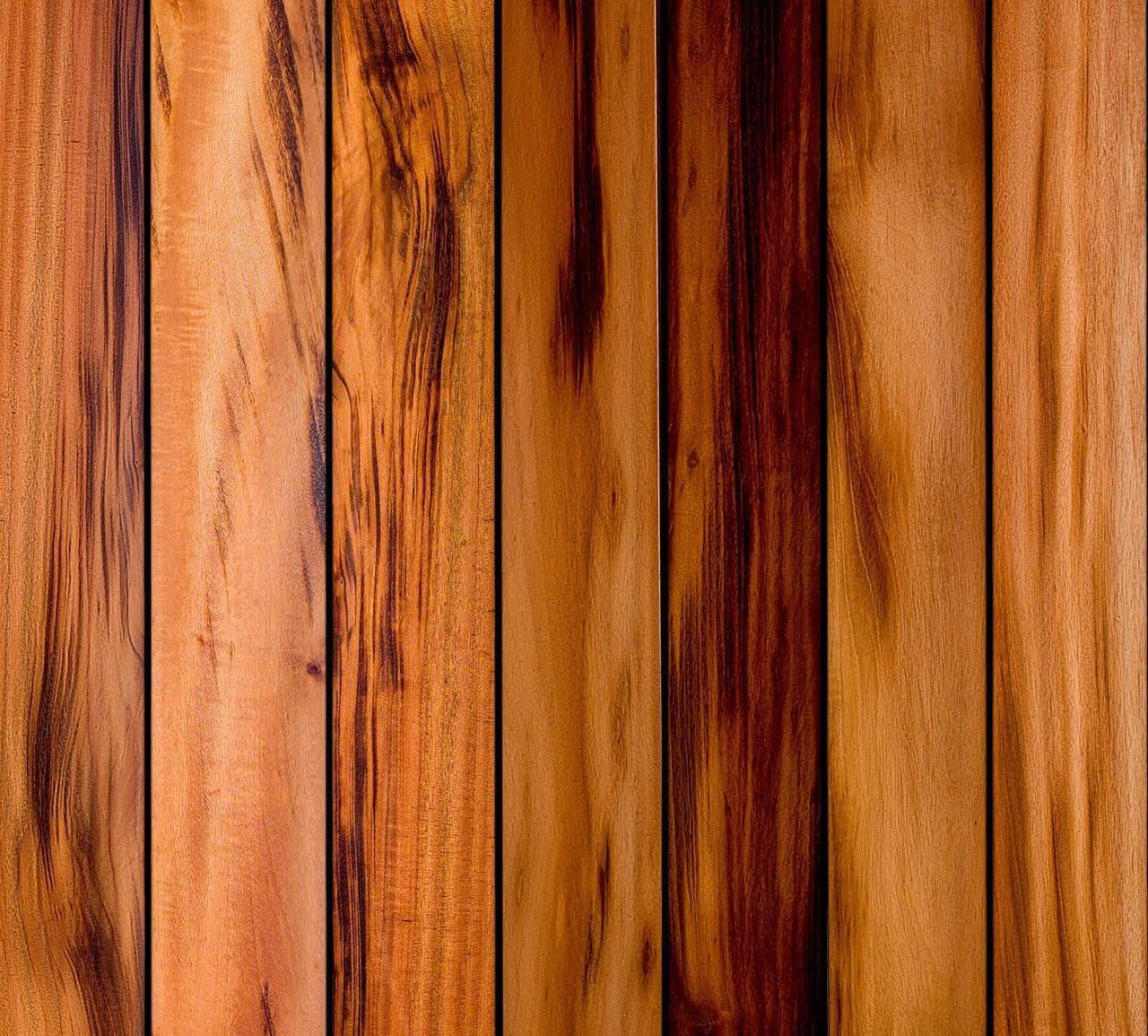
Tigerwood, also known as Goncalo Alves, is an exotic hardwood originating from Brazil. It is characterized by its golden-brown hues with distinct dark brown streaks, giving it a unique striped appearance. Its natural properties make it a candidate for demanding outdoor applications. With an air dry density of 4.92 lbs/bf and a specific gravity of 0.91, it is considered one of the densest hardwoods available. This density contributes to its durability and resistance to rot and decay.
Crucially for coastal settings, Tigerwood is naturally moisture-resistant and water-repellent due to its inherent oils. This resistance is a significant advantage where humidity and occasional salt spray are constant factors. Its robust nature also provides resistance to termites, which can be a concern in warm, humid climates.
While Tigerwood's natural oils and density offer a degree of protection, it is important to note that "resistant" does not mean "impervious." Continuous exposure to harsh coastal elements will still necessitate proper installation, maintenance, and consideration of compatible hardware to maximize its lifespan and appearance.
Salt Exposure and Material Performance
Coastal environments are defined by the presence of salt in the air and precipitation, which can accelerate corrosion of metal fasteners and potentially affect wood surfaces. For Tigerwood, its natural density and moisture resistance help mitigate the direct impact of salt on the wood fibers. However, salt can still deposit on the surface, requiring regular cleaning to prevent buildup that could dull its appearance or, over time, affect the wood.
The primary concern with salt exposure on a Tigerwood deck is its effect on fasteners. Standard steel fasteners can corrode rapidly in a salt-laden atmosphere, leading to structural compromise and unsightly stains on the decking surface. Therefore, the choice of corrosion-resistant fasteners is paramount for any coastal decking project.
Choosing Compatible Hardware for Coastal Tigerwood Decking
Given the corrosive nature of coastal air, selecting the correct hardware is not optional; it is essential for the longevity and safety of your Tigerwood deck. Stainless steel fasteners are generally recommended for exterior hardwood decking in coastal areas.
Consider both face-fastening and hidden fastener systems. If face-fastening, ensure all screws are marine-grade stainless steel. For hidden fastener systems, verify that all components, including clips and screws, are made from suitable corrosion-resistant materials. Pre-drilling is required for Tigerwood due to its density, regardless of the fastener type, to prevent splitting. Always check the fastener manufacturer's specifications for suitability in coastal or saltwater environments.
Beyond fasteners, consider any other metal components on or around the deck, such as railings, gates, or decorative elements. These should also be made from materials designed to withstand coastal conditions, such as marine-grade stainless steel or powder-coated aluminum, to prevent galvanic corrosion or rust staining on your Tigerwood boards.
Installation Considerations for Coastal Decks
Proper ventilation beneath the deck is critical in humid coastal climates to prevent moisture buildup, which can contribute to wood movement and potential issues. Ensure adequate airflow to allow the Tigerwood to acclimate and dry evenly.
Board spacing is also important. Tigerwood is available in 5/4"x6" (1" x 5.5") profiles. Hardwoods can exhibit some movement, swelling, and shrinking with changes in humidity. Following manufacturer recommendations for board spacing is crucial to accommodate this natural movement and ensure proper drainage, especially where salt and moisture are prevalent. Wider gaps may be advised in high-humidity environments.
While Tigerwood is considered easy to work with, its density means it requires professional-grade tools, carbon-tipped saw blades, and pre-drilling for all fastenings. Gluing can be difficult due to its density, so mechanical fastening is the primary method for installation.
Maintenance and Appearance in a Coastal Setting
Tigerwood naturally weathers to a silvery-gray patina over time when exposed to UV radiation. In a coastal environment, this weathering process may be influenced by salt spray, potentially leading to a slightly different aged appearance. Regular cleaning to remove salt residue, sand, and other environmental debris is recommended to maintain its best appearance.
If you prefer to retain the original golden-brown hues and dark streaks, applying a UV-inhibiting oil finish is necessary. This finish will need periodic reapplication, the frequency of which may increase in intense coastal sun exposure. Always choose finishes specifically formulated for exterior hardwoods and suitable for marine environments.
While its properties are advantageous for coastal areas, rigorous maintenance, and appropriate installation practices are essential to achieve this longevity in such a demanding setting.
Worked Example: Coastal Deck Project
Consider a hypothetical coastal home deck project: a 12-foot by 20-foot rectangular deck, approximately 240 square feet, using 5/4"x6" Tigerwood decking boards. The homeowner desires a long-lasting deck that can withstand the salty air and strong sun.
First, determine the board length distribution. Assuming standard lengths are available from 3 to 24 feet, a mix of 12-foot and 20-foot boards could minimize waste. For a 12-foot width, you would typically lay boards across the 12-foot dimension, requiring 12-foot lengths. For the 20-foot length, you could use 20-foot boards or butt-join shorter lengths with proper support.
If using 12-foot boards for the 12-foot width, the number of boards needed would be: 240 sq ft / (5.5 inches / 12 inches/ft * 12 feet) = 240 / 5.5 = 43.6 boards. Rounding up, approximately 44 boards of 12-foot length would be a starting point. Always add 10-15% for cuts, waste, and future repairs. So, 44 * 1.15 = 50.6, or 51 boards of 12-foot length.
A hidden fastener system compatible with dense hardwoods and rated for coastal use would be prioritized to maintain a clean aesthetic and prevent surface staining from corroding screws. If face-fastening, pre-drilling and countersinking each screw would be mandatory, with careful attention to consistent spacing.
The project would also include a plan for regular washing with fresh water to remove salt deposits and a twice-yearly inspection for any signs of fastener corrosion or wood movement. If the homeowner wishes to maintain the original color, a clear, UV-inhibiting penetrating oil specifically designed for exotic hardwoods in coastal climates would be applied annually, or as needed based on observation.
Before you order
- Is the deck structure adequately designed for the weight of dense hardwood and local wind loads?
- Is there a plan for adequate under-deck ventilation to manage humidity?
- Have you accounted for the need for specialized tools (e.g., carbon-tipped saw blades, pre-drilling equipment) for installation?
- Will you allow the Tigerwood to weather naturally or apply a UV-inhibiting finish? If applying a finish, what is the maintenance schedule?
- Do you have a plan for regular cleaning to remove salt and debris?
- Have you reviewed the specific installation guidelines from the Tigerwood supplier for board spacing in humid environments?
Confirm installation details, approved uses and warranty terms in the current instructions for the exact product and profile. Your installer should verify the substrate, structure and applicable project requirements.
Questions to help you decide
Is Tigerwood suitable for direct salt spray exposure?
Tigerwood is highly dense and naturally moisture-resistant due to its oils, which gives it an advantage in humid and occasionally salt-sprayed environments.
What kind of fasteners should I use for Tigerwood decking in a coastal area?
Always pre-drill holes due to Tigerwood's density.
How do I maintain Tigerwood decking in a coastal climate?
Maintenance for coastal Tigerwood decking includes regular cleaning with fresh water to remove salt deposits and debris. If you prefer to retain the wood's original color, apply a UV-inhibiting oil finish formulated for exotic hardwoods in marine environments, with more frequent reapplication possibly needed due to intense sun and salt exposure. Otherwise, the wood will naturally weather to a silvery-gray patina.
Plan Your Coastal Tigerwood Decking Project
Ready to bring the dramatic figure and disciplined performance of Tigerwood to your coastal home? Request a material quote today. Provide your project dimensions, desired board profile (e.g., 5/4"x6"), and ZIP code to confirm current availability and service options. We can help you evaluate the right materials for your specific coastal conditions.
Request a material quote →