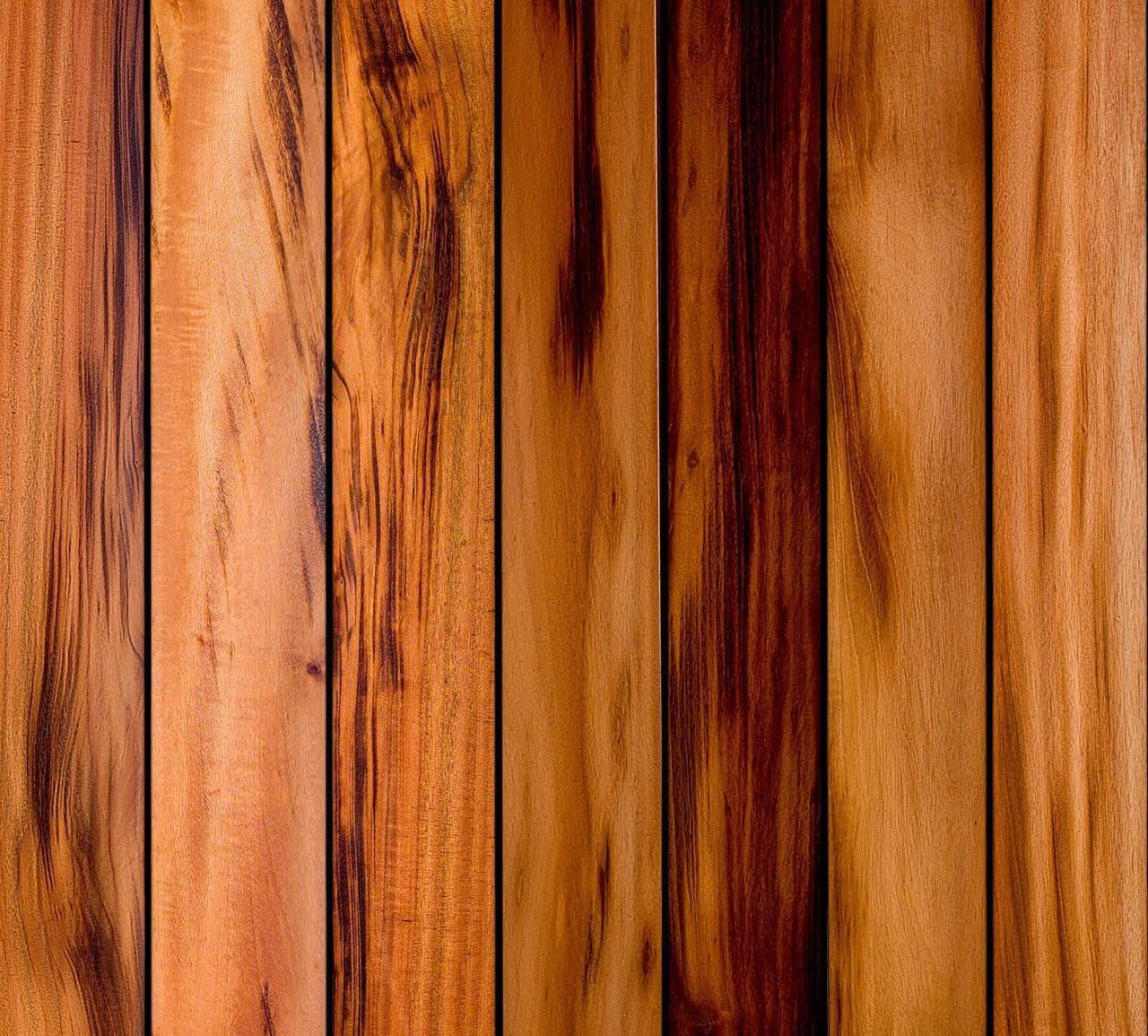
Understanding Tigerwood Decking Profiles
Tigerwood is a dense exotic hardwood, valued for its durability and unique appearance. When selecting Tigerwood decking, understanding the available board profiles is the first step. Different manufacturers may offer various dimensions, but a common profile for Tigerwood decking is 5/4"x6", which translates to an actual dimension of 1 inch by 5.5 inches.
This standard dimension offers a balance of stability and a classic decking look. Always confirm the exact product dimensions with your supplier, as nominal sizes can differ from actual milled dimensions. The specific profile will dictate how the boards lay out and interact visually on your deck surface.
Tigerwood's inherent properties, such as its resistance to termites and moisture, make it suitable for exterior applications like decking. These material characteristics remain consistent regardless of the board width chosen.
Visual Impact of Different Board Widths
The width of your decking boards plays a crucial role in defining the visual rhythm and perceived scale of your deck. A consistent board width, such as the common 5.5-inch face, can create a uniform and orderly appearance. This approach often suits contemporary designs or projects where the focus is on the natural grain and striping of the Tigerwood itself.
Wider boards can make a deck appear more expansive and modern, reducing the number of visible seams across the surface. Conversely, narrower boards might create a busier, more intricate pattern, potentially emphasizing the linear quality of the deck. While a single standard width is common for Tigerwood, understanding these visual principles can help you decide if a particular width aligns with your design goals.
Planning Your Deck Layout with a Single Board Width
For most Tigerwood decking projects, working with a single, consistent board width simplifies planning and installation. The common 1" x 5.5" (actual dimensions) profile provides a robust and visually appealing surface. When planning your layout, consider the overall dimensions of your deck and how the boards will be arranged.
For a straightforward layout, boards are typically run parallel to the longest dimension of the deck or perpendicular to the house. This method minimizes cuts and creates a clean, continuous line. Account for the necessary spacing between boards as specified by the manufacturer for proper drainage and expansion. This spacing is critical for the longevity of your deck.
If your deck has an irregular shape or requires specific design elements like picture-frame borders, these details will also influence how the boards are laid out and where cuts will be necessary. Always sketch your layout in advance to visualize the final result and identify potential challenges.
Worked Example: Calculating Tigerwood Board Quantities
Let's consider a hypothetical rectangular deck measuring 12 feet by 10 feet, using Tigerwood decking boards with an actual width of 5.5 inches (1" x 5.5" nominal).
Convert the deck width to inches: 10 feet * 12 inches/foot = 120 inches.
Next, divide the deck width by the coverage width per board: 120 inches / 5.625 inches/board = 21.33 boards. Since you can't install a fraction of a board, you will need 22 boards across the 10-foot width. The last board may require ripping (cutting lengthwise) to fit, or the spacing can be adjusted slightly across the entire deck to absorb the difference.
For the length of the deck (12 feet), you would select boards that are 12 feet long or longer. Always factor in a waste percentage, typically 10-15%, for cuts, mistakes, and future repairs. For this 12x10 deck, you would need 22 boards, each 12 feet long, plus an allowance for waste.
Considerations for Coastal or Winter Exposure
Tigerwood's natural resistance to moisture makes it a suitable choice for various climates, including those with coastal exposure or harsh winters. Its density and natural oils contribute to its durability in challenging conditions. However, proper installation and maintenance are always crucial.
In areas with significant temperature fluctuations, ensure that the board spacing accommodates expansion and contraction. While Tigerwood is resistant, prolonged exposure to standing water or extreme humidity without proper ventilation can still impact the material. Ensure the deck design allows for adequate airflow beneath the deck surface to prevent moisture buildup.
For coastal environments, the wood's natural properties help it resist the effects of salt air. Regular cleaning can help remove salt residue and maintain the decking's appearance. For winter conditions, ensure snow and ice can melt and drain effectively. The choice of board width does not inherently alter these considerations, but a well-planned layout can facilitate drainage and maintenance.
Before you order
- Confirm the actual dimensions of available Tigerwood decking profiles.
- Sketch your deck layout to visualize the board arrangement and identify potential cuts.
- Calculate the number of boards needed, accounting for board width, spacing, and deck dimensions.
- Factor in a waste percentage (typically 10-15%) for cuts and potential errors.
- Consider how the board width will visually impact the overall scale and style of your deck.
- Review manufacturer guidelines for board spacing to ensure proper drainage and material performance.
- Plan for proper ventilation beneath the deck, especially in high-moisture or coastal areas.
Confirm installation details, approved uses and warranty terms in the current instructions for the exact product and profile. Your installer should verify the substrate, structure and applicable project requirements.
Questions to help you decide
What is the standard width for Tigerwood decking boards?
A common nominal profile for Tigerwood decking is 5/4"x6", which typically translates to an actual finished dimension of 1 inch thick by 5.5 inches wide. Always verify the exact dimensions with your supplier as they can vary.
Does board width affect the durability of Tigerwood decking?
The board width itself does not inherently change the core durability of Tigerwood. Its natural density, hardness, and resistance to termites and moisture are inherent properties of the wood. However, proper installation, including correct spacing for expansion and contraction, is crucial for the longevity of any decking board, regardless of width.
Can I use different widths of Tigerwood decking on the same deck?
While it's technically possible, mixing different board widths for Tigerwood decking is less common for a uniform look. If you plan to use varied widths, careful planning is required to ensure a cohesive design and to manage installation challenges, such as maintaining consistent spacing and alignment. Most projects benefit from a single, consistent board width for simplicity and visual harmony.
Ready to Plan Your Tigerwood Deck?
Request a material quote today. Provide your project dimensions, desired Tigerwood profile, and ZIP code to confirm current availability and service options for your decking project. Explore our full range of <a href="/decking/hardwood/tigerwood">Tigerwood decking</a> and other <a href="/decking">decking materials</a>, including <a href="/decking/hardwood/ipe">IPE</a>, <a href="/decking/composite">composite</a>, and <a href="/decking/pvc">PVC options</a>.
Request a material quote →