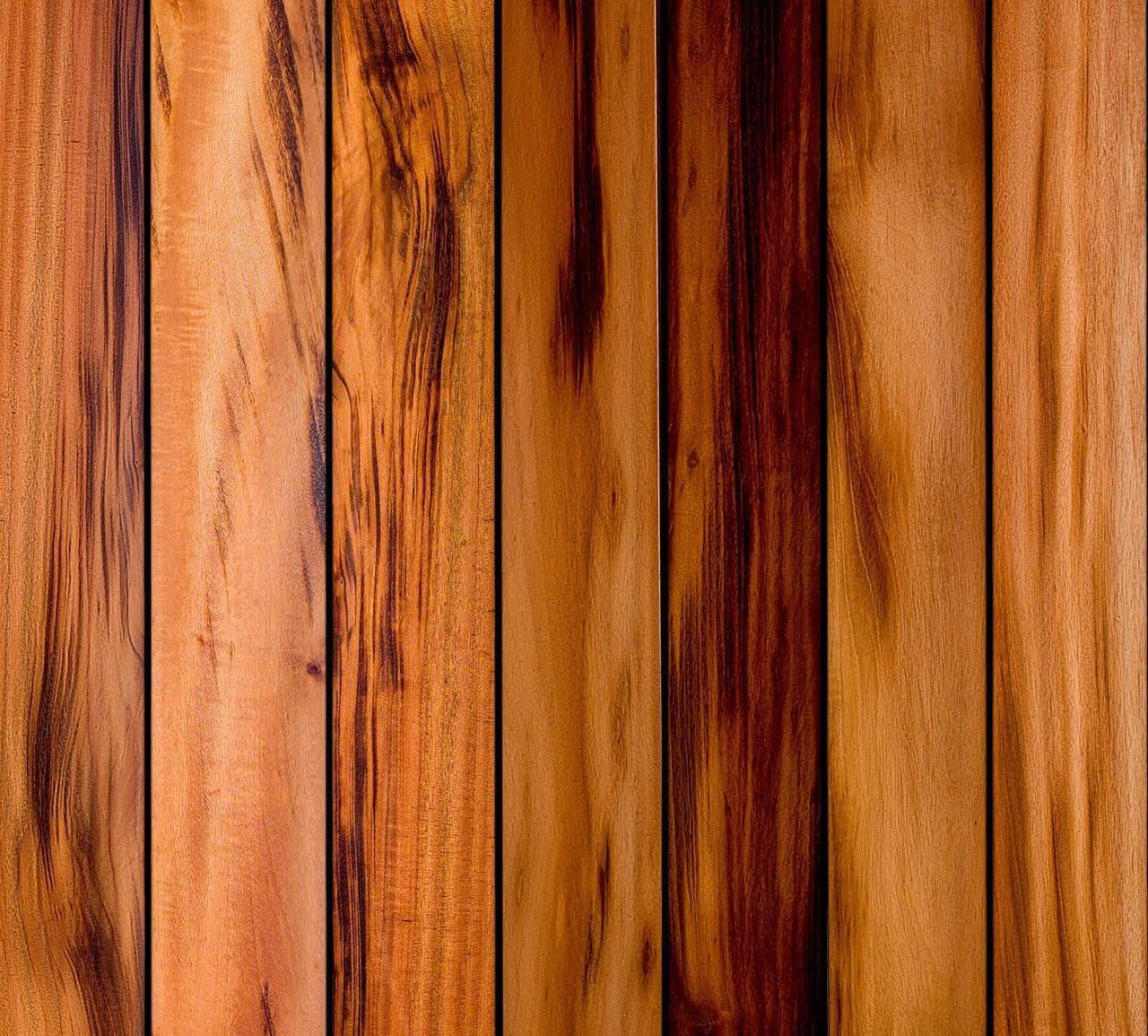
Understanding Tigerwood Decking Board Availability
Tigerwood decking is typically supplied in various lengths to accommodate diverse project needs. For instance, our 5/4"x6" (1" x 5.5" actual) Tigerwood decking boards are available in lengths ranging from 3 to 24 feet. These lengths are kiln-dried (KD) to ensure stability.
Knowing the specific lengths available is the first step in planning. This range allows for flexibility in design, but also requires careful consideration to avoid excessive waste, especially for smaller or irregularly shaped deck areas. Always confirm the current available lengths when requesting a quote for your specific project.
The Impact of Board Length on Deck Aesthetics
The way board lengths are laid out directly influences the visual appeal of your deck. Longer boards can create a more continuous, expansive look, especially on larger decks, by reducing the number of visible seams. This can be particularly desirable with Tigerwood's striking grain patterns, allowing them to flow uninterrupted.
Conversely, a deck composed of many short boards or with seams that appear haphazardly placed can look disjointed. Careful planning aims to distribute seams evenly and inconspicuously, integrating them into the overall design rather than letting them become a focal point.
Types of Decking Seams and Joints
When joining decking boards end-to-end, the most common methods include butt joints and mitered joints. For Tigerwood, ensuring these joints are tight and properly supported is essential for structural integrity and a clean appearance.
Mitered joints, where board ends are cut at an angle to meet, are less common for standard decking runs but can be used for decorative borders or specific design elements. Regardless of the joint type, each seam introduces a potential point of visual interruption and requires proper framing support beneath it.
Minimizing Waste with Strategic Length Planning
One of the primary goals of detailed board length planning is to minimize material waste. Offcuts are inevitable, but smart planning can turn what might be waste into usable sections for other parts of the deck, such as shorter runs, stairs, or border pieces. This involves calculating the exact lengths needed for each section of your deck and then mapping those requirements against the available board lengths.
When purchasing, it's often advisable to order slightly more material than your exact calculation to account for potential cuts, minor imperfections, or future repairs. This buffer, typically 5-10%, can prevent delays if a board needs to be recut or replaced.
Worked Example: Planning for a 16-foot by 10-foot Deck Section
Let's consider a hypothetical deck section measuring 16 feet long by 10 feet wide. For this example, we'll assume standard 5.5-inch wide Tigerwood boards and available lengths up to 24 feet. The goal is to cover the 16-foot length with minimal seams and waste.
A common strategy is to use the longest boards possible. If 16-foot boards are available, this section can be covered with single boards, eliminating seams along the 16-foot dimension. The number of boards needed for the 10-foot width would be 10 feet / (5.5 inches / 12 inches/foot) = approximately 21.8 boards. So, you would need 22 boards.
If 16-foot boards are not available, or if shorter lengths are more economical for a complex layout, consider combinations. This would introduce a seam at the 8-foot mark. For a consistent look, these seams should ideally be staggered across the width of the deck, similar to how interior flooring is laid, to avoid a continuous seam line.
To cover the 10-foot width using 8-foot boards (two per 16-foot run), you would still need 22 boards in total for each 16-foot run. Since each run requires two 8-foot boards, you would purchase 44 eight-foot boards. The offcuts from any cuts made to fit the 10-foot width would be minimal if the boards are precisely cut and used efficiently. Always remember that each butt joint requires a joist directly beneath it for support, so your joist spacing must align with your planned seam locations.
Beyond the Basics: Advanced Layout Considerations
For more complex deck designs, such as those with diagonal layouts or picture-frame borders, board length planning becomes even more critical. Diagonal layouts inherently generate more offcuts, making efficient planning essential. Picture-frame borders, which use boards to frame the main decking area, often require specific shorter lengths or careful cuts from longer boards to achieve a clean mitered corner.
Consider how Tigerwood's distinct streaking pattern will appear when boards are joined. While the goal is often to minimize the visual impact of seams, sometimes the natural variation in the wood can make matching patterns difficult. Embrace the natural character of the wood and focus on structural integrity and consistent spacing.
Before you order
- Confirm current available Tigerwood decking lengths from your supplier.
- Measure your deck's dimensions accurately, including any irregular sections.
- Sketch a layout plan, marking board directions and potential seam locations.
- Prioritize using the longest available boards to minimize seams where possible.
- If using shorter boards, plan to stagger seams for a stronger, more attractive appearance.
- Identify all required board lengths for each section of your deck.
- Calculate the total number of boards needed, accounting for cuts and a waste factor (e.g., 5-10%).
- Verify that your joist layout supports all planned end-to-end board joints.
- Consider the aesthetic impact of seam placement on Tigerwood's unique grain.
- Account for any special cuts needed for borders, stairs, or diagonal patterns.
Confirm installation details, approved uses and warranty terms in the current instructions for the exact product and profile. Your installer should verify the substrate, structure and applicable project requirements.
Questions to help you decide
What are the standard lengths for Tigerwood decking?
Our Tigerwood decking boards, such as the 5/4"x6" profile, are typically available in lengths ranging from 3 to 24 feet. It is always recommended to confirm current stock lengths when planning your order.
How do I calculate how many boards I need?
First, determine the total square footage of your deck. Then, calculate the square footage of a single board (width in feet multiplied by length in feet). Divide your total deck area by the area of one board to get an approximate number. Always add a waste factor (typically 5-10%) to account for cuts, trimming, and potential errors. For optimal planning, create a detailed cut list that maps specific board lengths to your deck layout.
Should I stagger my deck board seams?
Yes, staggering seams is generally recommended for both aesthetic and structural reasons. It prevents a continuous line across the deck, which can be visually distracting and create a weak point. Staggered seams distribute stress more effectively and contribute to a more professional, finished appearance.
Plan Your Tigerwood Decking Project
Ready to bring the dramatic figure and disciplined performance of Tigerwood to your outdoor space? Request a material quote for your project. Provide your project dimensions, desired profile, and ZIP code to confirm current availability and service options for Tigerwood decking. We're here to help you select the right lengths for a beautiful and lasting deck.
Request a material quote →