Why Choose Thermally Modified Ash for an Entry Accent?
Thermally modified ash offers a unique combination of aesthetic appeal and performance suitable for high-visibility applications like an entry accent. Its thermal modification process enhances the wood's stability, making it more resistant to changes in humidity, a crucial factor for exterior elements exposed to varying weather conditions. This improved stability helps maintain the material's appearance and structural integrity over time.
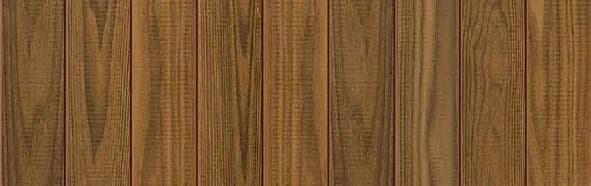
Ash is known for its pronounced grain patterns, which provide a denser hardwood feel and a sophisticated look. The thermal modification process naturally imparts a deep brown hue, eliminating the need for stains to achieve a rich, natural wood appearance. This makes it an attractive choice for creating a warm and inviting entry point that can complement various architectural styles.
Beyond its visual qualities, thermally modified ash is versatile, suitable for cladding, ceilings, and feature walls. This broad application range allows for design continuity if you wish to extend the ash aesthetic to other parts of your entry or outdoor living space. When selecting a profile, consider how it will contribute to the overall texture and shadow lines of your entry accent.
Defining Your Entry Accent Zone
The first step in planning your entry accent is to clearly define the area where the thermally modified ash cladding will be installed. This might be a vertical section framing the door, an overhead soffit extending from the entry, or a combination of both. Consider the existing architectural lines of your home and how the new accent will integrate or contrast with them. A well-defined accent zone ensures a deliberate and impactful statement rather than an arbitrary addition.
Measure the width and height of the proposed accent area carefully. Think about how the cladding will terminate at its edges – will it meet another material, turn a corner, or have a clean, finished edge? These details influence the type of trim or corner detailing you might need. For example, a crisp, modern look might favor mitered corners, while a more traditional style might incorporate corner boards.
Selecting the Right Profile and Layout
Thermally modified ash is available in various profiles, each offering a distinct aesthetic. For an entry accent, common profiles include S4S E4E End Match in nominal sizes like 1 × 6 Plus or 5/4 × 6. These profiles are suitable for siding and ceilings. The choice of profile significantly impacts the visual texture and shadow lines of your entry accent.
Consider the orientation of the cladding. Vertical boards can emphasize height and create a sense of grandeur, while horizontal boards can visually widen the entry and provide a more grounded feel. A diagonal layout, while more complex to install, can introduce dynamic visual interest. Experiment with sketches or mock-ups to visualize how different profiles and orientations will appear in your specific entry space. The 'S4S E4E End Match' profile, for instance, offers a clean, four-sides-smooth finish with eased edges, ideal for a refined appearance.
For trim and molding details around windows or doors within your accent zone, smaller profiles like 1 × 10, 2 × 2, 2 × 4, or 2 × 6 S4S E4E can be utilized to maintain material consistency and a cohesive design.
Coordinating with Doors, Lighting, and Weather Exposure
The entry accent should complement your front door. If your door is a bold color, the natural deep brown of thermally modified ash can provide a rich, grounding backdrop. If your door features natural wood, ensure the tones and grains harmonize. The goal is to create a unified and inviting composition.
Lighting plays a crucial role in highlighting your entry accent. Consider integrated LED strips along the edges of the cladding, or strategically placed sconces that cast light across the wood, emphasizing its grain and texture. Proper lighting not only enhances aesthetics but also improves safety and visibility at night.
Weather exposure is a practical consideration for any exterior element. While thermally modified ash offers improved moisture response, planning for rain and direct sunlight is still important. Ensure adequate overhangs or proper drainage solutions to minimize prolonged water exposure. For coastal or winter conditions, consider how the material will perform and age in that specific environment. While thermal modification improves stability, all exterior wood will experience some degree of weathering over time.
Worked Example: A 10-Foot Entry Accent Wall
Let's consider a hypothetical entry accent wall that is 10 feet wide and 8 feet tall, intended to frame a standard 3-foot wide by 6-foot 8-inch tall front door. The goal is to clad the area around the door with thermally modified ash, using a vertical application of the 1 × 6 Plus S4S E4E End Match profile.
First, calculate the total area to be covered. The accent wall is 10 feet wide by 8 feet tall, for a total area of 80 square feet. The door opening is 3 feet wide by 6.67 feet tall (6 feet 8 inches), which is approximately 20 square feet. This leaves 60 square feet of area to be clad (80 sq ft - 20 sq ft = 60 sq ft).
The 1 × 6 Plus profile has a nominal width of 6 inches, or 0.5 feet. Assuming a typical coverage width of 5.5 inches (0.458 feet) for tongue-and-groove or shiplap profiles, each linear foot of board covers approximately 0.458 square feet. To cover 60 square feet, you would need roughly 131 linear feet of material (60 sq ft / 0.458 sq ft/linear ft).
For vertical installation on an 8-foot tall wall, each board would be cut to 8 feet in length. Therefore, you would need approximately 17 boards (131 linear feet / 8 linear feet/board). Always add a waste factor, typically 10-15%, for cuts and potential errors. For this project, adding 15% waste means needing about 20 boards (17 boards * 1.15).
This calculation provides an estimate for the full modules needed. Always confirm the exact coverage of the chosen profile and consider the layout to minimize waste. For instance, the 1 × 6 Plus S4S E4E End Match profile is listed for siding applications. While the example uses a straightforward calculation, a detailed cut plan would be necessary to optimize material use, especially around the door opening.
Before you order
- Define the precise boundaries of your entry accent zone.
- Select a thermally modified ash profile (e.g., S4S E4E End Match 1 × 6 Plus) that aligns with your desired aesthetic and application.
- Determine the orientation of the cladding (vertical, horizontal, diagonal).
- Plan how the cladding will meet adjacent materials, corners, and door/window frames.
- Consider how the accent will integrate with your front door's material and color.
- Design lighting elements to highlight the ash cladding.
- Evaluate weather exposure and plan for appropriate protection or drainage.
- Calculate material quantities, including a waste factor for cuts and detailing.
- Confirm the substructure requirements for your chosen cladding system.
Confirm installation details, approved uses and warranty terms in the current instructions for the exact product and profile. Your installer should verify the substrate, structure and applicable project requirements.
Questions to help you decide
What is thermally modified ash?
Thermally modified ash is a hardwood that has undergone a high-heat treatment process without chemicals. This process improves the wood's stability and durability, making it more resistant to moisture changes, decay, and insect infestation. It also imparts a consistent deep brown color throughout the wood, which is beneficial for exterior applications like cladding. The original Ash species are typically from North America and Europe.
Does thermally modified ash require a finish?
Thermally modified ash does not require a finish for performance, as the thermal modification process enhances its durability. However, if left unfinished, it will naturally weather to a silver-gray patina over time, similar to other wood species exposed to UV radiation. If you wish to maintain the original deep brown hue, a UV-inhibiting oil finish can be applied and will require periodic reapplication.
Can thermally modified ash be used in all climates?
Yes, thermally modified ash is suitable for a broad range of climates due to its improved stability and moisture resistance. Its enhanced properties make it a good choice for exterior applications in areas with fluctuating humidity or significant temperature changes. However, as with any exterior wood product, proper installation, ventilation, and attention to drainage details are crucial for optimal long-term performance in any climate.
Ready to Design Your Entry Accent?
Request a material quote today. Provide your project dimensions, desired profile, and ZIP code to confirm current availability and service options for thermally modified ash. Explore our full range of products, including siding and cladding, thermally modified wood, and NORX brand materials, to complete your design vision.
Request a material quote →