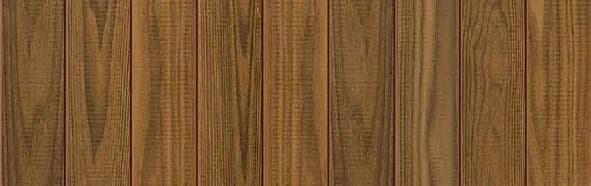
Understanding Thermally Modified Ash Materials
Thermally Modified Ash is a hardwood known for its enhanced stability and distinctive appearance. It is available in several profiles and nominal sizes, each suited for specific applications. Common profiles include S4S E4E End Match for siding, ceilings, and decking, and S4S E4E for decking, structural details, trim, and molding. The specific profile and size you select will directly impact your material costs and installation requirements.
The natural deep brown hue of Thermally Modified Ash provides a rich aesthetic, making it a popular choice for cladding, ceilings, and feature walls. When planning your budget, consider the visual impact and the required quantity of each profile for your design.
For example, a project might utilize 1x6 Plus S4S E4E End Match for cladding, and 2x4 S4S E4E for specific decking or trim elements. Each profile will have its own unit cost, and accurately specifying these will be the first step in your budget.
Worked Example: Estimating Materials for a Cladding Project
Let's consider a hypothetical wall cladding project using Thermally Modified Ash 1x6 Plus S4S E4E End Match profile, with a nominal face width of 5.5 inches. The wall measures 20 feet wide by 10 feet high. We will assume a horizontal installation with a minimal gap between boards.
First, calculate the total surface area: 20 feet (width) * 10 feet (height) = 200 square feet.
Next, calculate the coverage per linear foot for the chosen board. A 1x6 Plus board has a nominal face width of 5.5 inches (0.4583 feet). So, one linear foot covers 0.4583 square feet.
To find the total linear feet needed for the area: 200 square feet / 0.4583 square feet per linear foot = approximately 436.4 linear feet.
It is crucial to account for waste due to cuts, defects, and miscalculations. A common industry practice is to add a waste factor, typically 10-15%. For this example, we'll use 15%: 436.4 linear feet * 1.15 (waste factor) = 501.86 linear feet. Round up to the nearest full board length or bundle quantity as appropriate for ordering. If boards are sold in 12-foot lengths, you would need 501.86 / 12 = 41.82 boards. This would round up to 42 boards, totaling 504 linear feet.
This calculation provides the material quantity for the main cladding. Remember to apply similar calculations for any trim, corners, or other profiles needed for the project.
Essential Accessories and Fasteners
Beyond the primary wood boards, a Thermally Modified Ash project requires various accessories. These can include: fasteners (screws, clips, nails), furring strips or a rainscreen system, insect screens, corner trim, flashing, and possibly a suitable finish or sealant if you choose not to let the wood weather naturally.
The type of fasteners depends on the chosen installation method and the substrate. For exterior applications, corrosion-resistant fasteners are generally recommended. For a rainscreen system, you'll need battens, which add to the material cost and installation complexity.
Carefully review the manufacturer's recommendations for compatible fasteners and installation methods for your chosen Thermally Modified Ash profile. These small items can add up significantly in the overall budget.
Labor Costs and Installation Complexity
Labor is often a substantial portion of any construction budget. The cost will vary based on the complexity of the installation, local labor rates, and the experience of the installers. Factors that increase labor time and cost include intricate designs, custom cuts, working at height, and detailed finishing.
A rainscreen assembly, while beneficial for moisture management, typically requires more labor than a direct-to-sheathing installation due to the additional steps of installing furring strips and insect screens. Complex corner details, window and door trim, and incorporating multiple profiles will also increase labor hours.
Obtain detailed quotes from qualified contractors that specify their hourly rates or project fees, and what is included in their scope of work. Ensure their quote accounts for site preparation, material handling, installation, and cleanup.
Finishes, Sealants, and Maintenance Considerations
Thermally Modified Ash has a natural deep brown tone. While it can be left to weather to a silver-gray patina over time, some projects may opt for a finish or sealant to maintain its initial color or to provide additional protection.
If you choose to apply a finish, factor in the cost of the product, application tools, and the labor for application. Keep in mind that finishes require periodic reapplication, which should be included in your long-term maintenance budget.
Maintenance costs are an ongoing consideration. Regular cleaning to remove dirt and debris, and reapplication of finishes if desired, are part of preserving the appearance of Thermally Modified Ash. Discuss these aspects with your contractor and material supplier to understand the long-term financial implications.
Contingency Planning and Hidden Costs
No project budget is complete without a contingency fund. Unforeseen issues, such as unexpected site conditions, material damage during delivery, or design changes, can arise. A contingency of 10-20% of the total project cost is a prudent allocation.
Hidden costs can also include permit fees, specialized equipment rental, waste disposal, and potential design consultant fees. Discuss all potential costs with your contractor and architect (if applicable) upfront to minimize surprises.
Even with careful planning, unexpected challenges can impact timelines and budgets. Having a contingency allows for flexibility without derailing the entire project.
Before you order
- Have I calculated the exact linear footage or square footage for each Thermally Modified Ash profile needed?
- Have I applied a realistic waste factor (e.g., 10-15%) to all material quantity estimates?
- Have I itemized all necessary accessories, including fasteners, furring strips, flashing, and trim?
- Have I obtained multiple detailed labor quotes from qualified contractors?
- Have I accounted for any desired finishes, sealants, and their reapplication schedule?
- Is there a contingency fund (10-20% of total project cost) included in the budget?
- Have I considered potential hidden costs like permits, equipment rental, and waste disposal?
- Does my budget account for any special considerations for my specific climate or project type (e.g., coastal, winter)?
- Have I confirmed the availability of my chosen Thermally Modified Ash profiles and accessories?
- Have I factored in delivery costs and lead times for materials?
Confirm installation details, approved uses and warranty terms in the current instructions for the exact product and profile. Your installer should verify the substrate, structure and applicable project requirements.
Questions to help you decide
What is the typical waste factor I should include for Thermally Modified Ash?
A common waste factor for wood projects, including Thermally Modified Ash cladding or decking, ranges from 10% to 15%. This accounts for cuts, potential defects, and any errors during installation. For complex designs or unusual angles, you might consider a slightly higher percentage.
Do I need special fasteners for Thermally Modified Ash?
Yes, it is generally recommended to use corrosion-resistant fasteners, such as stainless steel screws or clips, for Thermally Modified Ash, especially in exterior applications. Always consult the manufacturer's specific installation guidelines for compatible fasteners and methods to ensure proper performance and longevity.
Does Thermally Modified Ash require a finish?
Thermally Modified Ash does not strictly require a finish for durability. It can be left unfinished to naturally weather to a silver-gray patina over time. However, if you wish to preserve its initial deep brown hue or provide additional surface protection, applying a suitable exterior finish or sealant is an option. Be aware that finishes will require periodic reapplication as part of ongoing maintenance.
Ready to Budget Your Thermally Modified Ash Project?
Request a material quote today. Provide your project dimensions, desired Thermally Modified Ash profile, and your ZIP code to get started. Our team can help confirm current availability and service options for your project.
Request a material quote →