Understanding Thermally Modified Ash's Natural Appearance
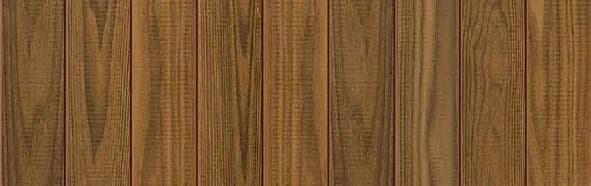
Thermally Modified Ash is known for its natural deep brown hue, which results from the thermal modification process. This inherent color provides a solid foundation for a dark facade, often requiring less opaque staining to achieve the desired depth.
The wood's pronounced grain also contributes to its visual character, adding texture and interest that can be enhanced or subdued by the chosen finish. This hardwood presence is a key benefit for high-visibility applications like cladding. While the natural color is dark, it is not black. Achieving a true dark or black facade typically involves an additional finish application.
Thermally modified Ash offers improved stability in response to humidity changes, making it a suitable material for exterior cladding. It is useful across walls, ceilings, and selected decking details when the specified profile and installation system are confirmed.
Common profiles for Thermally Modified Ash cladding include S4S E4E End Match in nominal sizes such as 1 × 6 Plus and 5/4 × 6. These profiles are designed for siding and ceiling applications.
Selecting a Dark Finish for Thermally Modified Ash
To achieve a dark facade with Thermally Modified Ash, you will typically apply an exterior-grade finish. The choice of finish affects not only the final color but also the maintenance requirements and the wood's long-term appearance. Options generally include opaque stains, semi-transparent stains, or oils with dark pigments.
Opaque stains offer the most consistent and darkest color, effectively covering the wood grain. This can create a uniform, modern look. Semi-transparent stains allow some of the natural wood grain to show through, providing a softer, more nuanced dark finish. Pigmented oils can deepen the natural brown of the Ash while still allowing the wood's texture to be visible, offering a more natural dark aesthetic.
When selecting a finish, consider its UV resistance. Darker finishes, especially those that absorb more sunlight, can be prone to fading over time if not adequately protected. Look for finishes specifically formulated for exterior use and with strong UV inhibitors to help maintain color longevity.
Impact of Sun Exposure on Dark Facades
Dark facades, by their nature, absorb more solar radiation than lighter surfaces. This can lead to increased surface temperatures, which should be considered during design and installation. While Thermally Modified Ash has improved stability, extreme temperature fluctuations can still impact the finish and the material over many years.
Sun exposure will also influence the fading rate of any applied finish. Elevations that receive intense, direct sunlight for extended periods will likely experience more rapid fading compared to shaded areas. This can lead to an uneven appearance over time, where sunny sections may lighten more quickly than protected ones. Planning for periodic reapplication of the finish is essential to maintain a consistent dark look.
Consider the orientation of your facade. South and west-facing walls typically receive the most intense sun exposure. For these elevations, selecting a highly durable, UV-resistant dark finish is even more critical, and a more frequent maintenance schedule may be necessary.
Maintenance Considerations for Dark Finishes
Maintaining a dark facade on Thermally Modified Ash involves regular cleaning and periodic reapplication of the chosen finish. Dirt, dust, and environmental pollutants are often more visible on dark surfaces, necessitating regular washing to preserve the facade's appearance. Use a mild cleaner and soft brush, rinsing thoroughly.
The frequency of reapplication depends on the type of finish, the level of sun exposure, and local climate conditions. Opaque stains may last longer than semi-transparent options or oils, but all will eventually require refreshing. It is advisable to follow the finish manufacturer's recommendations for maintenance intervals.
When reapplying, ensure the surface is clean and dry. Light sanding may be required to prepare the surface for optimal adhesion, especially if there is significant fading or peeling. Consistent maintenance helps to ensure the dark facade retains its intended aesthetic over its lifespan.
Worked Example: Designing a Dark Accent Wall
Consider a hypothetical residential project where a homeowner wants to create a striking dark accent wall on a contemporary home. The wall measures 12 feet wide by 9 feet high, totaling 108 square feet. They decide to use Thermally Modified Ash 1 × 6 Plus S4S E4E End Match cladding to achieve a crisp, modern look.
For a truly dark facade, they select an opaque, charcoal-colored exterior stain designed for wood cladding. This choice will provide a uniform, deep color that minimizes the visibility of the wood grain.
To calculate the material needed, first determine the linear footage. A 1x6 Plus board has a nominal width of 6 inches, which is 0.5 feet. For a 12-foot wide wall, this means 12 feet / 0.5 feet per board = 24 boards for the width. Since the wall is 9 feet high, each board will be cut to 9 feet. Therefore, 24 boards x 9 feet/board = 216 linear feet of cladding. Allowing for a typical 10-15% waste factor for cuts and any imperfections, approximately 240-250 linear feet would be a reasonable purchase quantity. This accent wall faces north, reducing direct sun exposure and potentially extending the life of the dark stain.
They also plan for a rainscreen assembly behind the cladding to ensure proper ventilation and moisture management, a crucial detail for any exterior cladding, especially with darker finishes that may experience higher surface temperatures. This involves installing furring strips over a weather-resistant barrier.
Before you order
- Confirm the desired shade of dark (e.g., charcoal, deep brown, near-black).
- Research exterior-grade finishes suitable for Thermally Modified Ash and the chosen color depth (opaque, semi-transparent, oil).
- Verify the UV resistance and fade performance of the selected finish.
- Consider the facade's orientation and sun exposure levels.
- Plan for a maintenance schedule, including cleaning and reapplication of the finish.
- Account for a rainscreen assembly to manage moisture and ventilation behind the cladding.
- Obtain samples of Thermally Modified Ash with the proposed dark finish to assess the final look in various lighting conditions.
Confirm installation details, approved uses and warranty terms in the current instructions for the exact product and profile. Your installer should verify the substrate, structure and applicable project requirements.
Questions to help you decide
Will a dark finish make my Thermally Modified Ash facade too hot?
Dark finishes absorb more solar radiation, leading to higher surface temperatures compared to lighter colors. While Thermally Modified Ash has improved dimensional stability, it's important to consider proper ventilation in your wall assembly (like a rainscreen) to manage heat and moisture effectively. The perceived 'hotness' primarily affects the surface temperature of the cladding itself, rather than significantly impacting interior temperatures if the wall assembly is well-insulated.
How often do I need to reapply a dark finish to Thermally Modified Ash?
The reapplication frequency depends on the specific finish product, the intensity of sun exposure, and local weather conditions. Typically, exterior dark finishes may need reapplication every 2-5 years. Facades exposed to direct, intense sunlight will likely require more frequent maintenance than shaded areas. Always follow the finish manufacturer's recommendations.
Can Thermally Modified Ash be left to weather naturally to a dark color?
Thermally Modified Ash has a natural deep brown hue. If left unfinished and exposed to the elements, it will gradually weather to a silvery-gray patina over time, similar to other natural wood species. It will not naturally turn black or a darker shade of brown. To maintain or achieve a specific dark color, an exterior-grade finish must be applied and periodically reapplied.
Plan Your Dark Facade with Thermally Modified Ash
Ready to specify Thermally Modified Ash for a striking dark facade? Request a material quote with your project dimensions, desired profile, and ZIP code. Confirm current availability and service options to start your project.
Request a material quote →