Understanding Covered Outdoor Walls
A covered outdoor wall is defined by its protection from direct weather exposure, typically under an overhang, porch roof, or balcony. This shelter significantly reduces the impact of UV radiation, driving rain, and standing water, which are primary factors in material degradation for fully exposed surfaces. This distinction is crucial because it allows for different material profiles and finishes, potentially simplifying maintenance and extending the visual appeal of the wood.
While sheltered, these walls are still subject to ambient humidity fluctuations, temperature changes, and indirect sunlight. Selecting a material that can manage these conditions while providing the desired aesthetic is key. Thermally Modified Ash is well-suited for such environments due to its improved dimensional stability compared to untreated ash.
Why Thermally Modified Ash for Covered Walls?
Thermally Modified Ash undergoes a high-heat treatment process that alters its cellular structure, enhancing its resistance to moisture and improving its stability. This modification makes it less prone to expansion and contraction with changes in humidity, a valuable trait for any outdoor application, even those that are covered.
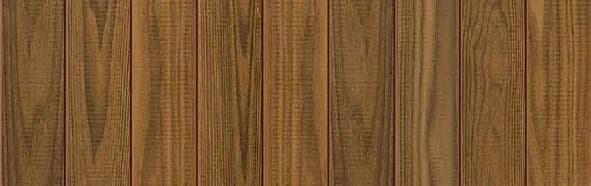
Beyond its performance benefits, Thermally Modified Ash offers a distinct aesthetic. It presents a deeper, richer brown hue and a pronounced hardwood grain that can elevate the appearance of a covered outdoor space. Its denser feel makes it suitable for high-visibility areas where the tactile quality of the material is appreciated. It is useful across vertical and overhead applications.
The benefits of Thermally Modified Ash include its hardwood presence, offering a deeper grain and denser feel, and its better moisture response due to improved stability. This broad application range makes it versatile for various vertical and overhead surfaces.
Suitable Profiles for Covered Outdoor Walls
For covered outdoor walls, several profiles of Thermally Modified Ash are suitable, depending on the desired aesthetic and installation method. The S4S E4E End Match profile, available in 1 × 6 Plus and 5/4 × 6 nominal sizes, is a common choice for siding and ceiling applications. The end-matched feature can simplify installation by allowing boards to be joined between supports, potentially reducing waste.
While other profiles like 2 × 4 and 2 × 6 S4S E4E are listed for decking and structural details, and 1 × 10, 2 × 2, 2 × 4, 2 × 6 S4S E4E for trim and molding, the most common profiles for wall applications are typically those designed for cladding. Always confirm the specific profile is approved for your intended vertical application and any supporting substructure requirements.
Planning Your Covered Outdoor Wall Project: A Hypothetical Example
Consider a hypothetical covered patio wall measuring 15 feet wide by 8 feet high. The owner desires a seamless, natural wood look using Thermally Modified Ash. They choose the 1 × 6 Plus S4S E4E End Match profile, which has a nominal width of 6 inches.
To calculate the material needed, first determine the total area: 15 feet * 8 feet = 120 square feet. For a 1x6 (nominal 5.5 inch actual width) board, each linear foot covers approximately 0.458 square feet (5.5 inches / 12 inches per foot). Therefore, 120 square feet / 0.458 square feet per linear foot = approximately 262 linear feet.
Given that Thermally Modified Ash is typically sold in varied lengths, it's prudent to add a waste factor, usually 10-15%, for cuts and potential imperfections. For this project, a 15% waste factor would mean 262 linear feet * 1.15 = approximately 301 linear feet. This quantity should be ordered in full bundles, considering available lengths, to minimize waste and ensure consistent material. This example assumes a straightforward installation without complex detailing around windows or doors, which would require more precise calculations and potentially higher waste factors.
Installation and Maintenance Considerations
Even in a covered setting, proper installation is vital. Ensure adequate ventilation behind the wall cladding to prevent moisture buildup, which can still occur from ambient humidity. A rainscreen assembly, while often associated with fully exposed walls, can still offer benefits for covered walls by promoting airflow and drainage, even if the primary purpose is not direct rain deflection. Confirm fastener types and spacing with the manufacturer's guidelines for Thermally Modified Ash.
Maintenance for Thermally Modified Ash on a covered wall is generally less intensive than for fully exposed applications. If left unfinished, the wood will naturally weather to a silver-gray patina over time. Applying a UV-protective finish can help preserve its original deep brown hue, but this will require periodic reapplication. Regular cleaning to remove dust and debris will help maintain its appearance. Always refer to manufacturer recommendations for specific cleaning agents and finishing products.
Before you order
- Is the wall truly covered and protected from direct rain and sun?
- What aesthetic is desired (natural weathering or maintained original color)?
- Which Thermally Modified Ash profile best suits the design and installation method?
- Have I accounted for proper ventilation behind the cladding?
- Are the fasteners chosen compatible with Thermally Modified Ash and the substructure?
- What is the estimated material quantity, including a waste factor?
- What are the long-term maintenance expectations for the chosen finish (or lack thereof)?
Confirm installation details, approved uses and warranty terms in the current instructions for the exact product and profile. Your installer should verify the substrate, structure and applicable project requirements.
Questions to help you decide
Does Thermally Modified Ash require a finish on a covered outdoor wall?
No, Thermally Modified Ash does not require a finish for durability in a covered outdoor application. However, if you wish to retain its original deep brown color, a UV-protective finish will be necessary. Without a finish, the wood will naturally weather to a silver-gray over time.
Can Thermally Modified Ash be used in coastal environments for covered walls?
Thermally Modified Ash's enhanced stability makes it a suitable choice for covered outdoor walls in coastal environments, as it better resists moisture fluctuations. However, salt spray and high humidity still warrant careful consideration of ventilation and potential finish choices to protect the surface.
How do I clean Thermally Modified Ash on a covered wall?
For routine cleaning, a soft brush or cloth with mild soap and water is usually sufficient to remove dust and light grime. Avoid harsh chemicals or abrasive cleaners that could damage the wood or its finish. Always rinse thoroughly with clean water.
Ready to Transform Your Covered Outdoor Wall?
Request a material quote today! Provide your project dimensions, desired Thermally Modified Ash profile, and ZIP code to confirm current availability and service options. Explore our full range of <a href="/thermally-modified-wood/ash">Thermally Modified Ash products</a>, <a href="/siding-and-cladding">siding and cladding options</a>, and <a href="/brands/norx">NORX brand materials</a> for your project.
Request a material quote →