The Importance of Product Specifications and Data Sheets
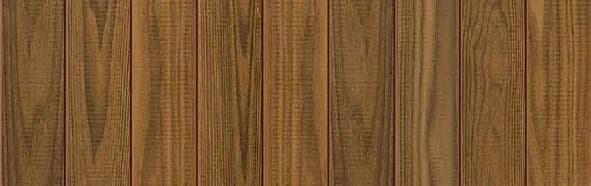
The first set of documents to request for any Thermally Modified Ash project are the comprehensive product specifications and data sheets. These documents are the core technical reference for the material itself. They detail the botanical name (Fraxinus spp.), origin (North America and Europe), and specific characteristics such as the natural deep brown tone. For Thermally Modified Ash, these sheets will also highlight key benefits like its hardwood presence, deeper grain, denser feel, and improved moisture response due to thermal modification, which enhances stability in varying humidity. This information confirms you are specifying the correct material for your design intent.
Crucially, product data sheets should list available profiles and their nominal sizes. For Thermally Modified Ash, common profiles include S4S E4E End Match in nominal 1 × 6 Plus and 5/4 × 6 for siding, ceilings, and decking applications. Larger S4S E4E profiles like 2 × 4 and 2 × 6 are often specified for decking and structural details, while 1 × 10, 2 × 2, 2 × 4, and 2 × 6 are used for trim and molding. Confirming these details ensures the product you plan to order matches the design requirements for your specific application, whether it's cladding, a ceiling, or a selected decking detail. The data sheet should clarify which profiles are suitable for which applications.
Installation Guides and Best Practices
Beyond the product itself, the installation documentation is paramount. Request detailed installation guides specific to Thermally Modified Ash and the chosen profile. These guides typically cover recommended fastening methods, spacing requirements, and considerations for ventilation, especially for exterior cladding applications like rainscreen systems. While Thermally Modified Ash offers improved stability, proper installation is still critical to its long-term performance and appearance. The guides should address how to handle the material on-site, including storage recommendations to prevent warping or damage before installation.
For example, if you are planning a cladding project, the guide should specify appropriate fasteners (material, type, and length), clearance requirements at the base of the wall, and detailing around windows and doors. It should also provide guidance on managing movement joints and field cuts. Adhering to the manufacturer's specified installation practices is essential for warranty validity and ensuring the material performs as expected in its intended application.
Care and Maintenance Instructions
While not strictly 'compliance' in the regulatory sense, requesting care and maintenance instructions is a vital step in project planning. These documents outline how to protect and preserve the appearance of Thermally Modified Ash over time. They typically cover cleaning recommendations, options for finishes (or allowing it to weather naturally), and advice on addressing any aesthetic changes that may occur. Understanding these requirements upfront allows you to communicate realistic expectations to clients and plan for ongoing care, which contributes to the long-term satisfaction with the project.
For exterior applications, maintenance instructions might discuss the effects of UV exposure and how to mitigate them if a consistent color is desired, or what to expect if the wood is left to develop a natural patina. This proactive approach to maintenance planning is an integral part of responsible material selection.
Worked Example: Cladding a 20-Foot Feature Wall
Consider a hypothetical project: cladding a 20-foot wide by 10-foot high exterior feature wall using Thermally Modified Ash 1 × 6 Plus S4S E4E End Match for a modern aesthetic. The design calls for a horizontal orientation.
First, we'd request the product data sheet for "Thermally Modified Ash S4S E4E End Match, nominal size 1 × 6 Plus." This document confirms the species, the natural deep brown tone, and its suitability for siding applications. It also verifies the actual dimensions, which for a nominal 1x6 Plus might be closer to 3/4 inch thick by 5.5 inches wide. Knowing the actual width is critical for estimating material quantities.
Next, we'd obtain the installation guide for Thermally Modified Ash cladding. This guide would provide specific instructions on the rainscreen gap, fastener type (e.g., stainless steel trim head screws), and spacing. For a horizontal installation, it would detail how to achieve proper drainage and ventilation behind the cladding.
For our 20-foot wide by 10-foot high wall, the total area is 200 square feet. If using 5.5-inch wide boards, each linear foot covers approximately 0.458 square feet (5.5 inches / 12 inches per foot). To cover 200 square feet, we'd need roughly 437 linear feet of material (200 sq ft / 0.458 sq ft/lin ft). However, the installation guide may also specify minimum board lengths, acceptable cut-offs, and suggest a waste factor (e.g., 10-15%) for cuts and defects. This is where the documentation directly informs the material takeoff, ensuring enough product is ordered to complete the project without delays due to shortages or incompatible cuts. The End Match profile means boards can be joined between supports, reducing waste compared to traditional square-end boards, provided the manufacturer's guidelines for unsupported end-matching spans are followed.
Requesting a Quote: What to Provide
When you are ready to request a quote, having reviewed the essential documentation allows you to provide precise details. You should be prepared to specify the exact Thermally Modified Ash profile and nominal size, the total project dimensions (e.g., length, width, height of walls or decking area), and your project's ZIP code. This information helps the supplier provide an accurate material quote, confirm current availability, and outline service options relevant to your location. Being specific about the profile and application, informed by the product documentation, ensures you receive a quote for the correct material and quantity.
Before you order
- Confirm the botanical name and origin of the Thermally Modified Ash.
- Verify the specific profiles and nominal sizes available for your intended application (e.g., siding, ceiling, decking).
- Review the benefits of Thermally Modified Ash, such as improved moisture response and hardwood presence.
- Obtain detailed installation guides for the chosen profile and application.
- Understand recommended fastening methods, spacing, and ventilation requirements.
- Check for specific instructions on handling, storage, and field cuts.
- Acquire care and maintenance instructions for long-term product performance and appearance.
- Plan for a waste factor in material takeoffs based on installation guidelines.
- Prepare project dimensions, exact profile, and ZIP code for a material quote.
Confirm installation details, approved uses and warranty terms in the current instructions for the exact product and profile. Your installer should verify the substrate, structure and applicable project requirements.
Questions to help you decide
Why is thermal modification important for Ash?
Thermal modification enhances the stability of Ash by altering its cellular structure. This process makes the wood more resistant to changes caused by humidity fluctuations, reducing swelling, shrinking, and warping. This improved moisture response makes Thermally Modified Ash particularly suitable for exterior applications like cladding and decking, where dimensional stability is crucial.
Can Thermally Modified Ash be used for both interior and exterior projects?
Yes, Thermally Modified Ash is versatile and can be used for both interior and exterior applications. Its improved stability and durability make it suitable for exterior cladding, ceilings, and selected decking details. Indoors, its pronounced grain and deep brown hue make it an attractive choice for feature walls or ceiling applications, offering a hardwood presence.
Do I need special fasteners for Thermally Modified Ash?
The specific fasteners required will be detailed in the manufacturer's installation guide for Thermally Modified Ash. Generally, corrosion-resistant fasteners, such as stainless steel screws, are recommended, especially for exterior applications, to prevent staining and ensure long-term holding power. Always refer to the product-specific installation instructions to select the correct fastener type, material, and length for your project.
Ready to Plan Your Thermally Modified Ash Project?
Request a material quote with your project dimensions, exact profile, and ZIP code to confirm current availability and service options for Thermally Modified Ash. Our team can help you gather the necessary documentation.
Request a material quote →