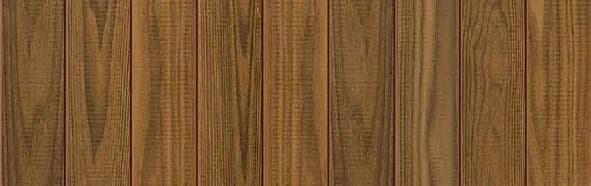
Understanding Thermally Modified Ash Properties
Thermally modified Ash offers a denser hardwood feel with a pronounced grain, making it a choice for high-visibility applications. The thermal modification process enhances the wood's stability, improving its response to changes in humidity. This characteristic is particularly relevant in coastal areas where humidity levels can fluctuate significantly. However, 'improved stability' does not equate to imperviousness to all environmental stressors.
While thermal modification enhances dimensional stability, it's important to understand that the wood still reacts to its environment. Its natural deep brown hue can be maintained with finishes or allowed to weather to a silver-gray patina over time, a common aesthetic choice in coastal settings. Its application range includes cladding, ceilings, feature walls, and selected decking details, provided the specified profile and installation system are confirmed.
For coastal applications, the key benefit is its better moisture response, which helps it resist warping or cupping that might occur in untreated wood due to humidity shifts. However, this does not mean it is inherently resistant to salt corrosion or continuous saturation.
Assessing Coastal Exposure Levels
Not all coastal locations are the same. A building directly facing the open ocean will experience far greater salt spray and wind exposure than one situated several blocks inland or protected by dunes and other structures. Before specifying Thermally Modified Ash, accurately assess your project's exposure level.
Consider factors such as prevailing wind directions, distance from the waterline, and the presence of any natural or built-up barriers. Areas with frequent direct salt spray will demand more robust hardware and potentially more frequent maintenance than those with only ambient humidity.
The impact of UV radiation can also be intense in coastal areas due to reflective surfaces like sand and water. While thermal modification can offer some benefits, it does not eliminate the need for UV protection if maintaining the original wood tone is desired.
Hardware and Fastener Selection for Coastal Environments
Standard galvanized or even some stainless steel fasteners may not offer sufficient corrosion resistance against continuous salt exposure.
These materials provide superior resistance to salt-induced corrosion, which can otherwise lead to unsightly staining, fastener failure, and compromise the structural integrity of the installation. Ensure all clips, screws, and any other metal components in contact with the wood or exposed to the elements meet this standard.
Even when using appropriate fasteners, consider the design of your assembly to minimize direct exposure of metal components where possible, or ensure they are easily inspectable for maintenance.
Installation and Rainscreen Principles
A properly designed and installed rainscreen system is particularly beneficial for coastal elevations. A rainscreen assembly creates a ventilated air gap behind the siding, allowing moisture to drain and promoting airflow to dry the wall cavity. This helps mitigate the effects of driving rain and humidity common in coastal areas.
For Thermally Modified Ash siding, ensure the installation details account for proper drainage and ventilation, especially at the base of walls, around windows, and at corners. Adhere strictly to manufacturer-recommended spacing for boards to allow for any minor movement and to facilitate drying.
Consider the specific profiles available, such as "S4S E4E End Match" in 1x6 Plus or 5/4x6 nominal sizes, which are suitable for siding applications. The choice of profile can influence how water sheds from the surface and how the assembly performs in windy, wet conditions. Always consult the product's installation guide for precise instructions.
Maintenance Considerations for Coastal Ash
While Thermally Modified Ash is more stable, it still requires maintenance, especially in a coastal environment. Regular cleaning to remove salt buildup and dirt is advisable. Salt residue can accelerate the weathering process and potentially impact the performance of finishes.
If you choose to apply a finish, select one formulated for exterior use and capable of standing up to UV exposure and moisture. Finishes will require periodic reapplication, and the frequency may be higher in harsh coastal conditions. If no finish is applied, the wood will naturally weather to a silver-gray, which can be a desirable aesthetic. However, even unfinished wood benefits from cleaning to prevent biological growth in damp conditions.
Inspect the siding and fasteners annually for any signs of wear, corrosion, or damage. Address any issues promptly to prevent minor problems from escalating.
Worked Example: Coastal Elevation Siding Calculation
Let's consider a hypothetical coastal home with a single-story elevation measuring 20 feet wide by 9 feet high, requiring Thermally Modified Ash siding. We will use a "S4S E4E End Match" profile with a 1x6 Plus nominal size. Assume an effective coverage width of 5.25 inches per board, accounting for overlap or reveal. We also assume 10% waste for cuts and unforeseen issues.
1. **Calculate total area:** 20 feet (width) * 9 feet (height) = 180 square feet.
2. **Calculate linear feet per square foot:** A 1x6 Plus board with 5.25 inches (0.4375 feet) effective coverage means 1 linear foot of board covers 0.4375 square feet. Therefore, 1 square foot requires 1 / 0.4375 2.286 linear feet.
3. **Calculate total linear feet needed (before waste):** 180 square feet * 2.286 linear feet/square foot 411.48 linear feet.
4. **Add waste factor:** 411.48 linear feet * 1.10 (10% waste) 452.63 linear feet.
5. **Determine board length and quantity:** If boards are typically supplied in 12-foot lengths, you would need 452.63 linear feet / 12 feet/board 37.7 boards. Round up to the nearest whole board, so 38 boards.
This is an illustrative calculation. Always confirm the exact effective coverage of your chosen profile and consult with your supplier for precise quantities, especially for complex designs or varying board lengths. Waste factors can vary based on project complexity and installer experience.
Before you order
- Verify local building codes and coastal zone regulations.
- Assess specific project exposure to salt spray, wind, and UV.
- Confirm Thermally Modified Ash profile suitability for exterior cladding.
- Plan for a ventilated rainscreen assembly.
- Detail proper drainage and ventilation at all wall penetrations and transitions.
- Budget for regular cleaning and potential finish reapplication.
- Request manufacturer's installation guidelines for coastal use.
- Consider the aesthetic of natural weathering versus applied finishes.
Confirm installation details, approved uses and warranty terms in the current instructions for the exact product and profile. Your installer should verify the substrate, structure and applicable project requirements.
Questions to help you decide
Is Thermally Modified Ash truly waterproof for coastal use?
No material is entirely waterproof. While thermal modification improves Ash's dimensional stability and resistance to moisture absorption compared to untreated wood, it is not impervious to water. It still requires proper installation, such as a rainscreen system, and appropriate detailing to manage water and humidity, especially in a coastal environment.
Will salt spray damage Thermally Modified Ash siding?
The wood itself is generally resistant to damage from salt spray, but prolonged exposure can lead to salt buildup, which may affect its appearance and potentially accelerate weathering. More critically, salt spray can corrode standard metal fasteners, leading to staining and structural issues. Using marine-grade stainless steel fasteners is essential to prevent this.
Can I leave Thermally Modified Ash unfinished in a coastal climate?
Yes, you can leave Thermally Modified Ash unfinished. It will naturally weather to a silver-gray patina over time, which is often a desired look in coastal architecture. However, even unfinished wood benefits from periodic cleaning to remove salt, dirt, and prevent biological growth in damp, humid conditions.
Plan Your Coastal Elevation with Thermally Modified Ash
Ready to specify Thermally Modified Ash for your coastal project? Request a material quote today by providing your project dimensions, desired profile, and ZIP code. We can help you confirm current availability and service options for Thermally Modified Ash and complementary products like siding and cladding, or other thermally modified wood options.
Request a material quote →