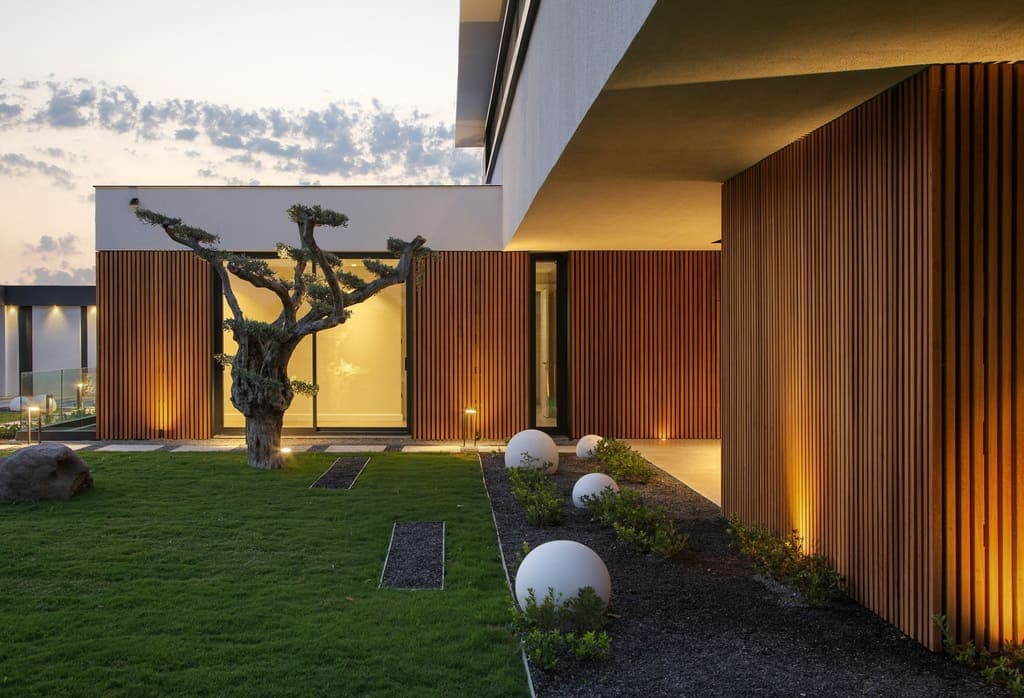
Understanding Thermal Movement in Sun-Exposed Wood
Sun-exposed elevations, particularly those facing south or west, absorb considerable solar energy, leading to higher surface temperatures. This temperature increase causes wood to expand. As temperatures cool, the wood contracts. This cycle of expansion and contraction, known as thermal movement, is a natural characteristic of all wood materials, including thermally modified wood.
The extent of this movement depends on factors such as the wood species, the specific thermal modification process, the profile dimensions, and the color of any applied finish. Darker finishes absorb more heat and can lead to greater temperature fluctuations and, consequently, more pronounced thermal movement.
Impact of Orientation and Sun Exposure
The orientation of an elevation dictates the intensity and duration of its sun exposure. South-facing walls typically receive the most consistent direct sunlight throughout the day, while west-facing walls experience intense afternoon sun, often accompanied by higher ambient temperatures. East-facing walls receive morning sun, which is generally less intense, and north-facing walls receive indirect light or limited direct sun.
When designing with thermally modified wood for highly exposed orientations, consider elements that might mitigate direct sun, such as overhangs, recessed windows, or vertical fins. These architectural features can reduce peak surface temperatures and the overall thermal load on the cladding, potentially lessening the impact of thermal movement and UV degradation.
Profile Selection for Sun-Exposed Applications
The choice of cladding profile can influence how thermally modified wood performs on sun-exposed elevations. Profiles with wider face dimensions may show thermal movement more visibly than narrower profiles. Similarly, profiles designed with deep shadow lines or specific joint details can help accommodate movement and minimize its visual impact.
For example, a tongue-and-groove profile with a modest reveal or a shiplap profile can allow for some expansion and contraction within the joint itself, reducing stress on the fasteners and the wood. When selecting a profile, review the manufacturer's recommendations for sun-exposed applications and ensure that the chosen fastening system is appropriate for the expected movement.
Color and Finish Considerations
The color of the thermally modified wood and any applied finish plays a significant role in its thermal performance. Darker colors absorb more solar radiation, leading to higher surface temperatures. This can increase the magnitude of thermal expansion and contraction, and potentially accelerate the natural weathering process, including color change.
If a dark aesthetic is desired for a sun-exposed elevation, be aware that the material will likely experience greater temperature swings. Lighter finishes or the natural, unfinished appearance of thermally modified wood will absorb less heat. Regardless of color, all exterior wood will undergo a natural graying process when exposed to UV radiation and weathering. Applying a UV-inhibiting finish can slow this process, but regular maintenance, as recommended by the finish manufacturer, is typically required to maintain the initial color.
For a natural, weathered look, thermally modified wood can be left unfinished. Over time, it will gradually develop a silver-gray patina. This process is generally more uniform on consistently sun-exposed surfaces than on partially shaded areas.
Example: Planning for a West-Facing Wall
Consider a hypothetical project involving a single-story building with a prominent west-facing wall, measuring 20 feet wide by 10 feet high. This wall receives intense afternoon sun. The design calls for 1x6 (nominal) thermally modified wood cladding with a shiplap profile, installed horizontally. The project aims for a dark, contemporary aesthetic.
To mitigate the impact of solar exposure on this wall, several planning decisions are critical:
1. **Profile Choice:** The 1x6 shiplap profile (actual face width approximately 5 inches) is selected. The shiplap joint inherently allows for some movement, but ensuring consistent spacing during installation is vital.
2. **Finish Selection:** A dark, opaque, UV-resistant exterior wood finish is chosen. While this choice will lead to higher surface temperatures, the finish manufacturer's specifications on thermal stability and reapplication intervals are reviewed carefully. The client understands that more frequent maintenance may be required compared to a lighter finish.
3. **Substructure and Fastening:** The cladding will be installed over a rainscreen assembly with vertical furring strips to allow for air circulation behind the cladding, which can help dissipate some heat. Stainless steel fasteners are specified to resist corrosion and provide secure attachment while allowing for minor wood movement.
4. **Movement Joints:** For a 20-foot long wall, a vertical movement joint is planned at the 10-foot mark. This breaks the continuous run of cladding, allowing individual sections to expand and contract more independently, reducing stress on the system. This joint will be a simple butt joint with a small, weather-sealed gap, concealed by a vertical trim piece or a dedicated expansion joint profile.
5. **Quantity Calculation:** The wall is 20 feet wide. If each cladding board is 10 feet long, two boards are needed horizontally per row to cover the width, with a movement joint in between. For a 10-foot high wall, and assuming a 5-inch exposed face per board, approximately 24 boards are needed vertically (10 ft * 12 in/ft / 5 in/board = 24 boards). Therefore, 24 rows * 2 boards/row = 48 boards of 10-foot length are required for the main field, plus extra for cuts and waste.
This example illustrates how specific product choices and installation details can be tailored to manage the challenges of sun-exposed elevations, rather than simply avoiding them.
Maintenance for Sun-Exposed Thermally Modified Wood
Regular maintenance is key to preserving the appearance and performance of thermally modified wood, especially on sun-exposed elevations. This typically involves periodic cleaning to remove dirt, mildew, and other surface contaminants. For finished surfaces, reapplication of the chosen finish according to the manufacturer's schedule is essential to protect the wood from UV degradation and maintain its color.
If the thermally modified wood is left unfinished to achieve a natural gray patina, cleaning is still recommended to prevent uneven discoloration and biological growth. Inspecting the cladding periodically for any signs of excessive movement, fastener issues, or finish degradation can help address potential problems early.
Complementary Products for Sun-Exposed Applications
Beyond the cladding itself, consider other products that enhance the performance of thermally modified wood on sun-exposed elevations. A high-quality rainscreen system with appropriate furring strips and a weather-resistive barrier is crucial for ventilation and moisture management.
Fasteners should be corrosion-resistant, such as stainless steel, to withstand weathering and ensure long-term stability. For finishes, explore options from reputable manufacturers known for their performance on exterior wood, especially those offering UV protection. Brands like NORX offer a range of thermally modified wood products that can be considered for such applications. Maximo Accoya is another option for high-performance exterior wood applications, known for its stability.
Additionally, trim and flashing materials should be selected to complement the thermally modified wood and provide durable protection at corners, openings, and movement joints.
Before you order
- Assess the orientation and expected intensity of sun exposure for each elevation.
- Understand the thermal movement characteristics of the specific thermally modified wood species and profile.
- Select cladding profiles that can accommodate movement and minimize its visual impact.
- Choose finishes (or decide to leave unfinished) with consideration for heat absorption and UV protection.
- Plan for appropriate substructure, including rainscreen assemblies and ventilation.
- Specify corrosion-resistant fasteners suitable for exterior wood.
- Incorporate movement joints for long, continuous runs of cladding.
- Establish a clear maintenance plan for cleaning and finish reapplication.
- Consider architectural features like overhangs or fins to reduce direct solar impact.
- Review manufacturer's installation guidelines specific to sun-exposed applications.
Confirm installation details, approved uses and warranty terms in the current instructions for the exact product and profile. Your installer should verify the substrate, structure and applicable project requirements.
Questions to help you decide
Does thermally modified wood warp more in the sun?
Thermally modified wood is engineered for improved dimensional stability, meaning it is less prone to warping, twisting, and cupping compared to untreated wood. However, all wood will experience some thermal expansion and contraction with temperature changes. On sun-exposed elevations, the surface temperatures can be high, leading to more pronounced thermal movement. Proper installation, including adequate spacing and fastening, is crucial to accommodate this movement and prevent issues.
What colors are best for sun-exposed thermally modified wood?
Lighter colors or the natural, unfinished appearance of thermally modified wood tend to perform better on sun-exposed elevations because they absorb less solar radiation, resulting in lower surface temperatures. Darker colors absorb more heat, which can lead to greater thermal movement and potentially faster weathering. If a dark finish is desired, select a high-quality, UV-resistant exterior finish and commit to its recommended maintenance schedule.
How do I prevent my thermally modified wood from graying quickly in the sun?
All wood, including thermally modified wood, will naturally gray over time when exposed to UV radiation and weathering. To slow this process, you can apply a UV-inhibiting exterior finish. These finishes create a protective layer that helps block UV rays. Regular reapplication of the finish, according to the manufacturer's instructions, is necessary to maintain this protection and preserve the original color. If you prefer the silver-gray patina, you can leave the wood unfinished, knowing it will weather naturally.
Ready to Plan Your Sun-Exposed Thermally Modified Wood Project?
Request a material quote with your project dimensions, desired profile, and ZIP code to confirm current availability and service options for thermally modified wood. We're here to help you select the right materials for your sun-exposed elevations.
Request a material quote →