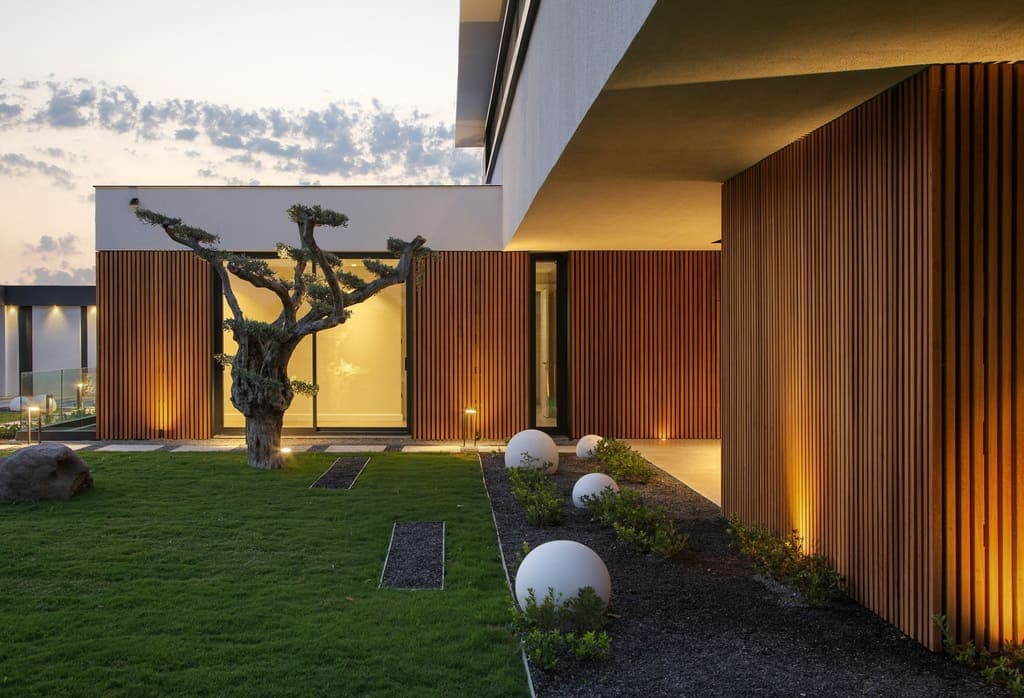
Understanding Thermally Modified Wood
Thermally modified wood undergoes a high-temperature treatment process that alters its cellular structure. This process enhances the wood's stability, making it less prone to shrinking and swelling due to changes in humidity. It also contributes to its resistance to certain forms of decay.
This modification process typically results in a rich, consistent brown tone throughout the wood, which can deepen or lighten depending on exposure to UV light and weathering if left unfinished. The stability makes it a suitable material for exterior applications like siding and cladding, as well as interior feature walls where consistent appearance is valued.
Lumber Plus offers a range of thermally modified wood options, including those from NORX, a partner brand known for its thermally modified products. Another option is Maximo Accoya, which uses a different modification process for enhanced performance.
Before requesting a quote, consider the specific characteristics of thermally modified wood that align with your project goals, such as its natural appearance and improved dimensional stability for a given application. This helps in selecting the most appropriate profile and species.
Project Overview: The Foundation of Your Quote
Start by providing a clear, concise overview of your project. This helps the supplier understand the scope and context of your material needs.
Include the project type (e.g., new residential construction, commercial facade renovation, interior accent wall). Also, specify the intended application for the thermally modified wood (e.g., vertical siding, horizontal cladding, soffit, interior paneling).
A critical piece of information is your project's ZIP code. This allows the supplier to factor in potential shipping costs and confirm service availability for your location.
Exact Dimensions and Quantities
Accurate measurements are paramount for a precise quote. Provide the total square footage of the area you intend to cover with thermally modified wood. It's often helpful to break this down by distinct walls or sections if applicable.
For each section, specify the length and height. For example, if you are cladding two walls, list the dimensions for Wall A (e.g., 20 feet long x 10 feet high) and Wall B (e.g., 15 feet long x 9 feet high).
Consider factors like waste from cuts, especially for complex designs or if you anticipate many angled cuts. While a supplier can help estimate waste, having a preliminary understanding of your project's cutting requirements can inform your initial quantity estimate.
It's generally recommended to order a slight overage (e.g., 5-10%) to account for cuts, potential damage, or future repairs. Discuss this with your supplier to determine an appropriate buffer for your specific project.
Selecting Your Thermally Modified Wood Profile
The profile refers to the shape and interlocking mechanism of the wood boards. This choice significantly impacts both the appearance and installation of your project. Common profiles include Tongue & Groove (T&G), Shiplap, and Square Edge.
Tongue & Groove profiles create a secure, interlocking fit, often used for a smooth, continuous surface. Shiplap offers a distinct shadow line and overlap, providing a more textured look. Square Edge boards are typically installed with a visible gap, often in a rainscreen system.
Lumber Plus offers various profiles for thermally modified wood. For instance, the NORX thermally modified wood is available in profiles such as T&G and Shiplap, in dimensions like 1x4 and 1x6. You can explore available profiles on our product page: <a href="/thermally-modified-wood">Thermally Modified Wood</a>. Be sure to specify the exact profile and nominal dimensions (e.g., 1x6 Shiplap) you are considering.
If you are unsure about the best profile for your aesthetic or installation method, describe your desired visual outcome, and the supplier can offer guidance based on available products.
Installation Details and Project Timing
Providing information about your installation plan can help in preparing a comprehensive quote, especially if accessories or specific cuts are needed. For example, will the wood be installed horizontally or vertically? Will it be part of a rainscreen system?
Indicate who will be performing the installation (e.g., professional contractor, DIY). While this doesn't directly affect material cost, it can influence recommendations for installation guides or accessory needs.
Finally, communicate your desired project timeline. Knowing if you need materials by a specific date helps the supplier check current availability and lead times. This is especially important for larger orders or less common profiles.
Worked Example: Facade Cladding Project
Let's consider a hypothetical project: cladding the exterior of a new detached garage. The garage has two main walls to be clad with thermally modified wood.
Project Type: New residential garage construction. Application: Exterior vertical cladding. Project ZIP: 90210.
Wall 1: 24 feet long x 10 feet high = 240 sq ft. Wall 2: 20 feet long x 10 feet high = 200 sq ft. Total Area: 440 sq ft. We will add a 7% waste factor for cuts and unforeseen needs: 440 sq ft * 1.07 = 470.8 sq ft.
Selected Product: NORX Thermally Modified Wood, 1x6 Shiplap profile. The nominal coverage for a 1x6 shiplap board, accounting for the overlap, is approximately 5.25 inches per board. A 16-foot board would cover (16 feet * 12 inches/foot) / 5.25 inches = 36.57 linear feet of coverage per board, or 16 feet * (5.25/12) feet = 7 sq ft per 16-foot board.
Required Quantity (approximate): 470.8 sq ft / 7 sq ft per 16-foot board = 67.25 boards. Rounding up, we would need 68 boards of 1x6 Shiplap, 16 feet long.
Installation Plan: Vertical installation on a rainscreen system. Contractor will install. Desired Delivery: Within 4-6 weeks.
This level of detail allows the supplier to quickly provide an accurate quote for the materials required, along with any necessary accessories for the specified profile and installation method.
Before you order
- Project Type (e.g., new residential, commercial renovation):
- Intended Application (e.g., exterior siding, interior wall, soffit):
- Project ZIP Code:
- Total Square Footage to Cover:
- Detailed Dimensions (length x height for each distinct area):
- Selected Thermally Modified Wood Profile (e.g., 1x6 Shiplap, 1x4 T&G):
- Desired Board Lengths (if specific lengths are preferred or required):
- Installation Method (e.g., horizontal, vertical, rainscreen):
- Installer (e.g., professional, DIY):
- Desired Project Start/Material Delivery Date:
Confirm installation details, approved uses and warranty terms in the current instructions for the exact product and profile. Your installer should verify the substrate, structure and applicable project requirements.
Questions to help you decide
Why do I need to provide a ZIP code for a quote?
Your ZIP code is crucial for calculating accurate shipping costs and confirming that Lumber Plus can service your specific project location. Shipping large quantities of lumber can vary significantly based on distance and logistics.
What if I don't know the exact profile or dimensions yet?
While exact details lead to the most accurate quotes, you can provide approximate dimensions and describe your desired aesthetic. The Lumber Plus team can then help you explore suitable thermally modified wood profiles and guide you on refining your measurements. However, a final quote will require precise specifications.
Should I include waste factor in my dimensions?
It is generally recommended to account for a waste factor (typically 5-10%) in your initial calculations to ensure you have enough material for cuts, potential mistakes, or future repairs. Discuss this with your supplier, as they can help confirm an appropriate percentage based on the complexity of your project and the chosen profile. For an initial quote, providing the net area plus a rough waste percentage is helpful.
Ready to Request Your Thermally Modified Wood Quote?
Gather your project details using this guide and contact Lumber Plus for a precise material quote. Provide your project dimensions, desired profile, and ZIP code to confirm current availability and service options. Visit our contact page to start your quote request today.
Request a material quote →