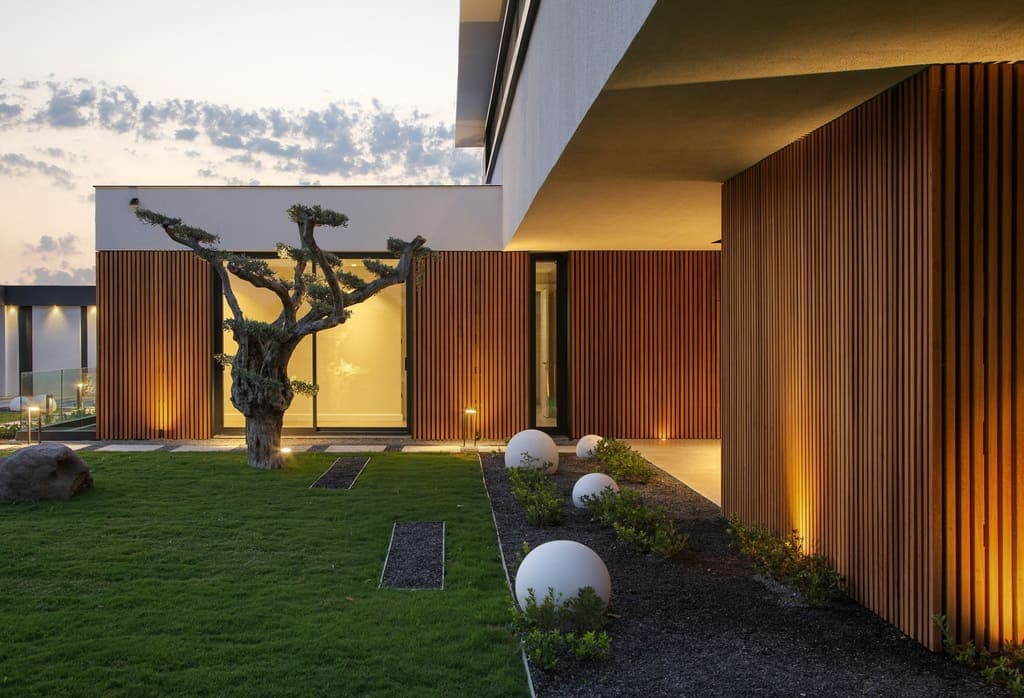
Understanding Thermally Modified Wood's Natural Appeal
Thermally modified wood undergoes a high-heat treatment process that alters its cellular structure. This process enhances stability and resistance to decay without the use of harsh chemicals, making it an environmentally conscious choice. The treatment also deepens the wood's natural color, often resulting in a rich, warm brown tone that can resemble tropical hardwoods.
Crucially, this modification maintains the wood's original grain pattern and texture. Unlike composite materials or heavily painted surfaces, thermally modified wood retains the tactile and visual authenticity of natural timber. This allows for elevations that feel connected to their surroundings, showcasing the unique character of each board.
Species and Their Inherent Characteristics
The type of wood species selected for thermal modification significantly influences the final natural look. Each species possesses distinct grain patterns, knot characteristics, and base colors that are enhanced by the thermal process. For example, ash and pine are common choices, each offering a different aesthetic.
Thermally modified ash typically features a pronounced, often wavy grain, contributing to a dynamic and textured appearance. Its inherent hardness lends itself to crisp, defined profiles. Thermally modified pine, while softer, often displays more visible knots and a straighter grain, offering a more rustic or traditional natural look. Understanding these inherent qualities is the first step in aligning the material with your desired aesthetic.
Profiles and Shadow Lines: Sculpting the Natural Look
The profile of the siding board plays a critical role in how light interacts with the facade, creating shadow lines that define the wall's texture and overall appearance. For a natural look, profiles that emphasize the wood's linear qualities and depth are often preferred.
Common profiles include tongue and groove, shiplap, and board and batten. Tongue and groove and shiplap profiles create clean, interlocking lines with subtle shadow gaps, offering a refined yet natural appearance. Board and batten, with its alternating wide boards and narrow battens, creates strong vertical lines and deeper shadows, contributing to a more dramatic and traditional natural aesthetic. The choice of profile should consider the scale of the building and the desired visual rhythm.
Finishes: Enhancing or Preserving the Natural State
While the goal is a natural look, the application of a finish can either protect and enhance this appearance or allow the wood to weather naturally. Unfinished thermally modified wood will gradually silver over time when exposed to UV radiation, developing a soft, weathered patina. This is often a desired natural aesthetic, particularly in coastal or rustic designs.
If maintaining the initial warm brown tone is preferred, a clear, UV-inhibiting oil or stain can be applied. These finishes penetrate the wood, protecting it from UV degradation while allowing the natural grain and color to show through. It's important to select finishes specifically designed for exterior wood and to understand their maintenance requirements to preserve the desired look.
For a truly raw, natural appearance, some projects opt for no finish. This choice requires accepting the natural silvering process as part of the material's evolution. Periodic cleaning can help maintain the surface, but the color change is an inherent aspect of unsealed wood exposed to the elements.
Project Example: Rustic Modern Cabin Siding
Consider a hypothetical 20-foot wide by 10-foot tall wall section for a rustic modern cabin. The design calls for a natural, weathered look that will silver over time. Thermally modified pine, known for its visible knots and straight grain, is chosen for this aesthetic.
The selected profile is a 1x6 (nominal 5.5-inch face coverage) shiplap siding. To calculate the material needed for this 200 square foot wall:
1. Determine linear feet: Wall height (10 feet) / board coverage (5.5 inches / 12 inches/foot) = approximately 21.82 boards high. Round up to 22 boards for full coverage and potential cuts.
2. Total linear feet: 22 boards * 20 feet (wall width) = 440 linear feet.
3. Account for waste: A typical waste factor for siding is 10-15%. Using 15% for cuts and unforeseen issues: 440 linear feet * 1.15 = 506 linear feet.
4. Board length: If available in 10-foot lengths, you would need 506 / 10 = 50.6 boards. Round up to 51 boards. If using 8-foot lengths, 506 / 8 = 63.25 boards, rounded up to 64 boards. This calculation helps ensure sufficient material, allowing for field cuts around windows or doors, and minimizing short offcuts.
For this project, no finish is applied, allowing the thermally modified pine to naturally weather to a soft, silvery gray, complementing the surrounding natural environment. The shiplap profile creates subtle shadow lines that enhance the linear flow of the siding without dominating the rustic aesthetic.
Before you order
- What wood species (e.g., ash, pine) best aligns with your desired grain pattern and knot visibility?
- Do you prefer a consistent warm brown tone or are you open to the wood silvering naturally over time?
- Which siding profile (e.g., shiplap, tongue and groove, board and batten) will create the desired shadow lines and architectural rhythm?
- Will you apply a clear, UV-inhibiting finish to preserve the initial color, or allow for natural weathering?
- How will the chosen profile and finish integrate with other exterior materials on your project?
- Have you considered the long-term maintenance implications of your finish choice (or lack thereof)?
- What are the specific dimensions of your project walls to accurately calculate linear footage and waste factor?
Confirm installation details, approved uses and warranty terms in the current instructions for the exact product and profile. Your installer should verify the substrate, structure and applicable project requirements.
Questions to help you decide
Will thermally modified wood retain its original color indefinitely?
No, like all natural wood, thermally modified wood will undergo color changes when exposed to UV radiation. If left unfinished, it will gradually weather to a silvery-gray patina over time. Applying a UV-inhibiting finish can help preserve the initial warm brown tones, but requires periodic reapplication.
Can thermally modified wood be painted for a natural look?
While thermally modified wood can be painted, doing so would obscure its natural grain and texture, diminishing the 'natural look' aesthetic. For projects aiming for an authentic wood appearance, clear or translucent finishes are typically preferred over opaque paints.
Is thermally modified wood suitable for all climates if I want a natural look?
Yes, the thermal modification process enhances the wood's dimensional stability and resistance to decay, making it suitable for a wide range of climates. The natural weathering process (silvering) will occur regardless of climate when exposed to UV, but the material's integrity is maintained. Always ensure proper installation, including ventilation and drainage, to support its performance in any environment.
Request a Material Quote for Your Natural Wood Elevation
Ready to bring the authentic beauty of thermally modified wood to your project? Request a material quote with your project dimensions, desired profile, and ZIP code. We can confirm current availability and service options for your area. Explore our selection of thermally modified wood at our product page, or consider complementary options like our general siding and cladding, NORX brand products, or Maximo Accoya for other project needs.
Request a material quote →