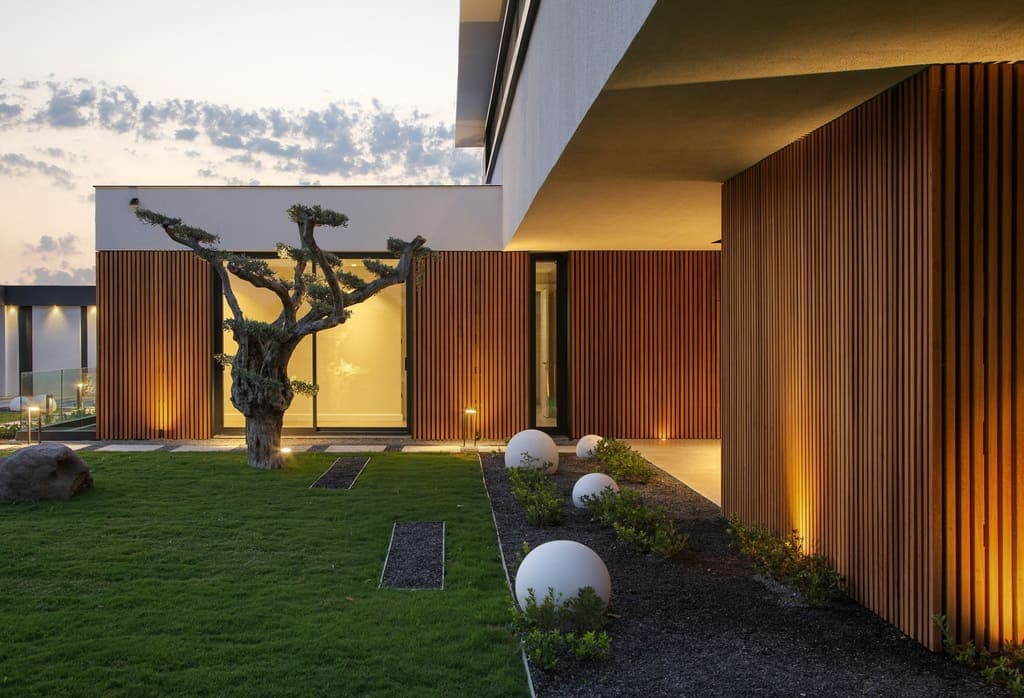
Understanding Thermally Modified Wood for Interiors
Thermally modified wood undergoes a high-temperature treatment process that alters its cellular structure. This process typically enhances dimensional stability and can reduce the wood's tendency to swell or shrink with changes in humidity, a beneficial characteristic for interior applications where consistent climate control is common. The treatment also deepens the wood's natural color, often resulting in rich brown tones that can range from honey to dark chocolate, depending on the species and modification intensity.
While commonly used for exterior siding and decking due to its improved durability, the stability and aesthetic appeal of thermally modified wood make it a viable option for interior feature walls. It offers a natural wood look without the need for exterior-grade finishes, allowing for a broader range of interior-appropriate coatings.
Selecting the Right Profile and Species
Thermally modified wood is available in various profiles, each offering a distinct visual effect. Common profiles include tongue-and-groove, shiplap, and square-edge boards. Tongue-and-groove and shiplap profiles are often preferred for interior walls as they provide a cleaner, more finished appearance by concealing fasteners and creating consistent shadow lines. Square-edge boards can be used for a more rustic or gapped look.
The species of wood also influences the final appearance. Ash and pine are common choices for thermal modification. Thermally modified Ash often presents a more pronounced grain and a darker, richer hue, while thermally modified Pine can offer a slightly softer grain pattern and a range of brown tones. Consider the overall design aesthetic of your room when selecting both the profile and species.
For a contemporary look, a narrow shiplap profile in thermally modified Ash can create sleek, horizontal lines that expand a room visually. For a more traditional or cozy feel, wider tongue-and-groove boards in thermally modified Pine might be suitable.
Finishing Options for Interior Applications
For interior feature walls, the finishing options for thermally modified wood are primarily aesthetic, as the wood's stability is already enhanced by the modification process. Many choose to apply a clear coat or a light stain to protect the surface and enhance the wood's natural color and grain without drastically altering its appearance.
Oil-based finishes can deepen the color and offer a natural matte or satin look, while water-based clear coats can provide a more resilient surface with a glossier finish. It is important to choose interior-specific finishes that are low in volatile organic compounds (VOCs) for indoor air quality. Some prefer to leave the wood unfinished for a completely natural, raw aesthetic, though a protective coat can help prevent surface marks and make cleaning easier.
Always test any finish on a scrap piece of the thermally modified wood to ensure the desired appearance before applying it to the entire feature wall. This step helps confirm the color and sheen are appropriate for your project.
Installation Considerations for an Interior Feature Wall
Proper installation is key to a visually appealing and durable feature wall. Ensure the substrate is clean, dry, and flat. For most interior applications, direct fastening into studs or furring strips is common. Using a nail gun with appropriate fasteners (e.g., finish nails or brads) is typically effective for securing the boards.
When installing tongue-and-groove or shiplap profiles, consider blind nailing through the tongue or the lap to conceal fasteners for a cleaner look. Maintain consistent spacing if using square-edge boards to create a deliberate gap effect. Allow the wood to acclimate to the room's humidity and temperature for several days before installation to minimize potential movement post-installation.
For a seamless appearance, plan your layout to minimize visible cuts and ensure that any necessary cuts are made cleanly and accurately. Starting from a plumb line and working across the wall can help maintain straight lines. Consider how the feature wall will integrate with adjacent walls, corners, and ceiling lines.
Worked Example: Designing a Feature Wall
Let's consider a hypothetical interior feature wall project for a living room. The wall measures 10 feet wide by 8 feet high. The homeowner desires a modern, clean look with a subtle wood texture. They have chosen thermally modified Ash, in a shiplap profile, with individual boards measuring 5 inches wide by 8 feet long (nominal dimensions).
First, calculate the total area: 10 ft x 8 ft = 80 square feet. Each board covers approximately (5/12) ft * 8 ft = 3.33 square feet. Therefore, the minimum number of boards needed is 80 sq ft / 3.33 sq ft/board = 24 boards. To account for cuts, waste, and potential mistakes, it is prudent to add a 10-15% overage. For this project, let's add 15%: 24 boards * 1.15 = 27.6 boards. Round up to 28 boards to purchase.
Given the 8-foot board length aligns perfectly with the 8-foot wall height, vertical installation means no horizontal cuts are needed for length. For a horizontal installation, each 8-foot board would need to be cut to fit the 10-foot width, resulting in two 5-foot pieces per board, with no waste. This would require 10 ft / (5/12) ft = 24 boards. Adding 15% overage, 24 * 1.15 = 27.6, so 28 boards. This example demonstrates how profile orientation and dimensions impact material quantities and cut plans.
The homeowner decides on a clear, low-sheen, water-based polyurethane finish to protect the wood while maintaining its natural appearance. This finish will be applied after installation to ensure full coverage over any field cuts.
Before you order
- Confirm thermally modified wood is suitable for interior use with your chosen product.
- Select a wood species (e.g., Ash, Pine) that complements your aesthetic.
- Choose an appropriate profile (e.g., tongue-and-groove, shiplap, square-edge) for the desired look.
- Decide on a finish (e.g., clear coat, light stain, unfinished) and test it on a sample.
- Measure your feature wall dimensions accurately to calculate material quantities, including waste.
- Plan the installation method (e.g., vertical, horizontal) and fastening strategy.
- Ensure the substrate is prepared correctly (clean, dry, flat).
- Account for proper acclimation of the wood before installation.
- Consider how the feature wall will interact with adjacent elements (corners, trim, outlets).
Confirm installation details, approved uses and warranty terms in the current instructions for the exact product and profile. Your installer should verify the substrate, structure and applicable project requirements.
Questions to help you decide
Can thermally modified wood be painted for an interior feature wall?
While it is possible to paint thermally modified wood, its natural beauty and enhanced color are often the primary reasons for its selection. Painting would cover these aesthetic qualities. If a painted finish is desired, ensure the wood is properly primed with an interior-specific primer suitable for wood, followed by a high-quality interior paint. However, if a solid color is the goal, other wood or composite materials might offer a more cost-effective solution.
Is thermally modified wood safe for indoor air quality?
Thermally modified wood is typically processed using only heat and steam, without the addition of chemicals, making it a natural product. For interior applications, the primary consideration for indoor air quality would be the choice of finish. Opt for low-VOC (Volatile Organic Compound) interior finishes to minimize emissions and ensure a healthy indoor environment.
Does thermally modified wood require special cleaning indoors?
For an interior feature wall, maintenance is generally minimal. Regular dusting with a soft cloth or a vacuum with a brush attachment is usually sufficient. If a finish has been applied, you can gently wipe the surface with a damp cloth and a mild, pH-neutral cleaner, avoiding abrasive cleaners or harsh chemicals that could damage the finish or the wood itself. Always follow the specific cleaning recommendations for the finish you have chosen.
Ready to Design Your Thermally Modified Wood Feature Wall?
Request a material quote today. Provide your project dimensions, desired profile, and ZIP code to confirm current availability and service options for your unique design.
Request a material quote →